
A custom packaging quote can look competitive until charges for setup, proofs, freight, storage or artwork changes appear later. The most reliable way to compare suppliers is to ask for an itemised quote that separates one-off costs, per-unit costs, optional services and costs that may change after approval.
The 7 hidden costs in custom packaging quotes you must clarify are not necessarily improper charges. Many are legitimate parts of producing printed boxes, labels or gift packaging. The risk is approving a quote before you understand what is included, what is excluded and which assumptions could alter the final invoice.
Before placing an order, request written confirmation of:
- the exact packaging specification and quantity
- all setup, tooling and pre-production charges
- the number and type of proofs or samples included
- artwork amendment allowances
- production lead time and any expedited options
- freight terms, delivery destination and unloading requirements
- storage arrangements for finished goods
- taxes, duties and clearance costs where applicable
Plate and Die Setup Charges
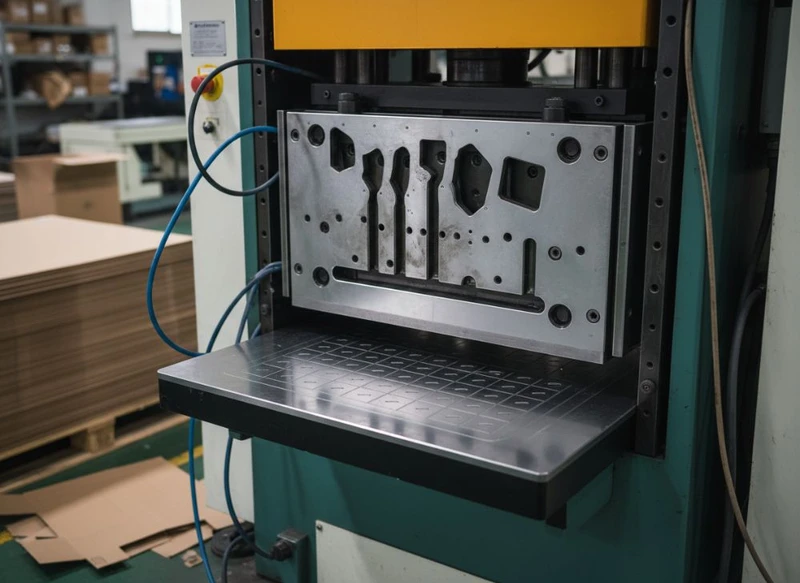
Printing plates and cutting dies are often one-off production costs, but they can materially affect the first order price. A plate transfers artwork during certain print processes, while a die cuts, creases or shapes a carton, sleeve, label or insert.
These charges may be included in a quote, shown separately, or only become apparent when the packaging design is finalised. They can also vary depending on the size, number of colours, shape, finishing requirements and printing method.
What to ask about printing plates
Ask the supplier to specify:
- whether printing plates are required for your selected print method
- how many plates are needed for the artwork
- whether plates are charged once or per production run
- whether plate costs change when colours, graphics or dimensions change
- who owns the plates after payment
- how long the supplier will retain them for repeat orders
- whether replacement plates could be needed after extended storage or repeated use
A common mistake is assuming that a minor colour amendment is simply an artwork change. Depending on the production method, it may require new plates and an additional setup charge.
What to ask about cutting dies
Custom structural designs frequently need a cutting die. This is especially relevant for cartons with unique silhouettes, windows, tabs, locking mechanisms, handles or unusual folds.
Clarify whether the quote includes:
- die development or adaptation of an existing template
- a new cutting die
- creasing, perforation or embossing components
- revisions if the packaging dimensions change
- storage or future-use arrangements for the die
Where practical, selecting a standard box format may reduce initial tooling costs. However, standard dimensions still need to suit the product, internal protection, display requirements and packing process. Saving on a die is not helpful if the finished packaging is oversized, difficult to assemble or inadequate for the product.
For businesses comparing formats, review the structural options available for custom printed boxes before requesting like-for-like quotations.
Proofing and Sampling Fees
A digital artwork file is not the same as an approved production sample. Proofing and sampling are valuable because they allow you to check content, layout, colour direction, size, materials, folds and finishes before committing to a full run.
The cost depends on the type of proof requested. A digital proof is generally used to check artwork placement and copy. A physical sample can help assess dimensions and construction. A production-representative sample may be needed when colour, substrate, embellishments or assembly details are especially important.
Understand what each proof can and cannot confirm
Ask what the proof is intended to validate.
| Proof or sample type | Typically useful for | Confirm before relying on it |
|---|---|---|
| Digital artwork proof | Copy, barcodes, positioning, basic layout | Whether it is colour-accurate or indicative only |
| Plain structural sample | Box size, folds, product fit and assembly | Whether final board and finish are represented |
| Printed sample | Artwork appearance and basic print result | Whether colours, finishing and materials match production |
| Production sample | A closer check of the intended finished specification | Cost, timing, approval process and any variation from final output |
Not every project needs every stage, but skipping samples can shift risk into the full production run. This is particularly important when packaging has tight product tolerances, complex folding, small text, barcodes, foil, embossing, spot finishes or colour-critical branding.
Questions that prevent sampling surprises
Include these questions in your request:
- Is a digital proof included?
- How many rounds of proof amendments are included?
- Is a physical sample available, and what does it represent?
- Is the sample charge credited against a production order, or billed separately?
- Are courier or freight charges for samples included?
- Who gives final artwork and sample approval?
- What happens if changes are requested after approval?
Check spelling, ingredient or product information, warning statements, SKU details, barcode readability, QR codes and legal or market-specific labelling with the appropriate internal or external reviewer. A packaging supplier can produce to approved artwork, but the brand owner should confirm that the final content is suitable for its intended Australian market.
Expedited Shipping Costs
Fast turnaround often costs more because it may require production rescheduling, priority materials, split dispatches or premium freight. An apparently short lead time can also mean different things: artwork approval to dispatch, factory completion to collection, or arrival at the delivery address.
For Australian buyers, distinguish clearly between production lead time, dispatch timing and freight transit time. Do not assume an urgent order includes every stage.
Clarify the cost of urgency before it becomes urgent
Ask the supplier to identify:
- the standard production timeframe assumed in the quote
- the event that starts production timing, such as final artwork approval or deposit receipt
- any priority production fee
- premium freight or airfreight alternatives, if offered
- costs for split shipments
- whether partial delivery is possible or useful
- the cut-off date after which changes could affect the schedule
- whether delays in proof approval, payment or information supplied by the buyer alter timing
An expedited option may be sensible for a launch, seasonal range or retail replenishment, but compare its full cost with alternatives such as using existing packaging temporarily, simplifying a finish, or placing an earlier repeat order.
Avoid accepting vague wording such as “fast production” or “express delivery”. Ask for the assumptions and charges in writing, while recognising that freight schedules and clearance processes can still be outside a packaging supplier’s direct control.
Minimum Order Quantity (MOQ) Traps
A minimum order quantity, or MOQ, is the lowest quantity a supplier will produce for a particular packaging specification. It is often driven by material purchasing, print setup, machine efficiency, finishing processes and packing requirements.
The trap is not simply that the MOQ is high. It is comparing the total order cost without considering how much packaging you will actually use before the design, product, information or brand identity changes.
Look beyond the unit price
A higher order quantity can reduce the quoted price per box, but create other costs:
- cash tied up in unused stock
- warehouse space
- damage, dust or moisture exposure during storage
- obsolete packaging after a product update
- wastage from changes to labels, barcodes or product claims
- additional handling and stock-counting work
- loss of flexibility for promotional or seasonal packaging
Compare the total cost and risk at several realistic quantities rather than automatically choosing the lowest unit price.
| Comparison point | Lower-quantity order | Higher-quantity order |
|---|---|---|
| Unit price | Often higher | Often lower |
| Upfront commitment | Lower | Higher |
| Setup cost spread | Across fewer units | Across more units |
| Storage requirement | Usually lower | Usually higher |
| Risk of obsolete stock | Usually lower | Can be higher |
| Ability to update design | Greater between runs | More limited while stock remains |
Get the MOQ definition right
Ask whether the MOQ applies to:
- the total order across several designs
- each size, flavour, colourway or SKU
- each print version
- each material or finish
- each delivery location
- each repeat order
For example, a quote may be based on a total quantity but become more expensive if that volume is split between several product variants. That is not inherently unreasonable, but it needs to be visible before you compare quotations.
If labels are part of the pack format, the same issue applies to custom stickers and labels: each size, material, finish or artwork version may have its own minimum and setup requirements.
Storage and Inventory Fees
Storage is easy to overlook when a production quantity exceeds your available space or when you plan staged deliveries. Some suppliers may offer to hold finished packaging, while others require collection or shipment shortly after production. The commercial terms vary widely.
Storage can be useful, but only if the agreement is specific. A vague arrangement can create unexpected monthly charges, handling fees or difficulties when calling off stock.
Confirm the storage model
If finished goods will be held after production, clarify:
- how long storage is included, if at all
- the fee after any included period
- whether charges are per pallet, carton, cubic metre or another basis
- minimum monthly fees or administration charges
- inbound and outbound handling costs
- pick-and-pack fees for staged releases
- minimum release quantities
- stock reporting frequency and stock reconciliation process
- responsibility for packaging condition while stored
- procedures for damaged, missing, obsolete or uncollected stock
- notice required before stock release or disposal
It is also worth checking how the packaging will be packed for storage. Outer cartons, palletisation, wrap, labelling and humidity protection may affect both freight efficiency and the condition of packaging over time.
Do not treat storage as free merely because it was not mentioned in an initial quote. Ask for the storage terms even if you expect to take the entire order at once; plans can change when a launch date moves or warehouse capacity tightens.
Artwork Revision Charges
Artwork revision fees can arise at several points: before a proof is produced, after a digital proof, after a sample, or after production files have been prepared. The later a change occurs, the more likely it is to affect prepress work, plates, dies, material allocation or the production schedule.
The key issue is defining what counts as a revision. Replacing a word, changing a barcode, supplying a corrected logo, adding a new product variant or resizing the carton may each have different production implications.
Establish an artwork change process
Before starting, agree on:
- the required file format and artwork specifications
- who is responsible for supplying print-ready files
- whether prepress checks are included
- the number of artwork revisions included in the quotation
- the hourly, per-file or per-round charge after that allowance
- charges for revisions after proof or sample approval
- whether changes to dimensions require new structural artwork or tooling
- the approval contact authorised to sign off files
- the version-control method for final files
Good file naming and approval discipline are practical cost controls. Use a clear version number, date and SKU reference. Keep copy, barcode and regulatory reviews separate from aesthetic feedback where possible. This reduces the chance of a previously corrected detail being accidentally reintroduced.
Common artwork mistakes that lead to avoidable costs
- Sending low-resolution logos or images
- Supplying artwork without bleed, safe areas or correct dimensions
- Changing product information after the proof stage
- Using colours without agreeing how they will be reproduced
- Failing to check small text, reverse type and fine lines
- Approving a file without checking all packaging panels
- Treating a change to one variant as though it affects every version
- Having several stakeholders send conflicting feedback
For gift packs with multiple components, the artwork review should cover the outer box, inserts, sleeves, tissue, labels and any other printed elements as a set. Reviewing gift packaging options early can help your team define every component that needs artwork, tooling or sampling.
Tooling Maintenance Costs
Tooling maintenance costs are less common in short-run work but can matter for long-running packaging programmes, repeat orders and structurally complex packs. Tooling can include cutting dies, embossing dies, foil dies and other production components needed to reproduce the design.
The important distinction is between an upfront tooling charge and later costs for retention, repair, replacement or modification. A supplier may retain tooling for future runs, but the duration and conditions should be clear.
Questions to include in a repeat-order plan
Ask:
- Is tooling retained for repeat orders, and for how long?
- Is there a storage charge for tooling?
- Who owns paid-for tooling?
- Is routine maintenance included or charged separately?
- What triggers a replacement tool?
- Will wear or damage be communicated before a new charge is incurred?
- Can the tool be transferred, and under what conditions?
- Does a change in board thickness, dimensions or finishing make the existing tooling unsuitable?
- Will repeat orders use the same tool, or is new tooling assessed each time?
Do not assume a paid die remains suitable indefinitely. Materials, dimensions, production methods and required finishes can change. Conversely, do not accept an unexplained new tooling charge without asking whether the original tool remains available and compatible with the revised specification.
For a packaging program expected to run over multiple seasons, record tooling details alongside the approved artwork files and packaging specification. It makes future quote comparisons more accurate.
Understanding Freight and Duties
Freight is often the largest variable outside the manufacturing price, particularly for bulky, lightweight packaging. Cartons can occupy substantial space relative to their weight, so freight may be calculated using volume, weight, pallet requirements, route and service level.
For goods made outside Australia, border clearance, duties, taxes and associated handling may also affect the landed cost. The applicable treatment depends on the goods, origin, declared value, contractual delivery terms and other factors. Confirm the current requirements relevant to your shipment rather than relying on a generic estimate.
Ask for the delivered-cost basis
A useful quote should state whether freight is:
- included or excluded
- estimated or fixed
- based on a particular destination and delivery conditions
- calculated by actual weight, volumetric weight or pallet space
- delivered to a commercial address, warehouse or another location
- inclusive of unloading or subject to site requirements
- a single shipment or staged deliveries
- subject to fuel, peak-period or other freight surcharges
If goods are imported, clarify who is responsible for:
- arranging international transport
- customs and border clearance
- import duties and taxes, where applicable
- brokerage or clearance fees
- local delivery after clearance
- demurrage, storage or other charges if documentation or collection is delayed
Compare quotes on landed cost, not factory cost
When assessing packaging suppliers, use the same comparison basis for every quote:
Landed cost = product cost + setup + samples + tooling + freight + clearance-related charges + storage + expected revision costs
Not every project will incur every item, but this framework exposes the difference between a low ex-factory price and the likely total cost to receive usable packaging.
Also compare the packaging configuration. A quote for a lighter board, different finish, lower print coverage, altered dimensions or different packing method may be cheaper for reasons that have nothing to do with supplier efficiency. Match the specification before comparing totals.
A practical quote-clarification checklist
Send this checklist with your request for quotation:
- Provide final or near-final dimensions, material preferences, print colours, finishes and quantity by SKU.
- Ask for all one-off setup, plate, die and tooling costs as separate line items.
- Confirm the type, number and cost of digital proofs and physical samples.
- State how many artwork versions and amendments are expected.
- Request standard and expedited production options separately.
- Ask for MOQ by design, size, variant and finish.
- Confirm packing configuration, palletisation and freight assumptions.
- Request storage and staged-release terms if goods will not be collected at once.
- Confirm tooling ownership, retention and possible repeat-order charges.
- Ask whether the quote is delivered cost, freight excluded or subject to future freight calculation.
- For imports, identify the party responsible for clearance-related costs and applicable duties or taxes.
- Put final approvals, specifications and commercial inclusions in writing before production starts.
FAQ
Are setup charges always a hidden cost?
No. Setup charges are standard in many forms of custom packaging production. They become a problem only when they are omitted, grouped into an unclear line item or not explained as one-off versus recurring costs.
Is the cheapest quote usually the best option?
Not necessarily. The lowest initial price may exclude samples, freight, tooling, storage, revisions or duties. Compare equivalent specifications and calculate the likely landed cost before deciding.
Can I reduce packaging quote costs without lowering quality?
Often, yes. Consider standard dimensions, fewer structural variations, consolidated artwork approvals, realistic quantities and early planning. Any change should still be checked against product fit, protection, brand presentation and the requirements relevant to your market.
What should be included in a packaging specification?
At minimum, include dimensions, packaging style, material or board preference, print colours, finishes, quantity by SKU, artwork status, packing requirements and delivery destination. Add product weight, internal fit requirements and assembly expectations where relevant.
A clear brief makes cost comparison easier. If you are preparing a new packaging project, explore XGolden Print’s custom packaging box options and use the checklist above to request an itemised quote that shows the complete cost basis.
