
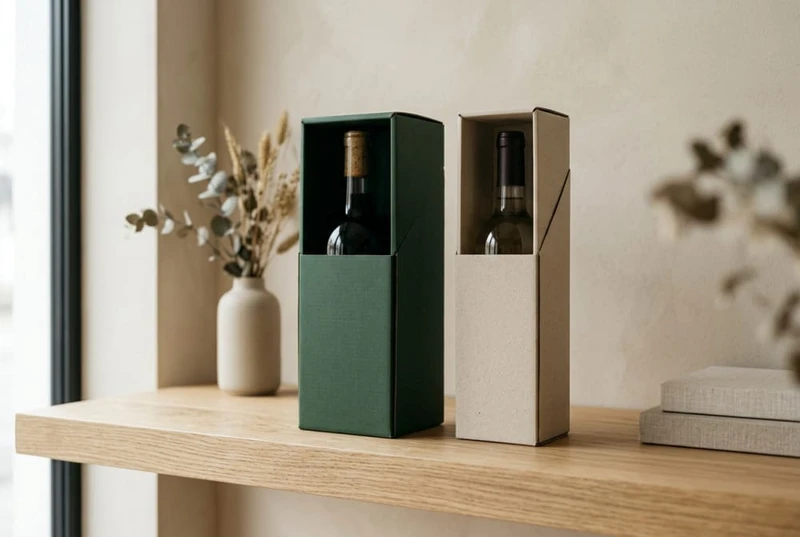
For beverage brands in Australia, packaging has to do two jobs at once: protect fragile bottles through warehousing, retail handling, and shipping, while also helping the product look premium enough to justify its price. That balance matters whether you sell cold-pressed juice in Melbourne, botanical wellness shots in Sydney, sparkling mixers in Brisbane, or limited-release spirits in Adelaide. Custom packaging gives brands more control over bottle safety, shelf impact, gift presentation, and fulfilment efficiency than standard stock formats.
Well-designed beverage boxes are not only about appearance. They affect breakage rates, pallet stability, picking speed, customer perception, and even how easily a product enters premium retail or corporate gifting channels. In Australia, where brands often ship across long distances between production sites, metro warehouses, and regional customers, bottle packaging needs to perform under real transport conditions. A box that looks attractive but fails during courier handling can quickly become expensive. On the other hand, a strong, well-fitted gift box or retail carton can improve margins, reduce losses, and support expansion into higher-value segments.
Our workshop supports this kind of packaging development with advanced converting equipment, precise finishing capability, and a production team focused on consistent quality. We work across gift boxes, paper boxes, stickers, and broader packaging solutions, helping brands move from concept samples to small custom runs or larger volume orders without losing control of detail.
Different packaging needs for bottled drinks, wellness products, and specialty beverages
Not every beverage should be packed the same way. Glass bottles, PET formats, aluminium cans in presentation sets, wellness ampoules, and premium cordial bottles all create different packaging demands. Bottled water multipacks sold through supermarkets need efficient stacking, barcode visibility, and cost discipline. Premium kombucha in independent retail often needs stronger branding and better visual differentiation. Wellness products such as immunity shots, collagen drinks, and herbal tonics usually require compact cartons that communicate dosage, ingredients, and premium positioning clearly.
Specialty beverages often need the most tailored approach. A tasting set of native botanical mixers, a holiday pack of craft syrups, or a launch box for seasonal sparkling tea needs packaging that protects multiple units while still feeling curated. In Australian retail, this is especially relevant for brands targeting boutique bottle shops, gourmet grocers, tourism venues, and seasonal pop-up gifting campaigns. These channels place more weight on presentation than standard FMCG shelves.
Packaging format decisions should begin with the product’s actual route to market. A beverage sold through Coles or Woolworths-style environments may need shelf-ready outers and efficient replenishment. A wellness line placed in pharmacies or health stores may benefit from upright cartons with clear ingredient panels and tamper-evident labelling. A direct-to-consumer subscription pack needs transit resilience first, then presentation second. Matching the box structure to the sales channel avoids unnecessary material use and helps the packaging budget work harder.
| Product type | Typical bottle format | Main packaging priority | Recommended box style | Typical sales channel | Key risk |
|---|---|---|---|---|---|
| Craft juice | 250ml to 750ml glass | Cold-chain handling and breakage control | Partitioned corrugated shipper | Retail and online | Impact cracking |
| Wellness shots | 60ml to 100ml small glass | Compact display and premium messaging | Rigid sleeve box or folding carton set | Pharmacy and health retail | Movement inside pack |
| Specialty syrups | 500ml glass | Gift appeal and shelf presence | Printed paperboard gift box | Gourmet stores | Label scuffing |
| Botanical mixers | 200ml glass | Multi-pack presentation | Tasting set with inserts | Promotional and gifting | Neck collision |
| Premium tea drinks | 330ml bottle | Brand storytelling | Window carton or premium tuck box | Independent retail | Low shelf visibility |
| Seasonal beverages | Mixed bottle sizes | Short-run flexibility | Custom box plus campaign stickers | Events and limited release | High setup cost |
This comparison shows why product type matters early. When structure, graphics, and logistics are designed together, packaging performs better and usually becomes more cost-effective over the full sales cycle.
The line chart reflects a realistic upward trend in premium beverage packaging demand in Australia, driven by gifting, wellness products, direct-to-consumer sales, and stronger brand positioning across metropolitan markets such as Sydney, Melbourne, and Perth.
Insert designs that keep glass bottles safe during retail distribution and shipping
Insert design is one of the most important decisions for fragile beverage packaging. Even a strong outer box can fail if bottles move inside during handling. For glass formats, inserts prevent side-to-side impact, reduce neck contact, and help distribute weight during stacking. In Australian distribution, packaging may travel from production sites to port-adjacent logistics hubs, then through national warehouse networks and courier systems. That means bottle packs can be exposed to vibration, compression, and repeated manual handling.
Common insert options include die-cut paperboard dividers, folded corrugated partitions, moulded pulp supports, and premium rigid-board cradles. The right choice depends on bottle weight, shape, number of units per box, and whether the pack is for retail display or shipping only. A four-bottle tasting set sold as a gift may use a visually refined insert with a snug fit and clean reveal when opened. A six-bottle transit carton for e-commerce usually benefits from stronger corrugated fitments with headspace control and edge protection.
For brands shipping from Sydney to Perth or from Adelaide into regional Queensland, transport durations and transfer points increase the value of proper insert engineering. Internal fit should also account for closures, bottle shoulder shape, and label placement. Inadequate spacing can lead to chipped glass, rubbed labels, or leaking caps. Small improvements in insert geometry often create a large reduction in returns and damaged stock.
Our technical capability matters strongly in this stage. With advanced machinery and accurate cutting processes, we can develop inserts that fit bottle dimensions precisely, reducing wasted board and preventing unnecessary movement. This helps both small promotional sets and larger retail production runs maintain consistency from sample approval to final production.
| Insert type | Protection level | Presentation level | Best use | Material efficiency | Notes |
|---|---|---|---|---|---|
| Corrugated partition | High | Moderate | Shipping cartons | Good | Suitable for mixed handling environments |
| Die-cut paperboard cradle | Moderate | High | Gift sets | Very good | Neat appearance for premium packs |
| Moulded pulp insert | High | Moderate | Eco-focused lines | Good | Works well for sustainable positioning |
| Rigid board insert | High | Very high | Luxury beverage gifting | Lower | Premium feel with strong support |
| Wrap-around neck stabiliser | Moderate | Moderate | Tall narrow bottles | Very good | Reduces bottle sway |
| Hybrid insert system | Very high | High | Fragile multi-format packs | Moderate | Useful for bundles with different bottle sizes |
This table highlights that the best insert is rarely the cheapest single material. The right insert is the one that reduces product loss, supports presentation, and suits the actual delivery path.
Gift-ready box concepts for holiday releases, tasting sets, and promotional bundles
Gift-ready beverage boxes have become more important across Australia as brands expand into Christmas releases, corporate gifting, cellar door takeaways, and event-led promotions. A standard transit box may protect the bottle, but it does little to create anticipation or encourage gift purchase. A custom gift box can transform the same product into a higher-value offer simply by improving presentation, structure, and opening experience.
Holiday gift boxes often work best with strong seasonal colour palettes, textured finishes, inserts that hold one to six bottles securely, and enough panel space for message cards or tasting notes. Tasting sets may include mini bottles, glassware, recipe cards, or pairing suggestions. Promotional bundles often need flexibility so the same outer structure can support multiple campaign themes across the year. In these cases, a stable box structure combined with seasonal stickers or sleeves can control cost while keeping campaigns fresh.
Australian brands in tourism, food gifting, and premium beverage retail benefit especially from this approach. A Yarra Valley beverage gift pack, a Barossa promotional syrup set, or a Brisbane summer spritz bundle can all gain stronger shelf and online appeal through custom presentation. The box should reflect where the product sits in the market: clean and clinical for wellness, celebratory for festive releases, refined for premium specialty beverages.
For brands exploring custom gift packaging for beverages, it helps to think beyond decoration. Magnet closures, lift-off rigid boxes, drawer boxes, fold-flat gift mailers, and presentation sleeves all create different cost and fulfilment outcomes. The strongest concept is usually the one that looks premium while still packing efficiently, storing neatly, and shipping safely.
| Gift box concept | Best occasion | Bottle count | Premium feel | Freight suitability | Commercial advantage |
|---|---|---|---|---|---|
| Rigid two-piece box | Holiday gifting | 1 to 3 | Very high | Moderate | Strong unboxing experience |
| Drawer-style box | Tasting sets | 2 to 6 | High | Moderate | Good for inserts and notes |
| Fold-flat gift mailer | Online bundles | 1 to 4 | High | High | Lower storage footprint |
| Sleeve over carton | Promotional bundles | 2 to 6 | Moderate to high | High | Efficient for campaign changes |
| Window presentation box | Retail gifting | 1 to 2 | High | Low to moderate | Shows bottle design directly |
| Handle gift carton | Cellar door and events | 2 to 4 | Moderate | Moderate | Convenient carry format |
The table shows that gift packaging should match both brand intent and logistics. A box that feels elevated at point of sale but stores poorly or ships badly can erode the margin that premium presentation creates.
The bar chart indicates strong demand from wellness beverages, seasonal releases, and e-commerce bundles. These categories often gain the most from gift-ready structures because presentation and protection both shape purchase decisions.
Sticker strategies for limited editions, flavors, and short-run campaigns
Stickers are often underestimated in beverage packaging planning, yet they can solve several commercial challenges at once. For limited editions, pilot launches, new flavours, event-exclusive products, or co-branded campaigns, stickers allow brands to adapt packaging without funding a full print run for every version. This is especially useful for Australian beverage businesses testing different retail markets, festival campaigns, or seasonal variants before moving to higher-volume production.
Sticker use works best when planned from the start. The box or label panel should include a clear application zone, with surface finish chosen to suit either matte or gloss stickers. Removable campaign stickers may help for temporary messaging, while permanent labels suit flavour identification, compliance updates, or sealed presentation. For short-run promotions, consistent sticker placement preserves brand quality even when the production run is small.
Some beverage brands use stickers only for compliance or flavour coding. Others use them to create urgency: numbered editions, holiday seals, “small batch” messages, or state-specific launches. A wellness drink range might use colour-coded stickers to separate immunity, energy, sleep, and focus variants without changing the carton structure. A specialty beverage brand might apply foil-accent limited-release stickers for higher perceived value.
For businesses comparing options, custom sticker production for packaging campaigns can support both decorative and operational needs. The best results come when sticker materials, adhesive performance, and box coatings are matched carefully, especially if products may move through chilled environments or mixed-temperature storage.
Our manufacturing capability supports this flexibility. We handle both small-batch customisation and larger volume production, which allows beverage brands to test short-run campaigns without losing the pathway to scale. That is useful for Australian launches tied to holiday calendars, regional food events, or retailer-specific promotions.
Outer carton planning for storage, handling, and cleaner shelf display
Outer cartons do more than hold units together in transit. They affect pallet efficiency, warehouse handling, shelf replenishment, stock rotation, and store presentation. For beverage brands supplying independent retailers, chains, or online fulfilment centres, a well-planned outer carton improves labour efficiency and reduces product wear. In Australia, where products may move through large distribution distances from ports and industrial precincts to store networks, outer carton planning deserves early attention.
A good outer carton should fit the primary packs securely, stack safely, carry readable identifiers, and open cleanly when used as a shelf-ready format. If the beverage is sold in premium gift boxes, the outer must protect those boxes from corner crush and surface damage. If the product is sold in compact wellness cartons, the outer should prevent rattling and avoid oversized voids that increase freight costs. Carton dimensions should also align with warehouse shelving, pallet layers, and courier parcel thresholds where possible.
For cleaner shelf display, some brands use perforated outers that convert quickly into retail trays. Others prefer closed cartons for back-of-house storage and separate retail display boxes for presentation. The right answer depends on retailer expectations and replenishment frequency. In markets such as Sydney and Melbourne, where premium grocery and specialty retail environments often value tidier shelf standards, outer carton appearance can indirectly influence how store staff handle the product.
| Outer carton feature | Operational benefit | Retail benefit | Best for | Trade-off | Advice |
|---|---|---|---|---|---|
| Double-wall corrugated | High compression strength | Low visual value | Heavy glass shipping | Higher material cost | Use for long-distance freight |
| Shelf-ready perforation | Fast replenishment | Cleaner display | Retail chains | Needs accurate design | Test tear quality before launch |
| Printed transit carton | Easy identification | Moderate presentation | Mixed channel supply | Higher print cost | Useful for organised backrooms |
| Standard brown shipper | Low cost | Minimal display value | Online shipping | Weak premium impression | Pair with stronger inner box |
| Partitioned case pack | Excellent bottle separation | Low shelf impact | Fragile glass lines | Takes assembly time | Best when breakage risk is high |
| Tray and hood format | Fast access | Good display potential | Promotional retail | Less transit protection | Better for short supply chains |
This table shows that outer cartons should be designed for the full operating environment, not only the warehouse. Stronger handling performance often improves the retail experience as well because packs arrive cleaner and more consistent.
How packaging priorities change between retail channels and online orders
Retail and e-commerce packaging often look similar from the outside, but the priorities behind them are different. In-store retail packaging has to earn attention quickly. It needs strong branding, clear information hierarchy, and dimensions that work on shelf. E-commerce packaging must survive a more aggressive handling environment, where products may be sorted, dropped, and stacked in mixed loads. For bottled beverages, this difference is especially important.
In retail-first channels, visual impact and shelf efficiency tend to lead. In online-first channels, fit, cushioning, tamper confidence, and parcel efficiency become more important. A beverage brand that sells through both should usually avoid forcing one packaging solution to do everything. Instead, it may use a premium retail box inside a stronger dedicated shipper, or create channel-specific configurations using the same graphic language.
Australian online orders create additional considerations because of long delivery distances and climate variation. A package moving from Melbourne to Darwin or from Perth to regional New South Wales may face more stress than a metro retail delivery. Protective void design, board grade, closure method, and label durability all become more important. Returns are costly, and damaged glass products can also create customer service and safety issues.
The area chart reflects a realistic shift toward omni-channel packaging in Australia. More beverage brands now need packaging systems that work in store, in wholesale distribution, and in direct-to-consumer fulfilment at the same time.
Where possible, brands should review packaging by channel using a simple matrix: shelf effect, freight resilience, pick-pack labour, storage volume, and total landed cost. This often reveals that the lowest unit-cost box is not the most efficient commercial option. For businesses sourcing custom beverage boxes for retail and shipping, early channel planning can prevent expensive redesign later.
Cost issues that beverage brands often overlook in packaging development
Many beverage brands focus mainly on unit price when quoting packaging, but the real cost picture is wider. Overlooked costs often include breakage, excess freight caused by oversized packs, poor pallet utilisation, slow packing labour, campaign obsolescence, and stock damage from cartons that are too weak for the route. A low-cost box can become expensive once these hidden costs appear across a full quarter or annual program.
Print method and finishing choice also affect budget in ways that are not always obvious. Foiling, embossing, rigid structures, and multi-part inserts can raise perceived value, but they must be matched to the product margin. On the other hand, brands sometimes overspend by printing too many seasonal versions when a standard box plus stickers would achieve the same commercial effect. In Australia’s beverage market, where batch sizes and channel mix can vary significantly, packaging flexibility is often as valuable as premium finishing.
Storage cost is another common blind spot. Bulky gift boxes may look excellent but consume warehouse space in Sydney, Brisbane, or Melbourne where storage rates are not trivial. Fold-flat designs, modular insert systems, and common-size outers can improve inventory efficiency. Freight costs from offshore production to Australian ports also need consideration, especially for rigid box formats that ship with higher volume than folding cartons.
Our service capability is built around these realities. We help clients compare structure options, production quantities, and finishing choices so that packaging performs commercially rather than only visually. From small-batch trials to larger repeat programmes, the goal is to give brands a practical path that balances presentation, production efficiency, and transport protection.
| Overlooked cost area | How it appears | Commercial impact | Typical cause | Prevention method | Importance |
|---|---|---|---|---|---|
| Breakage claims | Refunds and replacements | High | Weak insert design | Transit testing and fit review | Very high |
| Freight inefficiency | Higher shipping charges | High | Oversized packaging | Dimensional optimisation | High |
| Slow packing labour | Extra fulfilment time | Moderate to high | Complex assembly | Simplify structure | High |
| Campaign leftovers | Unused printed stock | Moderate | Overprinting seasonal variants | Use stickers or sleeves | Moderate |
| Warehouse space | Higher storage fees | Moderate | Bulky rigid packs | Use fold-flat alternatives | Moderate |
| Retail damage | Scuffed or crushed packs | Moderate | Weak outer cartons | Upgrade transit packaging | Moderate to high |
This table shows why beverage packaging should be costed across the full chain, not just by the printed unit. Hidden costs often outweigh small savings on material or finishing.
How custom packaging helps beverage products move into higher-value market segments
Custom packaging can help a beverage brand move from functional sales into premium, giftable, or specialty market segments. This matters when a product is no longer competing only on flavour or ingredients, but also on perceived quality, brand story, and suitability as a gift or elevated purchase. In Australia, this shift is visible across non-alcoholic aperitifs, premium mixers, wellness beverages, artisanal syrups, and boutique ready-to-drink products.
Consumers often judge price legitimacy through packaging before they taste the product. A well-structured box, refined insert, premium sticker treatment, and clean outer presentation can support higher shelf prices and better acceptance in gourmet retail, hospitality gifting, and premium online bundles. For distributors and retailers, professional packaging also signals that the brand is ready for broader placement and more consistent fulfilment.
Moving into higher-value segments does not always require the most elaborate packaging. It requires the right package architecture. A restrained paper box with accurate bottle fit and elegant finishing can look more premium than an overdesigned format. Brands entering premium categories should prioritise material quality, tactile detail, opening experience, and clean information layout. Sustainability claims should also be credible and practical, especially as 2026 approaches with stronger policy focus on recyclability, packaging reduction, and supply-chain transparency.
Future beverage packaging trends in Australia are likely to centre on three areas. First, technology: better digital proofing, variable print, and short-run production will help brands test premium concepts faster. Second, policy: recyclability, material reduction, and clearer recovery pathways will influence both design and procurement. Third, sustainability and logistics integration: brands will seek packaging that balances protective performance with lower material intensity and improved transport efficiency. Companies that design with these trends in mind now will be in a stronger position for retail review cycles and online growth over the next few years.
The comparison chart shows how different packaging models can influence value perception and market positioning. The strongest uplift typically comes from packaging systems that combine protection, presentation, and channel suitability rather than relying on appearance alone.
Buying advice for beverage brands in Australia
When sourcing packaging, beverage brands should begin with practical questions. What is the bottle weight and shape? Which channels matter most over the next 12 months? Will the product be gifted, shipped individually, or sold in shelf-ready formats? How many variants are likely across seasons or flavours? These questions help define whether the right solution is a folding carton, a rigid gift box, an insert-led shipper, or a layered system using stickers for campaign flexibility.
It is also wise to request mock-ups and transport-minded samples before committing to scale. This is particularly important if stock will move through major Australian logistics corridors linked to Port Botany, the Port of Melbourne, Fremantle, or Brisbane distribution hubs. A design that looks excellent in a studio can behave differently once packed, stacked, and shipped.
Industries and applications where premium beverage packaging performs best
Custom packaging performs especially well in gourmet food retail, pharmacy and wellness, tourism gifting, cellar door merchandising, hotel minibars, event gifting, subscription beverage clubs, and corporate hamper programmes. It is also valuable for product launches where the first impression shapes retailer confidence. In each of these industries, packaging helps explain why the product belongs in a higher-value segment.
Case examples from the Australian market
A Sydney wellness beverage brand may use a standard monochrome carton with colour-coded stickers to control flavour variation costs while keeping shelf consistency. A Melbourne craft mixer producer might launch a festive three-bottle tasting set using a fold-flat gift mailer with a die-cut insert to support online and in-store sales at once. An Adelaide specialty syrup brand could move into gourmet retail by replacing generic shippers with a printed carton and premium sleeve that gives independent stores a cleaner shelf presentation. These are practical examples of how custom packaging becomes a commercial tool, not just a design exercise.
Working with a packaging partner
The best packaging supplier is not simply the one that offers a low quote. It is the one that can align technical capability, manufacturing stability, and service responsiveness with the realities of your beverage category. In our workshop, advanced equipment supports accurate production, our team manages both detailed custom work and larger manufacturing volumes, and our service approach stays flexible enough for product launches, repeat orders, and evolving campaign needs. That combination is useful for Australian brands balancing premium presentation with operational discipline.
FAQ
| Question | Answer | Why it matters | Best timing | Priority level | Notes |
|---|---|---|---|---|---|
| Do all glass beverages need inserts? | Most do if shipped individually or in sets. | Reduces breakage and label damage. | At structure planning stage | High | Essential for e-commerce |
| Are stickers suitable for premium products? | Yes, if finish and placement are well designed. | Supports short runs and seasonal changes. | During artwork planning | Moderate to high | Useful for flavour variants |
| Should retail and online packs be different? | Often yes, or use a hybrid system. | Each channel has different handling demands. | Before quotation | High | Prevents redesign later |
| What carton type suits heavy bottles? | Usually stronger corrugated board with fitments. | Improves stacking and transport safety. | At engineering stage | High | Test before rollout |
| Can gift boxes still be practical? | Yes, especially fold-flat or sleeve formats. | Balances premium look with storage efficiency. | During concept selection | Moderate | Good for seasonal campaigns |
| How early should packaging be planned? | Before final launch scheduling and channel confirmation. | Avoids rush costs and supply delays. | At product development stage | Very high | Important for holiday releases |
The FAQ table reinforces a practical point: beverage packaging works best when considered early, tested realistically, and matched to sales channels rather than chosen only for appearance.
Across Australia, beverage brands are facing a more complex packaging environment. Products need to look premium, survive longer freight routes, adapt to online growth, and respond to sustainability expectations. Custom boxes, inserts, stickers, and outer cartons help brands manage those competing demands. When packaging is planned well, it protects glass bottles, improves shelf appeal, supports gifting, and helps products move into more profitable market segments without losing operational control.
