
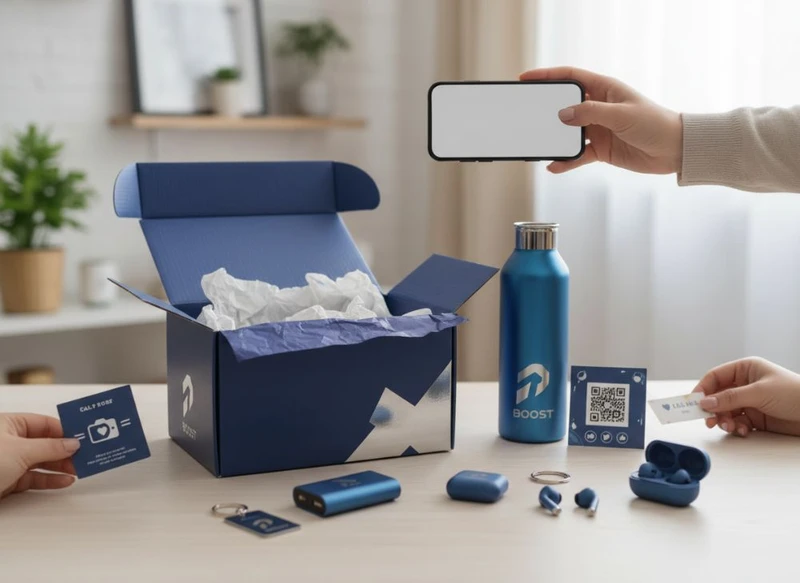
Custom packaging can extend a brand’s social media presence beyond the screen by giving customers a clear reason to photograph, scan or talk about a product. The strongest approach is not simply adding a social handle to every box. It is designing one useful, visually distinctive interaction that fits the product, customer and fulfilment journey.
For Australian brands, boost brand visibility: integrating social media with custom packaging means balancing creativity with practical packaging needs. A shareable box still needs to protect the item, present required product information clearly and work within the realities of storage, packing and delivery. Start with a single social objective—such as collecting product photos, growing an email list or promoting a launch—then build the packaging prompt around it.
A practical packaging-to-social strategy has four parts:
- A moment worth sharing, such as an attractive reveal, personal detail or collectible element.
- A simple prompt, telling customers exactly what to photograph, tag, scan or enter.
- A low-friction destination, such as a mobile-friendly landing page, social profile or competition entry page.
- A measurement method, so the team can see whether packaging activity supports the original goal.
Encouraging Photo Shares with Great Unboxing
Unboxing content works best when the package creates a sequence rather than revealing everything at once. This does not require excessive layers or costly embellishments. It means giving the customer one or two considered moments to discover: an outer message, a branded seal, a colour reveal, a printed interior or a neatly arranged product presentation.
The ideal unboxing experience depends on the product category. A premium skincare item may benefit from a clean interior message and organised inserts. A food gift may rely on colourful presentation and a card explaining the contents. An e-commerce product with a practical use may need a fast, frustration-free opening instead of multiple decorative layers.
Useful elements to consider include:
- A short message under the lid or inside the mailer
- A repeatable colour palette that photographs accurately
- Tissue paper, wraps or dividers that create a deliberate reveal
- A thank-you card with a social prompt
- A branded seal that gives the parcel a finished appearance
- An insert explaining how to reuse, recycle or dispose of the pack where applicable
Keep the social request specific. “Share your unboxing” is broad; “Show us your first look and tag @brandname” is clearer. If an official campaign hashtag is used, check that it is short, distinct and easy to spell before printing it across a production run.
Design for the camera without making opening difficult
A box needs to look good in a customer’s hands and on a phone screen, but it must also be easy to open. Complicated closures, tightly packed components and excessive tape can undermine the moment the design is trying to create.
Before approving artwork, review the package from several viewpoints:
- What does the customer see first on delivery?
- Which surface is most likely to appear in a photo?
- Does the key message remain visible when the box is open?
- Could glare, very small type or low-contrast printing reduce readability?
- Are important instructions hidden beneath packing materials?
- Does the product remain protected throughout the unboxing sequence?
A prototype review involving packaging, marketing and fulfilment teams can identify conflicts early. The most photogenic concept is not useful if it creates extra packing steps or risks damaging the product.
Using Label Stickers as a Call-to-Action
Stickers are a flexible way to test social prompts without redesigning every packaging panel. They can be applied to outer cartons, tissue paper, closure seals, thank-you cards or product labels, depending on the pack format and intended use.
A sticker call-to-action should focus on one action only. Possible examples include:
- “Tag us in your set-up”
- “Scan for the full story”
- “Share your colour choice”
- “Join the launch list”
- “Enter this month’s giveaway”
- “Save this guide for later”
Because stickers have limited space, clear hierarchy matters more than elaborate copy. Put the action first, then the handle, QR code or short URL alternative. Avoid placing a key sticker where it may be covered by shipping labels, tape or handling marks.
For short campaigns, seasonal releases or product trials, custom labels can be more adaptable than pre-printing a permanent message onto a carton. Explore custom printed stickers when a campaign needs a distinct seal, product label or removable call-to-action.
Sticker selection checks
Before specifying stickers, confirm:
| Decision area | What to check |
|---|---|
| Placement | Whether the sticker will remain visible after packing, handling and delivery |
| Adhesive | Suitability for the carton, glass, pouch, paper wrap or other application surface |
| Finish | Whether a matte, gloss or uncoated finish supports the intended visual effect and scannability |
| Size | Enough room for readable type and a QR code with clear surrounding space |
| Removal | Whether customers should be able to remove the sticker cleanly |
| Variable campaigns | How version changes, batch details or different campaign messages will be managed |
If labels carry product claims, ingredients, disposal guidance or other regulated information, verify the current requirements that apply to the product and Australian market before printing.
Creating Shareable Gift Packaging Moments
Gift packaging naturally encourages social sharing because the recipient experiences both the product and the gesture behind it. The design should make the package feel intentional while remaining suitable for the brand’s price point and operational model.
Rather than treating every gift box as a luxury item, decide what the gift moment needs to achieve. Is the goal to make a seasonal order feel special, support corporate gifting, build anticipation for a limited release or encourage customers to send a product directly to someone else?
Effective shareable gift packaging may include:
- A writable gift message area
- A reveal message under a sleeve or lid
- A colour combination associated with a particular campaign
- A compartment layout that displays the contents neatly
- A reusable box format, where appropriate
- A discreet prompt inviting the recipient to share the moment
A gift box is often seen before the item itself, so it should communicate the brand without requiring additional explanation. Consider the recipient as well as the purchaser: the person receiving the gift may not already follow the brand or understand the product range.
Brands reviewing structural options can compare custom box formats based on product dimensions, opening style, insert requirements and the level of presentation required. For occasions where the package is central to the product experience, gift packaging options can help frame a more specific brief.
Avoid over-packaging for the sake of a photo
An elaborate gift reveal can be memorable, but extra components add material use, packing complexity and potential disposal concerns. Choose layers only when each one has a purpose: protection, presentation, information or reuse.
If sustainability messaging is included, ensure it accurately reflects the actual materials and local disposal pathways relevant to the customer. Broad environmental claims can create confusion when the pack contains mixed materials or parts that need separate handling.
Adding QR Codes to Boxes for Contests
QR codes make packaging interactive by connecting a physical product to a digital campaign. They can direct customers to a competition, a user-generated content gallery, a product tutorial, a loyalty sign-up, a playlist or a social profile.
For a contest, the QR code should lead to a page that explains the entry process immediately. Customers should not have to search for the promotion after scanning. Include the closing date, eligibility conditions, entry method, prize details where relevant, privacy information and any terms that apply. Have relevant promotional, privacy and consumer requirements checked for the Australian market before launch.
A QR code is most useful when it offers value beyond “follow us”. For example, a customer might scan to:
- Enter a themed photo challenge
- Access a product styling guide
- Reveal a digital bonus after purchase
- Vote on a future colour or flavour
- View a behind-the-scenes design story
- Find care, assembly or usage instructions
QR code design and testing
Do not alter a QR code purely for decoration unless it remains reliable. High contrast, adequate quiet space around the code and a sensible print size all support scanning. Place it on a reasonably flat surface and avoid folds, seams, corners, high-glare finishes and areas likely to be scuffed.
Test the printed code—not only the artwork file—on several common mobile devices under normal indoor lighting. Also provide a readable alternative, such as a short web address or social handle, for people who choose not to scan.
Use a trackable campaign link where possible. This lets the marketing team distinguish packaging scans from other website visits without needing to make unsupported assumptions about customer behaviour.
User-Generated Content from Packaging
User-generated content (UGC) is more likely when customers know what type of contribution is welcome. Packaging can set the brief: show your first use, style the product on your desk, share your gift reveal, post your finished result or vote for your favourite variation.
The request should fit the product. Asking for a complex video may be unrealistic for a low-involvement purchase, while a visually expressive product may invite more creative content. Match the level of effort to the value customers receive.
A useful UGC prompt includes:
- The action: take a photo, create a short video, tag an account or use a hashtag.
- The subject: the unboxing, product result, set-up, gift moment or styling idea.
- The benefit: an opportunity to be featured, join a community activity or access campaign content.
- The boundary: where to find campaign conditions or content permissions if the brand wishes to repost entries.
Do not assume that a public tag grants unrestricted permission to reuse a customer’s image in advertising. Set up a clear permission process before reposting content across paid, owned or partner channels. This is especially important when images feature people, children, homes or other identifiable details.
Designing Boxes to Be Visually Instagrammable
“Instagrammable” packaging is packaging with a recognisable visual point of view that remains clear in a quick photo or video. It does not mean covering every panel with graphics. In fact, a restrained design can be easier to recognise in a crowded social feed.
Focus on one or two visual signatures:
- A distinctive brand colour used consistently
- A strong type treatment or short phrase
- An interior print that rewards opening the box
- An unexpected but functional opening mechanism
- An illustration or pattern that continues across the pack
- A tactile contrast, such as smooth and textured surfaces
- A framed area that naturally positions the product for a photo
Consider how colours reproduce on different phone cameras. Pale details may disappear against white interiors, while very dark surfaces can conceal messaging in low light. Fine metallic effects, subtle varnishes and small type can look effective in person but may not translate in customer photography.
A practical visual hierarchy
The best social-ready boxes answer three questions at a glance:
- Whose product is this? Brand recognition should appear without overwhelming the design.
- What should the customer notice? A product name, collection, message or visual feature should lead the eye.
- What can they do next? The call-to-action should be discoverable, but not compete with mandatory product information.
Keep campaign artwork separate from core branding where possible. This enables a seasonal social activation without making the entire packaging system outdated when the campaign ends.
Influencer Marketing and Packaging
Packaging can support influencer activity when it gives creators useful material for an authentic product introduction. A well-considered mailer, gift box or launch kit may help a creator explain the product, show its details and demonstrate the experience without relying on a heavily scripted message.
However, influencer packaging should be designed for a real purpose, not just as a one-off spectacle. Ask whether the components can be adapted for retail, e-commerce, media sampling or customer gifting. A highly complex kit may be appropriate for a small targeted release but unsuitable for broader distribution.
When preparing packaging for creator campaigns, consider:
- Whether the product can be identified quickly on camera
- Whether a press note or product guide is easy to find
- Whether the package contains clear product-use information
- Whether fragile or loose items stay orderly during transport
- Whether the creator has a natural way to access the campaign link or brief
- Whether the outer package avoids revealing sensitive product details before delivery
Creators need to comply with applicable disclosure obligations and platform rules. Brands should provide clear campaign information, but should not print instructions that encourage misleading endorsements or prevent an honest review.
Measuring Social Engagement from Unboxing
Measure packaging-led social activity against a defined business question. A high number of scans may be useful for a product education goal but less meaningful if the objective was to generate reusable customer images. Choose measures that connect to the action printed on the package.
| Campaign goal | Packaging mechanism | Useful measures |
|---|---|---|
| Increase product discovery | QR code to product story or collection page | Scans, landing-page visits, click-through actions |
| Encourage customer posts | Hashtag and photo prompt | Tagged posts, hashtag use, permission requests received |
| Build an owned audience | QR code to sign-up form | Completed sign-ups, source-tagged conversions |
| Support a launch | Limited-edition box or insert | Campaign page visits, creator mentions, engagement on launch content |
| Gather product feedback | Scan-to-survey prompt | Survey starts, completed responses, recurring feedback themes |
| Improve repeat engagement | Insert linking to how-to content | Return visits, content views, repeat interactions |
Use a different trackable link or QR code for each packaging version, channel or campaign period. This makes it easier to compare a standard e-commerce insert with a gift box prompt or a creator mailer without guessing where activity originated.
Common measurement mistakes
- Measuring only likes rather than the intended action
- Using one generic QR code for every campaign and channel
- Launching a contest without a process for moderating or responding to entries
- Forgetting to record which packaging version was sent to which audience
- Treating every tag as permission for commercial reuse
- Printing a campaign code that leads to an expired page
- Ignoring customer service feedback about unclear instructions or scanning issues
Packaging campaigns often need time to collect meaningful feedback, particularly when products are purchased as gifts or used over a longer period. Review results alongside practical factors such as packing time, breakage feedback, returns reasons and material use—not social activity in isolation.
Choosing the Right Packaging Social Strategy
Start small and align the activation with a packaging format you already need. A sticker with a clear UGC prompt may be enough to test interest before committing to printed interiors, bespoke inserts or a campaign-specific box structure.
Use this decision checklist before proceeding:
- Define the one customer action the packaging should encourage.
- Choose a prompt that suits the product and purchase occasion.
- Confirm that the call-to-action remains visible through fulfilment and delivery.
- Test QR codes, short links and social handles on the finished pack.
- Ensure the design still protects the product and supports efficient packing.
- Set campaign ownership between marketing, e-commerce, packaging and customer service teams.
- Prepare privacy, permissions and promotional terms where required.
- Plan how the landing page and printed campaign assets will be updated or retired.
- Track results by packaging version and compare them with the original objective.
XGolden Print has 27 years of packaging and printing experience, with custom box, gift packaging and label projects forming part of its broader printing capability. When briefing any packaging supplier, provide the product dimensions, intended pack journey, artwork requirements, quantity, campaign duration and any special finishing or application needs. That helps turn a social idea into a practical specification.
The most effective next step is to select one existing product line, write a single customer-facing prompt and test it on a small packaging element before expanding the concept across a full range.
