
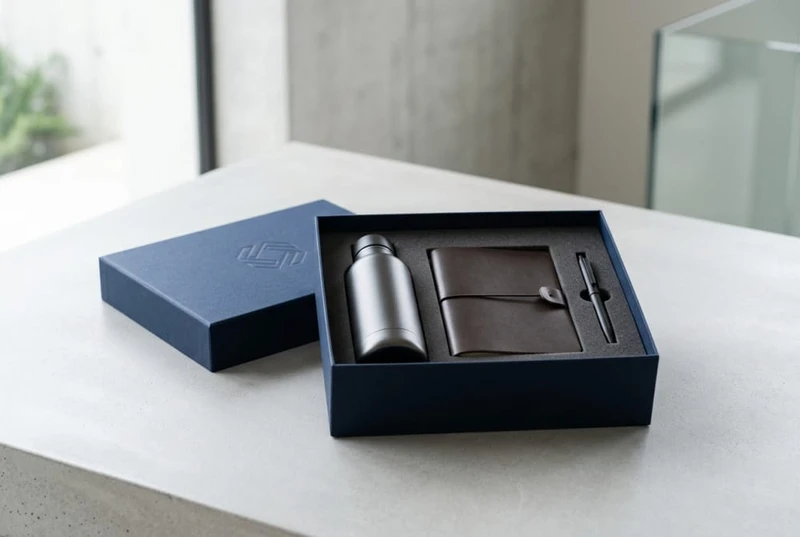
In Australia, corporate gifting works best when the packaging carries as much intent as the products inside. A branded notebook, drink bottle, snack pack, tech accessory, or welcome letter can feel ordinary in a plain carton, yet the same items can feel curated, premium, and campaign-specific when they are packed inside a custom structure designed for the audience, delivery method, and brand story. For B2B campaigns, packaging does more than protect goods in transit. It shapes first impressions, improves perceived value, supports account-based marketing, and helps teams organise gifting across onboarding, holiday outreach, partner engagement, event follow-up, and client retention programmes.
Australian buyers are also operating in a practical market. Freight routes between Sydney, Melbourne, Brisbane, Perth, Adelaide, and regional centres influence box dimensions, outer protection, and material choices. A pack that will be handed over at a conference in Darling Harbour needs a different construction from a branded kit moving through parcel networks into offices near the Port of Melbourne or distribution centres around Western Sydney. This is where thoughtful gift packaging becomes commercially useful, not just visually appealing.
For businesses comparing options, a well-built gift packaging solution can help standardise campaign quality across multiple recipients while still allowing room for custom inserts, stickers, notes, and premium finishes. It also creates consistency between sales, marketing, HR, and customer success teams that all rely on physical gifting for relationship building.
Why premium gift packaging matters in the Australian B2B market
Australian corporate buyers are increasingly using physical gifting to create memorable moments in a crowded digital environment. Whether the goal is to win attention from high-value accounts in Sydney, strengthen channel partnerships in Melbourne, support onboarding in Brisbane, or deliver event mailers to attendees in Canberra, packaging gives the recipient an immediate signal about care, budget, and brand standards. A premium box does not need to be excessive. It needs to be intentional, durable, and aligned with the recipient experience.
That shift is especially relevant for companies sending mixed-product kits. Many B2B gifts combine printed collateral, promotional merchandise, edible products, apparel, drinkware, and accessories. Without custom structures, these kits can look improvised. With the right fitments, partitions, wraps, and finishing touches, the same collection feels designed as one branded story.
| Campaign type | Typical recipients | Usual contents | Main packaging need | Recommended structure | Why it matters |
|---|---|---|---|---|---|
| Employee onboarding | New hires | Apparel, handbook, notebook, drink bottle | Neat presentation and internal organisation | Rigid or reinforced mailer with insert | Creates a strong first-day brand impression |
| Holiday gifting | Clients and partners | Food, wine accessories, premium merchandise | Gift feel and seasonal visual appeal | Magnetic box or premium lid-and-base | Signals appreciation and value |
| Event follow-up | Leads and attendees | Brochure, samples, branded item, note | Compact shipping and campaign branding | Postal mailer with compartments | Keeps post-event engagement consistent |
| ABM outreach | Target accounts | Highly tailored items and messaging | Personalisation and segmentation | Custom insert box with variable labelling | Supports account-specific storytelling |
| Retention campaign | Existing customers | Thank-you gifts, consumables, cards | Warm unboxing and efficient fulfilment | Branded foldable box | Reinforces relationship beyond the invoice |
| Sales enablement packs | Prospects and channel teams | Samples, print pieces, demo accessories | Protection and information hierarchy | Book-style presentation box | Makes the product story easier to absorb |
The table shows that the best packaging choice depends on campaign purpose, recipient profile, and fulfilment method. In the Australian market, where freight cost and delivery timing can vary significantly between metro and regional destinations, packaging should be selected with both brand impact and practical movement in mind.
Market signals shaping B2B gift packaging demand in Australia
Demand for premium presentation has grown as more companies treat gifting as a formal part of account strategy rather than an occasional gesture. Technology firms, professional services teams, property groups, education providers, finance brands, and healthcare suppliers all use physical kits to support brand recall and deepen relationships. Australian procurement teams are now looking for packaging that can scale across multiple states while still allowing campaign-specific graphics, sticker identification, and premium tactile details.
The market growth line reflects a practical reality: as digital channels become more crowded, physical brand experiences gain strategic value. Through 2026, growth is expected to be influenced by three major factors. First, ABM programmes will keep demanding more segmented packaging and variable inserts. Second, sustainability expectations from Australian buyers will push demand toward recyclable papers, lower-plastic designs, and shipping-efficient structures. Third, compliance and reporting pressures will encourage better packaging specification, clearer sourcing, and more consistent manufacturing standards.
This trend affects local buying behaviour in major business centres including Sydney, Melbourne, Brisbane, Perth, and Adelaide. It also matters in logistics-heavy corridors connected to the Port Botany precinct, the Port of Melbourne, Fremantle, and major airport freight hubs, where box size, stackability, and damage resistance influence total campaign performance.
Box concepts for onboarding kits, holiday gifts, event mailers, and promotional sets
Different campaign types need different box concepts. For onboarding kits, the priority is usually order and brand immersion. New starters should open the box and immediately see a coherent arrangement: welcome note first, then apparel, stationery, and practical desk items placed in fitted sections. A rigid mailer or reinforced corrugated box with a clean internal platform often works best here because it balances premium feel with shipping efficiency.
Holiday gifts tend to benefit from a more ceremonial opening experience. Magnetic closure boxes, wrap-around presentation cartons, or lid-and-base designs create anticipation and make food, glassware, candles, tea, coffee accessories, or branded keepsakes feel more considered. In Australia, many holiday programmes are sent during a peak freight period, so outer protection should be strong even when the inner box is premium.
Event mailers usually need to be lighter and more cost-aware. If you are sending pre-event packs to attendees in Melbourne or post-event follow-up kits to contacts met in Sydney, slim custom mailers with die-cut sections can hold brochures, lanyards, samples, vouchers, and a branded item without becoming bulky. Promotional sets for product launches or partner campaigns often need hybrid structures that combine sample protection with visual merchandising.
| Use case | Box concept | Best contents | Strength level | Presentation impact | Notes for Australia |
|---|---|---|---|---|---|
| Onboarding kit | Rigid mailer with layered insert | Apparel, stationery, welcome cards | High | Professional and organised | Suitable for interstate office delivery |
| Holiday gift box | Magnetic closure box | Premium merchandise and gourmet items | Medium to high | Very high | Add outer shipper for parcel networks |
| Event mailer | Custom foldable postal box | Leaflets, samples, small gifts | Medium | Clean and efficient | Works well for large-volume dispatch |
| Promotional set | Compartment box with dividers | Mixed merchandise categories | High | Highly curated | Good for campaign consistency |
| VIP account gift | Rigid lid-and-base box | Premium accessories and notes | High | Executive | Ideal for ABM and client retention |
| Channel partner pack | Book-style presentation box | Sales tools, samples, merchandise | High | Structured and informative | Useful for product education packs |
If you are specifying a custom box for branded campaigns, it helps to choose the structure only after listing the products, recipient journey, and shipping path. That reduces wasted material, minimises movement inside the box, and improves the final reveal.
How custom structures make mixed-product gift kits feel more intentional
Mixed-product kits can easily feel random when they are packed into a generic carton with loose filler. Custom structures solve that by introducing hierarchy. The first layer may hold a branded message card. The second may reveal a main item such as a mug or tech accessory. Lower sections might contain snacks, documents, or smaller merchandise pieces. This staged arrangement gives the recipient a guided experience rather than a simple unpacking task.
Custom inserts are especially important when a campaign combines different weights and materials. A glass bottle beside a soft notebook and a metal pen will shift during freight unless the internal layout has been designed properly. Die-cut cardboard inserts, sleeves, folded partitions, and wrapped platforms can hold each item in place and avoid the visual clutter that damages perceived quality.
For Australian campaigns, this is useful when packs are travelling long distances or moving through several handling points. A structured kit sent from a distribution point in Sydney to Perth, Darwin, or regional Queensland benefits from a design that reduces rattling and crush risk. Even for hand-delivered sets at trade events, intentional structure helps the gift look premium when opened on the spot.
The area chart highlights an ongoing trend: structured packaging is replacing generic outer cartons in higher-value gifting programmes. The reason is simple. Buyers want a better ratio between campaign spend and recipient impact. Instead of investing more in the product mix alone, they are using structure to make a standard set of items feel more premium and more brand-specific.
Sticker options for personalisation, campaign grouping, and account segmentation
Stickers are one of the most flexible tools in corporate gift packaging because they add campaign control without requiring a full redesign of the box. A single base box can be used across multiple audiences, while sticker variations identify account tiers, event streams, industry sectors, territories, or seasonal promotions. This is particularly useful for ABM programmes, where each segment may need different messaging while the overall visual system stays consistent.
For example, a software company targeting enterprise accounts in Sydney can use one sticker design, while growth-stage prospects in Brisbane receive another. New channel partners in Melbourne might get a third version tied to onboarding content. Colour-coded seals, recipient name labels, product callouts, tamper closures, and campaign badges can all be added quickly, helping operations teams distinguish kits during packing and dispatch.
Sticker materials also matter. Matte paper can create a refined feel for premium gifts, gloss stock gives more pop to event mailers, and durable adhesive options help when packs face warm conditions during transport. Businesses looking for segmentation tools can use custom stickers for branded packaging to support personalisation without changing every printed component in the pack.
| Sticker type | Best use | Packaging stage | Campaign benefit | Visual effect | Operational benefit |
|---|---|---|---|---|---|
| Name sticker | Personalised executive gifting | Final packing | Improves relevance | Personal and direct | Easy recipient sorting |
| Segment colour label | ABM tiers and account groups | Assembly line | Supports campaign grouping | Clear coded identity | Faster warehouse handling |
| Tamper seal | Postal dispatch | Box closure | Improves trust | Clean branded finish | Confirms unopened condition |
| Event badge sticker | Conference and expo mailers | Pre-dispatch | Ties pack to event identity | Campaign-specific accent | Easier stock allocation |
| Instruction sticker | Sample or tech kits | Internal insert | Improves usability | Informative | Reduces support questions |
| Limited-edition seal | Holiday or VIP campaigns | Final presentation | Raises perceived exclusivity | Premium focal point | Works across standard box runs |
When used carefully, stickers make campaign execution more agile. They are especially effective where Australian teams want to manage several customer cohorts without holding too many separate packaging SKUs.
Premium finishing details that suit modern corporate gifting projects
Finishing details influence how packaging feels before the recipient even touches the product. In modern corporate gifting, premium often means restrained rather than flashy. Soft-touch lamination, subtle embossing, foil accents, textured paper wraps, spot UV, ribbon pulls, and clean interior printing can all make a box feel elevated without losing commercial discipline.
For B2B brands in Australia, the right finish should match the campaign objective and industry tone. Financial services, legal, and consulting firms usually benefit from understated details such as blind embossing, debossed logos, matte finishes, and monochrome palettes. Consumer-facing tech and lifestyle brands may use brighter internal colours, foil highlights, or more expressive graphic treatments. Sustainable gifting programmes often lean toward uncoated or lightly finished stocks that communicate material honesty.
Premium finishing also affects photography and social sharing. While B2B gifting is not usually designed for influencer-style exposure, recipients still notice visual quality. A box with sharp print registration, smooth folds, precise fit, and a refined opening mechanism leaves a stronger memory than a heavily branded but poorly finished carton.
| Finish | Appearance | Best for | Perceived value | Practical note | Recommended brand style |
|---|---|---|---|---|---|
| Soft-touch lamination | Velvety matte surface | Executive gifting | High | Use on presentation-focused boxes | Premium and contemporary |
| Foil stamping | Metallic logo or accents | Holiday campaigns | High | Best used sparingly | Celebratory and polished |
| Embossing | Raised tactile detail | Luxury client packs | High | Effective on thicker stock | Subtle prestige |
| Spot UV | Gloss highlight on matte base | Product launch kits | Medium to high | Works with bold graphics | Modern and visual |
| Textured paper wrap | Natural tactile grain | Sustainable gifting | Medium to high | Choose durable wrap papers | Warm and crafted |
| Ribbon or pull-tab | Guided opening feature | Layered gift reveals | Medium | Add only when useful | Intentional and gift-like |
The explanation from the table is simple: finishes should support the brand story rather than compete with it. The best premium boxes in B2B settings usually combine two or three compatible finishes instead of trying every available effect.
Packaging methods for shipping branded merchandise or handing it out in person
Not every gift pack is used the same way. Some are sent through courier and postal networks. Others are handed out at conferences, leadership retreats, sales meetings, roadshows, or customer visits. The packaging method should reflect that difference from the start.
For shipping, double-layer logic is often the best approach: an attractive internal gift box and a practical external shipper. This protects premium finishes from scuffs and reduces the chance that the recipient sees transit labels on the presentation box. In Australia, where boxes may travel across long distances and climate conditions, this method also improves consistency.
For handouts, ease of carrying becomes more important. Lightweight foldable cartons with handles, sleeves, or compact rigid sets work well for in-person events in venues across Sydney Olympic Park, the Melbourne Convention precinct, or Brisbane exhibition spaces. These packs need to look good immediately and remain easy to transport between sessions, car parks, and hotels.
| Delivery format | Main packaging style | Protection level | Best contents | Cost efficiency | Best application |
|---|---|---|---|---|---|
| Postal dispatch | Gift box inside outer mailer | Very high | Premium mixed-product kits | Medium | Executive and interstate campaigns |
| Courier freight | Reinforced corrugated custom box | High | Heavy merchandise | High | Bulk fulfilment to offices |
| Conference handout | Compact foldable carton | Medium | Brochures and light merchandise | High | Trade shows and expos |
| VIP in-person delivery | Rigid presentation box | Medium | High-value curated gifts | Medium | Account meetings and board visits |
| Roadshow kit | Sleeved box with handle or carry fit | Medium | Portable promotional sets | Medium | Sales tours and field events |
| Retail-style collection point | Display-ready gift carton | Low to medium | Pre-packed branded merchandise | High | Pickup events and pop-ups |
In practice, businesses should map the full movement of the gift pack before selecting a structure. That includes warehousing, pick and pack, courier transfer, reception handling, and final opening. The more steps involved, the more important strong edges, secure inserts, and protective outer layers become.
Common packaging weaknesses that reduce the perceived value of promotional gifts
Promotional gifts lose impact when packaging feels improvised or inconsistent. One common weakness is oversizing. A large box with a small number of items immediately suggests poor planning and increases product movement. Another is weak internal retention. If contents slide, collide, or arrive disordered, the recipient notices the lack of care before seeing the products clearly.
Low-quality print is another risk. Inconsistent colour, blurry logos, poor folds, exposed glue marks, or peeling labels all reduce confidence in the brand. Weak closure systems can also undermine a premium experience, especially when a box opens accidentally in transit or arrives dented because the board grade was not matched to the load.
Australian businesses should be especially careful with seasonal conditions and shipping pathways. Heat, long-haul handling, and urban-to-regional transit can expose poor adhesives, weak corners, and under-specified outer packaging. That is why the cheapest pack format often becomes the most expensive once replacement shipments, damaged brand perception, or rushed rework are factored in.
The bar chart suggests where demand is strongest. Technology and professional services often require the highest level of presentation because they use gifting in lead generation, onboarding, event marketing, and relationship expansion. Finance, property, healthcare, and education also rely on gift packaging, but their projects may vary more in budget and compliance requirements.
How gift packaging supports ABM, retention, and relationship-building campaigns
Gift packaging plays a strategic role in account-based marketing because it helps convert product bundles into account-specific experiences. A well-designed box can carry a campaign narrative from the outside panel to the insert card and then to the product arrangement inside. For a target account, that consistency signals that the outreach was planned rather than automated.
In retention campaigns, packaging helps reinforce appreciation without overcomplicating the gift itself. Existing customers do not always need expensive items. Often, they respond better to relevant merchandise or practical consumables presented with care, consistency, and a clear message. The box, insert, and sticker system all contribute to that feeling of considered follow-through.
Relationship-building campaigns also benefit from packaging because they create repeatable standards. A company can run a sequence of touchpoints over a year: a welcome kit, a post-event follow-up mailer, a mid-year appreciation gift, and a holiday box. If these all share a coherent visual system but vary through personalisation, recipients begin to associate the packaging experience with the brand itself.
This matters in Australian B2B settings where relationships often develop over long sales cycles and across dispersed teams. A physical gift arriving in Perth from a Sydney head office or in regional Victoria from a Melbourne sales team can maintain closeness that digital channels struggle to match.
When simple cartons are no longer enough for premium B2B gifting programmes
Simple cartons are fine for low-risk, low-value, or purely functional distribution. They stop being enough when the campaign aims to impress, differentiate, segment, or deepen relationships. If the gift includes multiple products, targets senior decision-makers, represents a key account, or supports a premium brand position, a standard carton will often limit the result.
There are several signs that it is time to upgrade. The first is when gifts are being photographed internally or shared with teams because the box is part of the campaign story. The second is when fulfilment errors increase because different product combinations are hard to distinguish in plain cartons. The third is when marketing and sales teams need better personalisation, segmentation, or insert flexibility than stock packaging can provide.
Premium B2B gifting also requires consistency at scale. If one office in Melbourne uses a plain carton while another in Sydney uses a styled box, brand standards become uneven. A custom program can standardise dimensions, print quality, and inserts while still allowing localised content or account-specific stickering.
Comparing supplier and product approaches for Australian buyers
Australian businesses sourcing corporate gift packaging often compare local stock suppliers, promotional distributors, offshore manufacturers, and specialist custom packaging workshops. The right option depends on timeline, finish expectations, flexibility, and the complexity of the campaign.
The comparison chart shows why specialist custom suppliers tend to perform better for premium gifting programmes. Stock packaging providers can be useful for speed and simplicity, but they usually offer less freedom in internal structure, finish detail, and campaign segmentation. For buyers running ABM, onboarding, or branded mailer programmes, that flexibility often matters more than the lowest unit price.
Product types and applications by industry
Corporate gift packaging in Australia spans many industries, each with different expectations. Technology companies often use launch kits, employee welcome packs, and account-specific send-outs. Financial and legal firms lean toward understated executive gifts. Property groups use settlement, partner, and VIP event boxes. Universities and training institutions use alumni and stakeholder mailers. Healthcare and wellness suppliers often require careful organisation for educational materials and samples.
| Industry | Typical campaign | Common pack contents | Packaging style | Main buying concern | Recommended emphasis |
|---|---|---|---|---|---|
| Technology | ABM and onboarding | Tech accessories, notebooks, notes | Structured mailer or rigid kit | Personalisation | Inserts and segmentation stickers |
| Finance | Client appreciation | Desk gifts, cards, gourmet items | Minimalist premium box | Brand tone | Refined finishes and subtle design |
| Property | Settlement and VIP gifting | Keys, home gifts, documents | Rigid lid-and-base box | Presentation impact | Layered reveal and protection |
| Education | Alumni and stakeholder mailers | Merchandise, print, keepsakes | Postal kit with compartments | Budget control | Scalable design system |
| Healthcare | Partner and awareness campaigns | Samples, literature, branded items | Clear-organised insert box | Accuracy and usability | Labelling and internal logic |
| Professional services | Retention and referral campaigns | Thank-you gifts and notes | Elegant compact gift box | Consistency | Premium feel without excess |
The explanation here is that packaging should reflect the decision context of each industry. What works for a software launch in Surry Hills may not suit a private client gift in Collins Street or a university outreach program in inner Brisbane.
Buying advice for Australian procurement and marketing teams
When evaluating suppliers, start with campaign objectives rather than starting with box style. Clarify who will receive the pack, what products go inside, how the gift is delivered, which teams need access to it, and what level of personalisation is required. Then review structure, board grade, insert type, finish, sticker plan, and assembly workflow.
It is also worth checking production flexibility. Some campaigns need a small pilot run before a larger rollout. Others need volume from the start. The best packaging partners can support both. They can recommend practical material choices, protect design quality during scale-up, and help avoid unnecessary complexity in the assembly process.
For Australia, ask specific questions about freight resilience, outer shipper requirements, and lead times around seasonal peaks. A premium box that works well in a showroom sample still needs to survive dispatch to recipients in suburban business parks, CBD towers, industrial estates, and regional addresses.
Case examples from common B2B campaign scenarios
Consider three realistic campaign examples. First, a national software company sends employee onboarding kits from Sydney to new hires around Australia. The gift includes a hoodie, notebook, bottle, laptop accessories, and a welcome letter. A reinforced mailer with a fitted insert keeps apparel separate from hard goods and delivers a polished first impression.
Second, a property developer in Melbourne sends holiday gifts to investor partners and consultants. The pack includes premium food items, a branded card, and a desk accessory. A rigid magnetic box with a subtle foil logo and outer shipper gives the right balance of presentation and parcel protection.
Third, a healthcare supplier in Brisbane runs an event follow-up campaign after a conference. Attendees receive educational material, a small sample item, and a branded notebook. A slim custom mailer with segmented internal space keeps the pack lightweight while ensuring materials remain clean and ordered.
In each case, the packaging is not decorative extra cost. It directly improves campaign clarity, consistency, and recipient response.
Our company approach for the Australian market
For Australian buyers, our approach is built around dependable production quality, practical customisation, and campaign-ready service. On the technology side, our workshop uses advanced equipment to support accurate printing, precise converting, consistent finishing, and reliable sticker production. That technical capability helps us maintain cleaner folds, stable colour output, sharper branding details, and more dependable fit for inserts and structural components.
On the manufacturing side, we handle both smaller customised runs and larger-volume production with close attention to detail from material selection through final inspection. This matters for B2B gifting because box quality needs to stay consistent whether you are trialling a premium executive mailer or rolling out a larger multi-city campaign. We build gift boxes, paper boxes, stickers, and packaging formats designed to suit a wide variety of branded merchandise combinations.
On the service side, we focus on flexibility and efficiency so clients can move from concept to production with less friction. That includes supporting different campaign volumes, helping align structure with product mix, and maintaining quality checks that reduce avoidable issues before dispatch. For businesses serving the Australia market, this combination of technical control, production adaptability, and responsive service can make packaging easier to scale across onboarding, events, holiday gifting, and account-based outreach.
2026 trends shaping premium B2B gift packaging
Looking ahead to 2026, three trends are likely to shape packaging decisions in Australia. The first is technology integration. Variable data printing, QR-linked welcome experiences, and more precise digital proofing will make personalisation easier without forcing full artwork changes for every campaign segment. The second is policy and procurement pressure. Buyers will increasingly ask for recyclable formats, reduced plastic content, and clearer evidence of material choices as sustainability reporting becomes more formal. The third is freight-aware design. Rising transport costs and efficiency targets will push brands toward packs that use less empty space while keeping the unboxing experience strong.
We also expect more Australian businesses to shift from one-off gifts to planned annual gifting systems. Instead of building each campaign from scratch, they will develop a packaging platform with standard outer dimensions, modular inserts, and adaptable sticker or sleeve treatments. This approach helps procurement teams manage cost, improves consistency across departments, and makes it easier to respond to changing campaign needs.
FAQ
What is the best box style for mixed-product corporate gifts?
Usually a custom box with inserts or partitions. It keeps items stable, improves presentation, and makes the kit feel curated rather than randomly packed.
Are stickers useful for premium gifting, or do they look too basic?
They are highly useful when chosen well. Premium paper stocks, elegant shapes, and clean print can support personalisation, account grouping, and secure closures without lowering quality.
Should premium gift boxes always be rigid?
Not always. Rigid boxes are excellent for high-value presentation, but reinforced foldable mailers can also feel premium when designed with strong structure, precise printing, and smart inserts.
How do I choose between a shipping box and a handout box?
Start with the delivery path. If the pack will travel through parcel networks, prioritise protection and consider an outer shipper. If it will be handed over in person, focus on visual impact, portability, and easy carrying.
What makes simple cartons unsuitable for higher-end B2B gifting?
They often lack structure, personalisation options, finish quality, and unboxing intent. For executive gifts, ABM campaigns, and relationship-building programmes, those limitations can reduce perceived value.
Can premium packaging still support cost control?
Yes. Better-fit structures, modular inserts, and sticker-based segmentation can reduce wasted space, avoid damage, and help one box platform serve several campaigns efficiently.
In Australia, premium corporate gift packaging is not only about appearance. It is about creating a more deliberate experience for onboarding kits, holiday gifts, event mailers, and promotional sets while protecting products and improving campaign execution. When the structure, stickers, finishes, and delivery method are chosen carefully, branded merchandise feels more valuable, more relevant, and more memorable to the people receiving it.
