
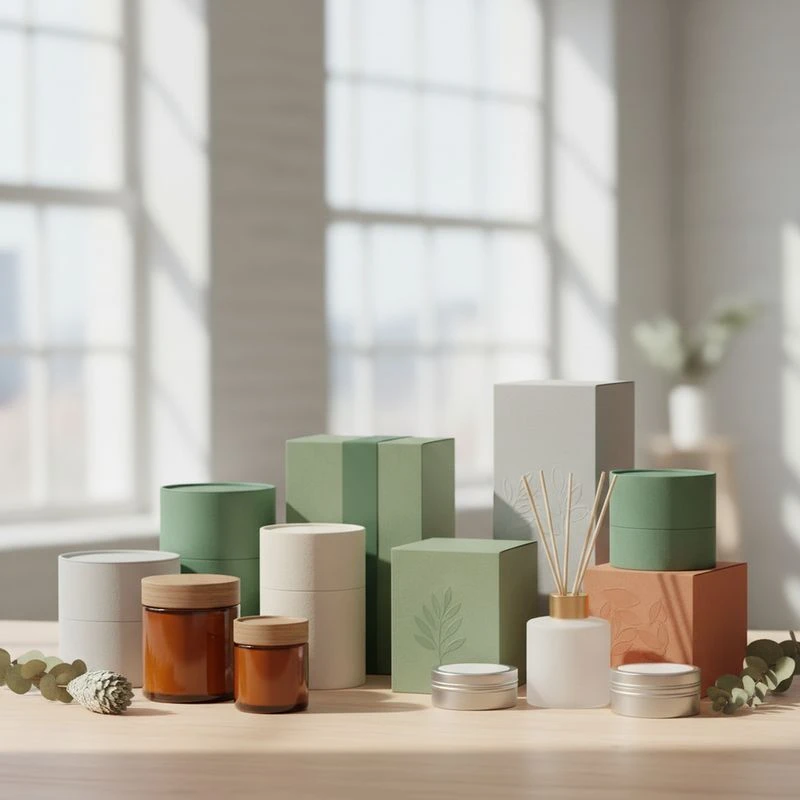
Unlock market potential and elevate your home fragrance brand with strategic, bespoke packaging solutions tailored for the Australian consumer. In the bustling market of Australia, where discerning customers seek both quality and a unique brand story, the role of custom packaging extends far beyond mere protection. It’s your brand’s first handshake, a silent salesperson, and a critical component in building lasting customer loyalty. For candle and home fragrance businesses, investing in thoughtfully designed, custom packaging is not just an option but a strategic imperative to stand out, communicate values, and create an unforgettable unboxing experience that resonates deeply with your target audience. This comprehensive guide will explore how tailored packaging can be a game-changer for your brand’s presence in Australia.
Candle Packaging
In the highly competitive Australian market for candles and home fragrance products, your packaging is often the first, and sometimes only, opportunity to make a lasting impression. Generic, off-the-shelf packaging simply won’t cut it when vying for consumer attention against a backdrop of established and emerging brands. The true power of custom packaging for candles and home fragrance brands lies in its ability to tell your unique brand story, communicate your values, and differentiate your product on crowded shelves or in online storefronts. Imagine a customer browsing; their eyes will naturally be drawn to packaging that is visually appealing, feels luxurious, and speaks to them directly.
Moving beyond mere aesthetics, custom candle packaging serves several crucial functional roles. Firstly, it offers essential protection, safeguarding delicate candles and fragile diffusers from damage during transit and handling. This is particularly important when considering the vast distances involved in distributing across Australia. Robust materials and smart structural design can prevent breakages, cracks, and scuffs, ensuring your product arrives in pristine condition, ready to delight the customer. Secondly, custom packaging provides an invaluable canvas for vital product information. This includes not just your brand logo and name, but also fragrance notes, burn times, safety warnings, and ingredient lists—all presented in a clear, cohesive, and brand-consistent manner. Failing to provide clear information can lead to customer dissatisfaction or, worse, safety concerns, so integrating this seamlessly into your design is paramount.
When embarking on your custom packaging journey for the Australian market, consider the local nuances. Australian consumers are increasingly environmentally conscious, making sustainable packaging options a significant differentiator. Exploring recycled materials, biodegradable alternatives, or packaging designed for repurposing can resonate strongly with your audience and enhance your brand’s reputation. Furthermore, the Australian climate can impact product stability; ensure your chosen materials and design can withstand varying temperatures and humidity without compromising product integrity or visual appeal. For instance, selecting materials resistant to warping or fading will maintain the premium look of your packaging over time. Practical examples might include a minimalist, earthy design for a bush botanicals range, using recycled kraft paper and soy-based inks, or a vibrant, coastal-inspired design for a beach-themed collection, featuring ocean-friendly packaging. Overlooking these details can be a pitfall, leading to packaging that doesn’t perform optimally or fails to connect with the values of Australian consumers. The solution lies in thorough research and working with packaging partners who understand both design aesthetics and material science tailored to your product and market.
The choice of material for your custom packaging is a fundamental decision that impacts both aesthetics and functionality. Here’s a comparison of common materials used for candle and home fragrance packaging:
| Material Type | Key Characteristics | Pros for Custom Packaging | Cons for Australian Market |
|---|---|---|---|
| Cardboard/Paperboard | Versatile, printable, various thicknesses. | Cost-effective, highly customisable, recyclable (often). Excellent for full-colour printing and intricate designs. | Less durable than rigid options, susceptible to moisture, perceived lower luxury unless treated with premium finishes. |
| Rigid Board (Chipboard) | Thick, sturdy, non-collapsible, often wrapped in paper. | Premium feel, robust protection, ideal for luxury brands, creates an excellent unboxing experience. | Higher cost, less space-efficient for shipping empty, heavier than paperboard. |
| Corrugated Cardboard | Fluted inner layer for strength and cushioning. | Exceptional protection, good for shipping multiple items, often made from recycled content. | Bulkier appearance, less refined for primary retail packaging (more for inserts/outer boxes). |
| Glass (for jars/bottles) | Transparent, weighty, recyclable. | Premium look, allows product visibility, widely recyclable in Australia. | Fragile, heavy (increases shipping costs), breakages during transit are a concern. |
Understanding these material properties is crucial for creating effective custom packaging for candles and home fragrance brands. While cardboard offers versatility and recyclability, rigid board provides that undeniable luxury feel that many Australian consumers associate with high-end products. Careful consideration of these factors will help ensure your packaging not only looks good but also performs optimally throughout its lifecycle, from production to the consumer’s home.
Luxury Boxes
For brands operating in the premium segment of the Australian candle and home fragrance market, luxury boxes are not merely packaging; they are an integral part of the product experience, enhancing perceived value and justifying a higher price point. In Australia, consumers are often willing to pay more for products that offer exceptional quality, unique design, and a memorable unboxing moment. A luxury box signals exclusivity and attention to detail from the moment it’s presented, transforming a simple purchase into an indulgent ritual. This sensory engagement builds anticipation and excitement, cementing a positive emotional connection between the customer and your brand.
The design of luxury boxes for custom packaging for candles and home fragrance brands goes beyond just pretty graphics. It involves careful consideration of materials, construction, and intricate details that elevate the entire product. Rigid boxes, often made from thick chipboard wrapped in premium paper, are a popular choice due to their robust structure and sophisticated feel. These boxes offer superior protection and a substantial weight that conveys quality. Think about a two-piece box with a perfectly fitting lid, a drawer-style box that slides open smoothly, or a box with a magnetic closure that offers a satisfying click when sealed. Each of these structural choices contributes significantly to the unboxing experience, turning it into a moment of discovery rather than just opening a package. For example, a high-end aromatherapy candle might come in a matte-finish rigid box with a subtle embossed logo, suggesting understated elegance.
To truly achieve a luxury aesthetic, attention must be paid to the interior of the box as much as the exterior. Custom inserts, precision-cut to hold the candle or diffuser securely, not only protect the product but also present it beautifully. These inserts can be made from various materials, including foam, velvet, or rigid paperboard, often colour-matched or contrasted with the box itself. Imagine a plush velvet insert cradling a delicate glass candle, or a sleek black foam insert holding a modern diffuser bottle firmly in place. These details prevent the product from shifting, which can be particularly important during shipping across Australia’s diverse landscapes, and enhance the overall presentation. Furthermore, incorporating elements like silk ribbons, custom tissue paper, or a small, branded thank-you card can add layers of sophistication and personalisation, making the customer feel valued and special. The pitfall here is investing in a beautiful exterior but neglecting the interior, which can lead to a disjointed and ultimately less luxurious experience. The solution is to design the entire unboxing journey holistically, ensuring every element reinforces the brand’s premium positioning.
Luxury packaging features are key differentiators for high-end candle and home fragrance brands:
| Feature Category | Specific Examples | Impact on Brand Perception | Considerations for Australia |
|---|---|---|---|
| Material Quality | Rigid board, specialty papers (textured, metallic), velvet or silk linings. | Immediately communicates high value, durability, and exclusivity. Elevates the tactile experience. | Sourcing sustainable luxury materials might be preferred by Australian consumers. Durability for varied climate. |
| Structural Design | Magnetic closures, drawer boxes, two-piece lift-off lids, custom inserts. | Creates an engaging, ritualistic unboxing experience. Ensures product security and pristine presentation. | Ease of assembly for manufacturers, efficiency for shipping and storage. |
| Finishes & Embellishments | Foil stamping (gold, silver), embossing/debossing, spot UV, soft-touch laminations, custom ribbons. | Adds visual appeal, tactile richness, and a bespoke feel. Highlights branding elements. | Balances elegance with Australian preference for understated sophistication; avoids over-the-top ostentation. |
| Brand Story Integration | Subtle branding on inserts, a printed brand narrative within the lid, a small, elegant brand booklet. | Connects the customer emotionally with the brand’s heritage, values, and product inspiration. | Authenticity and transparency in storytelling resonate strongly with Australian buyers. |
These luxury features are critical in shaping how consumers perceive your custom packaging for candles and home fragrance brands. By thoughtfully incorporating premium materials, sophisticated structures, and exquisite finishes, you create not just a container but a piece of art that enhances the overall product value and solidifies your brand’s position in the high-end Australian market. Each element works in concert to deliver an unparalleled experience, making every interaction with your brand memorable.
B2B Branding
For candle and home fragrance brands seeking to expand their reach across Australia, B2B branding through custom packaging is an indispensable strategy. When you’re approaching retailers, boutique stores, spas, or even corporate clients for bulk orders, your packaging speaks volumes about your brand’s professionalism, reliability, and commitment to quality. It’s not just about selling individual units; it’s about building lasting relationships and demonstrating that your brand is a trustworthy and desirable partner. In a B2B context, custom packaging acts as a silent but powerful advocate, reassuring potential stockists that your products will stand out on their shelves and appeal to their customer base.
Effective B2B custom packaging for candles and home fragrance brands extends beyond the individual product box. It encompasses the entire journey from your manufacturing facility to the retailer’s receiving dock. This includes the outer cartons for wholesale orders, internal dividers, and even any accompanying marketing materials. Consistency in branding across all these elements is paramount. A retailer receiving an order in generic, unbranded outer boxes might question your brand’s attention to detail, whereas a sturdy, branded shipping box immediately conveys a sense of professionalism and care. Practical examples include having your brand logo prominently displayed on all shipping cartons, using branded tape, or even including a beautifully designed wholesale catalogue or welcome kit within the first order. This level of consistency ensures that every touchpoint reinforces your brand identity, making it easier for retailers to trust and promote your products.
Furthermore, B2B packaging should be designed with the retailer’s operational needs in mind. This means considering ease of handling, storage, and display. Packaging that is stackable, clearly labelled, and robust enough to withstand multiple handling points will be greatly appreciated by your stockists. For instance, designing individual candle boxes with a flat top and bottom allows for stable stacking on shelves, and clear product information (like scent name and size) on multiple sides of the box aids in quick identification. Offering point-of-sale (POS) display units that are branded and easy to assemble can also be a significant value-add for your B2B partners. These might be small, branded counter displays for single candles or multi-tiered racks for collections. The pitfall here is creating beautiful individual product packaging but neglecting the practicalities of wholesale distribution, which can lead to frustration for retailers and damage your B2B relationships. The solution involves collaborating with your packaging provider to develop a cohesive strategy that addresses both aesthetic appeal and logistical efficiency, ensuring your products are not only desirable but also easy to manage for your business partners. By making it easier for retailers to do business with you, you foster stronger, more profitable partnerships across Australia.
Optimising custom packaging for B2B channels requires a different strategic focus than direct-to-consumer retail:
| Aspect of Packaging | B2B Branding Considerations | Direct-to-Consumer (DTC) Focus |
|---|---|---|
| Outer Shipping Cartons | Robust, branded with clear logos, product codes, and handling instructions. Optimised for bulk shipping and palletization. | Less emphasis on large outer cartons, more on individual product protection within smaller shipping boxes. |
| Internal Product Boxes | Maintain brand consistency and retail-ready presentation. May include simpler construction to reduce cost for volume orders. | Often more elaborate, with luxury finishes, bespoke inserts, and a focus on the unboxing experience for single purchase. |
| Information & Labelling | Clear, concise product information (SKU, scent, quantity) visible for inventory management. May include wholesale pricing guides. | Focus on consumer-facing information: brand story, detailed fragrance notes, aesthetic safety warnings. |
| Marketing & Support Materials | Inclusion of branded display units, marketing collateral for retailers (e.g., product knowledge sheets, lifestyle imagery). | Personalised notes, loyalty program information, cross-selling inserts for future purchases. |
| Sustainability | Focus on reducing waste in bulk packaging, using recycled content for cartons, and materials that are easy for retailers to recycle. | Emphasis on aesthetically pleasing sustainable materials for individual product packaging, with strong eco-messaging. |
Understanding these differences is crucial for any brand looking to succeed in both the retail and wholesale sectors of the Australian market. When developing custom packaging for candles and home fragrance brands, ensuring your B2B solutions are as thoughtful and professional as your DTC offerings will solidify your reputation and facilitate smoother, more profitable relationships with your business partners. This dual approach maximizes your market penetration and strengthens your overall brand presence.
Design Finishing
The selection of design finishing techniques for custom packaging for candles and home fragrance brands is where true artistry meets tactile luxury. These aren’t mere afterthoughts; they are integral elements that elevate the aesthetic appeal, communicate brand quality, and engage the consumer’s senses. In Australia’s competitive market, where consumers often make split-second purchasing decisions, sophisticated finishes can be the decisive factor that differentiates your brand from the rest. A well-chosen finish can transform a simple paperboard box into a sensory experience, hinting at the quality of the product within and reinforcing your brand’s premium positioning.
Consider the power of tactile finishes, which invite consumers to touch and explore the packaging before even opening it. Soft-touch lamination, for instance, provides a velvety, almost rubbery feel that instantly conveys a sense of luxury and sophistication, making the package a pleasure to hold. This contrasts sharply with a standard matte or gloss finish, offering a unique haptic experience that sets your brand apart. Beyond touch, visual finishes like foil stamping (hot foil or cold foil) add a dazzling metallic sheen that catches the light and the eye. Gold, silver, rose gold, or even holographic foils can be used to highlight your brand logo, key messaging, or intricate design elements, creating a striking visual impact. Imagine a sleek, black candle box with a shimmering gold foil logo; it exudes opulence and elegance, instantly drawing the consumer’s attention on a store shelf or in an online gallery.
Embossing and debossing are two other powerful techniques that add a third dimension to your packaging. Embossing raises specific design elements, creating a sculptural effect that makes them literally stand out, while debossing presses them inward, creating a recessed texture. Both methods add a sophisticated, tactile dimension without relying on colour, often used to subtly highlight logos, patterns, or intricate details, giving the packaging a handcrafted feel. These techniques are particularly effective for minimalist brands that prefer understated elegance over bold graphics. Another impactful finish is Spot UV, which involves applying a clear, glossy coating to specific areas of a matte-finished package. This creates a striking contrast between the matte and glossy textures, drawing attention to particular elements and adding a dynamic visual interest. For example, a floral pattern on a candle box could have its petals enhanced with Spot UV, making them visually pop against a matte background. The pitfall here is either overdoing the finishes, leading to a cluttered or gaudy look, or choosing finishes that don’t align with the brand’s core aesthetic. The solution lies in strategic application, using one or two complementary finishes to enhance, rather than overwhelm, the overall design, ensuring each choice serves to reinforce the brand’s identity and communicate its unique value proposition to the Australian consumer.
Here’s a breakdown of popular design finishing techniques and their strategic application:
| Finishing Technique | Description | Brand Impact / Sensory Experience | Best Suited For |
|---|---|---|---|
| Soft-Touch Lamination | A thin, matte film applied over the surface, creating a velvety, smooth texture. | Conveys luxury, sophistication, and a premium feel. Invites tactile interaction. | High-end, minimalist, or wellness-focused custom packaging for candles and home fragrance brands. |
| Foil Stamping (Hot/Cold) | Application of metallic (gold, silver, copper, etc.) or pigmented foil to specific areas. | Adds shimmer, glamour, and a strong visual focal point. Denotes high quality and celebration. | Luxury, festive, or celebratory custom packaging for candles and home fragrance brands. Logo highlighting. |
| Embossing/Debossing | Raising (embossing) or lowering (debossing) specific areas of the paper to create a 3D effect. | Adds tactile depth and a sophisticated, handcrafted feel. Subtly draws attention to details. | Elegant, understated, or artistic custom packaging for candles and home fragrance brands. Logo or pattern emphasis. |
| Spot UV | Applying a clear, high-gloss coating to selected areas over a matte or dull finish. | Creates a striking contrast between glossy and matte, adding visual intrigue and emphasis. | Modern, artistic, or detail-oriented custom packaging for candles and home fragrance brands. Highlights graphics or text. |
| Die-Cutting | Using a sharp steel rule die to cut specific shapes, windows, or intricate patterns into the packaging. | Allows for unique shapes, peek-through windows, or custom inserts. Enhances uniqueness and functionality. | Innovative, playful, or functional custom packaging for candles and home fragrance brands. Reveals product. |
Each of these design finishing techniques offers unique ways to enhance your custom packaging for candles and home fragrance brands, making them more appealing and memorable. By carefully selecting and combining these finishes, you can create a truly distinctive product that captures the essence of your brand and resonates powerfully with discerning Australian consumers, turning ordinary packaging into an extraordinary brand experience.
Gift Appeal
In the vibrant Australian retail landscape, where candles and home fragrances are perennial favourites for gifting, the ‘gift appeal’ of your custom packaging is paramount. Often, these products are not purchased for self-consumption but as thoughtful presents for friends, family, or colleagues. Therefore, designing packaging that is inherently gift-ready can significantly boost sales, drive impulse purchases, and distinguish your brand in a crowded market. A product that looks beautiful and complete without requiring additional wrapping adds immense value for the busy gift-giver, streamlining their purchase decision and enhancing their overall experience with your brand.
To cultivate strong gift appeal, your custom packaging for candles and home fragrance brands should embody a sense of occasion and thoughtfulness. This begins with the immediate visual impression: elegant aesthetics, harmonious colour palettes, and premium materials all contribute to making the product feel special. Consider how a simple satin ribbon, pre-tied around a beautifully designed box, instantly elevates it to gift status. Or how a small, integrated tag or space for a handwritten message transforms the package into a personalised offering. These small details signal that the product is intended for a meaningful exchange, aligning perfectly with the Australian gifting culture where presentation is often as important as the gift itself. For example, a luxurious soy candle in a rigid box with a magnetic closure and a subtle, debossed pattern communicates a sophisticated gift choice. Conversely, a charmingly illustrated box with playful typography might be perfect for a more whimsical, friendly gift, appealing to a different segment of the gifting market.
Beyond individual product presentation, think about multi-item gift sets. Custom-designed outer boxes that elegantly house a collection of candles, a diffuser and candle pairing, or a selection of miniature home fragrances can be incredibly attractive to gift-buyers. These sets offer a comprehensive and often more impressive gift solution, and the packaging itself becomes a significant part of the perceived value. Ensure these larger gift boxes maintain the same high standard of design and finishing as your individual products, providing a cohesive brand experience. Furthermore, consider packaging that is designed for repurposing; an elegant box that can be used for storage after the candle is finished adds lasting value and contributes to a more sustainable image, a trait highly valued by Australian consumers. The potential pitfall here is assuming that an attractive product alone is enough. Without packaging that actively facilitates and enhances the gifting process, you risk losing sales to competitors whose products are more visibly gift-ready. The solution lies in proactively designing with the gift-giver in mind, offering a seamless and beautiful experience from purchase to presentation. By integrating thoughtful details and considering various gifting scenarios, your custom packaging for candles and home fragrance brands can unlock significant market potential within the Australian gift economy.
