
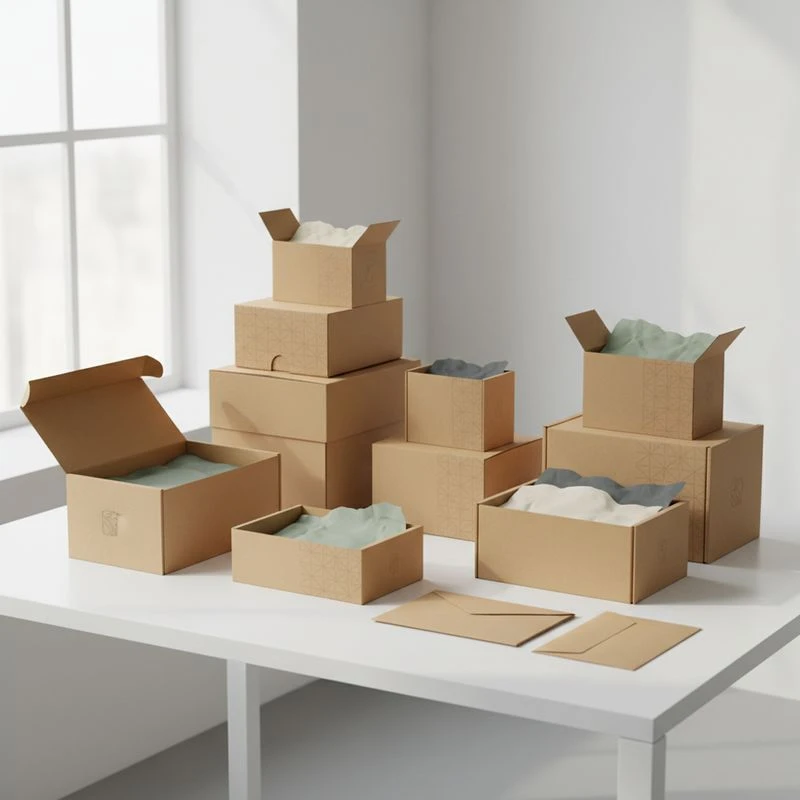
Transforming Shipments into Brand Experiences and Boosting Customer Loyalty Down Under
Ecommerce Packaging
In the dynamic and highly competitive Australian e-commerce landscape, custom packaging has transitioned from a mere logistical necessity to an indispensable strategic asset. The takeaway is clear: Generic packaging is no longer sufficient; to truly stand out and cultivate a loyal customer base, businesses operating in Australia must embrace custom packaging for e-commerce fulfillment. The reasoning behind this shift is multifaceted. Custom packaging serves as the primary physical touchpoint between an online brand and its customer. When a package arrives, its appearance immediately sets the tone for the unboxing experience. Thoughtfully designed packaging communicates professionalism, attention to detail, and a commitment to quality that generic boxes simply cannot convey. For Australian consumers, who are increasingly valuing authenticity and unique brand experiences, this first impression is critical.
Beyond aesthetics, custom packaging plays a crucial role in product protection, especially given Australia’s vast distances and varied climatic conditions. From the scorching heat of the outback to the humid coastal regions, products need robust protection during transit. Custom inserts, void fill, and specially chosen materials minimise damage, reducing costly returns and negative reviews. Furthermore, custom packaging is a powerful tool for reinforcing brand identity. It’s an opportunity to extend your brand story beyond your website, using colours, logos, and messaging that resonate with your target audience. For a brand selling eco-friendly products, for example, using recyclable or compostable custom packaging aligns perfectly with their values and appeals to Australia’s growing segment of environmentally conscious consumers.
To implement this effectively, businesses should start by evaluating their product range and typical shipping conditions. For delicate items, consider custom-designed rigid boxes with precise inserts. For apparel, custom poly mailers or sturdy cardboard boxes with branded tissue paper can elevate the experience. When selecting materials, prioritise durability, sustainability, and how well they reflect your brand values. Practical steps include consulting with Australian packaging suppliers who understand local regulations and environmental standards, conducting test shipments to ensure product integrity, and actively seeking customer feedback on the unboxing experience. A common pitfall is over-packaging, which increases costs and environmental impact, or under-packaging, leading to product damage. The solution lies in right-sizing your custom packaging for e-commerce fulfillment, ensuring maximum protection with minimal waste. This not only optimises shipping costs but also resonates positively with Australian consumers who appreciate responsible business practices. By investing in tailored packaging, Australian e-commerce businesses can transform a simple delivery into a memorable and engaging brand interaction, fostering loyalty and driving repeat purchases.
Shipping Boxes
The selection of appropriate shipping boxes, especially with custom elements, is unequivocally fundamental to achieving both paramount product safety and optimal cost efficiency for any Australian e-commerce operation. This isn’t merely about finding a container; it’s about choosing a robust, appropriately sized, and branded vessel that can withstand the unique rigours of shipping across Australia’s diverse geography. The reasoning here is twofold: protection and economics. Shipping boxes are the frontline defence for your products against the bumps, drops, and environmental fluctuations encountered during transit from Sydney to Perth, or Melbourne to a regional town. They must protect contents from impact, moisture, and even temperature changes, which are common across Australia’s varied climates. An inadequate box material or design will inevitably lead to product damage, sparking customer complaints, costly returns, and significant reputational harm, all of which are amplified in the online review-driven market.
From an economic standpoint, the dimensions and weight of shipping boxes directly impact freight costs, which can be a substantial overhead for Australian businesses, given the vast distances involved. Using generic, oversized boxes leads to unnecessary void fill, increased volumetric weight, and consequently, higher shipping charges. Custom-sized boxes, tailored to your products, dramatically reduce this wasted space and weight, offering significant savings over time. Actionable steps involve a thorough evaluation of various box types. For heavier or more fragile items, double-wall or even triple-wall corrugated boxes provide superior protection, an investment that often pays off by preventing damage. For lighter, non-fragile goods like apparel, custom poly mailers or single-wall corrugated boxes might be more suitable. It’s crucial to consider custom dimensions to minimise dead space, which not only saves on shipping costs but also reduces the need for excessive void fill, aligning with sustainable practices.
Furthermore, integrating custom branding elements directly onto the shipping box transforms a utilitarian item into a powerful marketing opportunity. A well-designed custom box carrying your logo, brand colours, or a unique pattern extends your brand’s presence from the digital storefront to the customer’s doorstep. Potential pitfalls include using flimsy materials that compromise product safety or opting for generic sizes that inflate shipping costs. Another common mistake is overlooking the aesthetic potential of the box itself, missing a prime opportunity for brand reinforcement. Solutions involve partnering with packaging specialists who can advise on optimal box sizes and materials for your specific products and shipping routes within Australia. Explore options for flat-pack boxes for efficient storage, which is crucial given often-limited warehouse space. Always verify your custom packaging for e-commerce fulfillment dimensions with Australia Post or your chosen courier’s specific guidelines to avoid unexpected surcharges. Opting for boxes made from recycled content or those that are easily recyclable themselves will also resonate strongly with the increasing number of environmentally conscious Australian consumers.
| Box Type | Ideal Use Case | Customisation Potential | Cost-Effectiveness | Suitability for Australia |
|---|---|---|---|---|
| Single-Wall Corrugated | Light to medium weight, less fragile items (e.g., apparel, books) | Moderate (flexo/digital print) | High for basic protection | Good for local metro, less for long-haul/fragile shipments |
| Double-Wall Corrugated | Medium to heavy, fragile items (e.g., electronics, ceramics) | High (flexo/digital print, custom inserts) | Medium, offers superior protection | Excellent, especially for interstate shipping across long distances |
| Rigid Mailer Boxes | Premium, delicate, or high-value items (e.g., luxury goods, cosmetics) | Very High (full-colour, specialty finishes, custom inserts) | Lower volume, higher per-unit cost | Excellent for creating a premium unboxing experience |
| Custom Poly Mailers | Non-fragile, soft goods (e.g., t-shirts, swimwear) | High (full-colour, strong branding) | Very High (lightweight, low cost) | Good for compact, durable items; less protective against impact |
This table outlines common shipping box types suitable for custom packaging for e-commerce fulfillment in the Australian market, highlighting their specific attributes. Choosing the right box type involves a careful balance of product protection, brand alignment, and cost efficiency. Australian businesses often lean towards double-wall corrugated for interstate shipping due to the extended transit times and varied handling conditions, ensuring products arrive safely and maintain customer satisfaction.
Custom Printing
Custom printing on packaging is a strategic imperative that elevates a plain box into a potent marketing channel, profoundly enhancing brand recall and fostering deeper customer connection within the Australian market. The takeaway here is that your packaging, when custom printed, transforms into an active brand ambassador, working tirelessly even after the purchase. The reasoning is straightforward: in an increasingly saturated e-commerce landscape, differentiation is paramount. Custom printing offers a unique advantage by creating a memorable visual and tactile experience for the customer. It’s an opportunity to vividly reinforce your brand identity, articulate your brand’s values, and essentially wrap your product in your brand’s narrative. For Australian consumers, who are becoming more discerning and brand-aware, thoughtfully designed and custom-printed packaging speaks volumes about a business’s commitment to quality, creativity, and attention to detail. This isn’t just about slapping a logo on a box; it encompasses a wide spectrum of design possibilities, from intricate patterns and full-colour graphics to subtle textures and personalised messages.
Consider the psychological impact of well-executed custom printing. Colours evoke emotions, fonts convey personality, and cohesive branding builds trust and familiarity. A vibrant, playful design might resonate with a youth-focused Australian fashion brand, while a minimalist, elegant print could appeal to a luxury homewares retailer. Actionable steps involve carefully deciding on the level of customisation that aligns with your brand’s aesthetic and budget. This could range from simple, single-colour logo placement on a natural kraft box for an eco-conscious brand, to full-colour, high-resolution graphics and specialty finishes like spot UV or embossing for a premium product. Explore different printing methods: flexography is cost-effective for larger production runs, digital printing is ideal for smaller batches and allows for variable data printing (like individual customer names), and screen printing can achieve vibrant colours and unique tactile effects. Crucially, ensure your design files are high-resolution and accurately reflect your brand guidelines to avoid blurry or inconsistent results. Think creatively about what else you can print: a warm ‘thank you’ message, clear care instructions, a call to action to share on social media with a specific hashtag (encouraging user-generated content), or even a QR code linking to your website or a special offer. This transforms a static piece of packaging into an interactive marketing tool, particularly effective in engaging tech-savvy Australian consumers.
Potential pitfalls in custom printing include poor quality printing that results in pixelated logos or faded colours, which can undermine brand perception. Inconsistent branding across different packaging elements (e.g., box, tissue paper, labels) can confuse customers, while an overly busy design can make the packaging look cluttered and unprofessional. Underestimating the design process’s time and cost can also lead to rushed decisions and suboptimal outcomes. To mitigate these risks, partner with experienced Australian packaging printers who possess expertise in colour management, material compatibility, and various printing techniques. Always request samples and mock-ups before committing to a large order to ensure the final product meets your expectations. Developing a clear and consistent brand style guide for all your custom packaging for e-commerce fulfillment is vital. By investing thoughtfully in custom printing, Australian e-commerce brands can create an unboxing experience that not only protects and delivers a product but also deeply connects with customers, fostering enduring loyalty and generating powerful word-of-mouth referrals.
B2B Logistics
Efficient B2B logistics for custom packaging is an absolutely critical, yet often underestimated, component for Australian e-commerce brands striving to maintain optimal inventory levels, curtail operational costs, and guarantee the timely dispatch of customer orders. The core takeaway here is that the seamless flow of your custom packaging materials is as vital as the flow of your actual products. The reasoning behind this is profound: while consumers only see the final package, behind the scenes, a complex logistical dance ensures that custom boxes, mailers, void fill, and other elements are present when needed. For Australian businesses, especially those leveraging suppliers from overseas or operating with multiple distributed warehouses across the continent, coordinating the supply of these essential materials presents unique challenges. Delays in packaging procurement can bring fulfillment operations to a grinding halt, leading to missed shipping deadlines, escalating costs for expedited freight, and severely frustrated customers.
Effective B2B logistics ensures that the right packaging materials are available at the right time and at the right place, thereby optimising warehouse space utilisation and labour efficiency. Consider the implications of running out of custom-sized mailers during a peak sales period like Black Friday or Boxing Day in Australia – it could cripple your ability to fulfill orders. Actionable steps for Australian e-commerce businesses include establishing robust communication channels with all packaging suppliers, whether they are local Australian manufacturers or international partners. Transparency regarding lead times, minimum order quantities, and delivery schedules is paramount. Implementing a sophisticated inventory management system is crucial to track stock levels, define reorder points, and accurately forecast future packaging needs based on sales projections and seasonal trends. Explore various procurement strategies: for stable demand and limited storage space, just-in-time (JIT) delivery for packaging can minimise inventory holding costs, while for higher volumes and available space, bulk ordering might unlock significant unit cost savings.
Furthermore, actively explore partnerships with warehousing and fulfillment providers (3PLs) in Australia who offer integrated packaging procurement and management services. Many Australian 3PLs can not only store your custom packaging alongside your products but also manage the reordering process, ensuring a seamless supply chain. A significant pitfall is underestimating lead times, particularly for custom-printed materials or those sourced internationally, which can be subject to global shipping delays. Another is overstocking, which ties up valuable capital and consumes expensive warehouse space, diminishing overall profitability. Running out of custom packaging entirely is, of course, the most critical error, leading to immediate operational stoppage. Solutions involve diversifying your supplier base to mitigate risks and avoid single points of failure. Develop detailed sales forecasts that account for seasonality and promotional campaigns. Investing in inventory management software or leveraging the expertise of a reputable Australian 3PL provider for your custom packaging for e-commerce fulfillment can transform this logistical challenge into a competitive advantage, ensuring your fulfillment process remains smooth, cost-effective, and resilient, ultimately supporting a superior customer experience.
| Aspect | Key Consideration for Australia | Potential Pitfalls | Solution for Custom Packaging for E Commerce Fulfillment |
|---|---|---|---|
| **Lead Times** | Often longer for custom runs, especially from international suppliers. | Stockouts, delayed customer shipments, rush order premiums. | Partner with local Australian manufacturers or establish safety stock levels based on forecasts. |
| **Storage Space** | Warehouse space can be costly across Australia; packaging takes up volume. | High overheads, inefficient inventory management. | Utilise flat-pack designs, implement Just-In-Time (JIT) delivery, or use 3PLs with integrated packaging storage. |
| **Freight Costs** | Significant impact due to Australia’s vast distances for inbound packaging materials. | High procurement costs, reduced profit margins. | Consolidate orders, negotiate with freight forwarders, explore local sourcing options to reduce transport. |
| **Supplier Relationships** | Reliability and communication are crucial for consistent supply and quality. | Inconsistent quality, unexpected delays, poor communication channels. | Foster strong, transparent relationships; consider multiple local suppliers to mitigate risk. |
Effective B2B logistics for custom packaging in Australia must proactively address unique challenges such as vast distances and potentially extended lead times. By strategically planning for these factors, e-commerce businesses can ensure a robust and uninterrupted supply chain for their custom packaging, thereby preventing disruptions to their fulfillment operations. This proactive approach not only manages costs efficiently but also directly contributes to a superior customer experience by ensuring products are always shipped in high-quality, branded packaging.
Brand Experience
Custom packaging is a powerful, yet frequently underestimated, instrument for cultivating a memorable brand experience and fostering enduring customer loyalty within the fiercely competitive Australian e-commerce market. The ultimate takeaway is that your custom packaging is not just a container; it’s a critical component of your brand’s narrative, delivered directly to your customer’s hands. In the digital age, where most customer interactions are screen-based, the physical arrival of a product represents one of the few tangible touchpoints an online brand has with its audience. Custom packaging has the extraordinary ability to transform this moment from a purely transactional delivery into an engaging, experiential “unboxing” ritual. This experience significantly contributes to the perceived value of the product, encourages repeat purchases, and, crucially, drives invaluable word-of-mouth marketing, especially amongst Australian consumers who are increasingly valuing personalised and unique brand interactions.
Your custom packaging is an organic extension of your website, your social media presence, and your entire brand story, arriving with impact right at your customer’s doorstep. It speaks volumes about your brand’s personality, attention to detail, and commitment to customer satisfaction. Actionable steps involve meticulously designing an unboxing sequence that aims to delight and surprise. This might begin with the outer custom shipping box, continuing through to branded tissue paper, custom-printed internal inserts featuring a heartfelt thank you note, small samples of other products, or even a tiny, branded gift that resonates with your brand ethos. Think holistically about the sensory experience: the pleasing texture of the materials, the subtle scent of the packaging (if appropriate for your product), and the visual appeal as each layer is revealed. For an Australian candle brand, this could mean using recyclable packaging with a custom-printed sleeve that subtly evokes the scent of the candle within, alongside a small, branded matchbox. For a gourmet food hamper, it might involve a sturdy, elegant box with custom dividers and a personalised card.
Moreover, leverage the social aspect of unboxing. Actively encourage customers to share their custom packaging for e-commerce fulfillment experience on social media platforms by including a specific hashtag, a call to action on an insert, or a QR code linking to a “share your unboxing” page. This transforms satisfied customers into authentic brand advocates, generating valuable user-generated content that resonates strongly with potential Australian buyers. Potential pitfalls include using generic or poorly designed packaging that actively detracts from the product’s quality, creating an inconsistent brand experience across different orders, or simply missing the opportunity to reinforce brand values or encourage further customer interaction. The solution lies in mapping out the entire customer unboxing journey step-by-step, identifying every opportunity for delight and brand reinforcement. Collect feedback on your custom packaging from customers to continuously refine and enhance the experience. Ensure your packaging aesthetic is in perfect alignment with your brand’s overall personality – whether it’s minimalist and elegant, vibrant and playful, or rustic and eco-friendly. Remember, the primary goal is not just to deliver a product, but to deliver a cohesive and memorable experience that deeply resonates with your Australian customer base, making them feel valued and eager to return for more.
