
A Strategic Guide to Design, Materials, and Compliance for the Australian Household Cleaning Market
Cleaning Packaging
In the vibrant and competitive Australian household cleaning market, the effectiveness of your product extends far beyond its formulation; it begins and often ends with its packaging. Custom cleaning packaging is not just an aesthetic choice; it is a critical strategic imperative for establishing brand identity, ensuring product integrity, and ultimately capturing consumer trust and market share. Australian consumers, increasingly discerning and environmentally conscious, expect packaging that is not only visually appealing but also safe, functional, and sustainable. Generic or ill-suited packaging fails to convey the inherent values of your brand, leading to a missed opportunity for differentiation in a crowded retail landscape where first impressions are everything. High-quality custom packaging directly influences shelf appeal, enhances brand recall, and elevates the perceived value of your cleaning solution.
Designing effective custom packaging for household cleaning products in Australia requires a holistic approach, starting with durability and functionality. Consideration for ergonomic aspects, such as comfortable grips and precision pour spouts, dramatically improves the user experience, making daily chores feel less cumbersome. For products containing hazardous chemicals, tamper-evident features and child-resistant closures (CRC) are not merely beneficial but are often mandatory safety requirements, reflecting a commitment to consumer well-being that resonates strongly with Australian families. The selection of appropriate materials is equally vital. High-density polyethylene (HDPE) and polyethylene terephthalate (PET) are industry staples due to their excellent chemical resistance, ensuring the cleaning product’s integrity over its shelf life. Furthermore, integrating recycled content, such as rPET or rHDPE, addresses the growing demand for sustainable practices and aligns with Australia’s broader environmental goals, presenting a powerful message to eco-aware consumers.
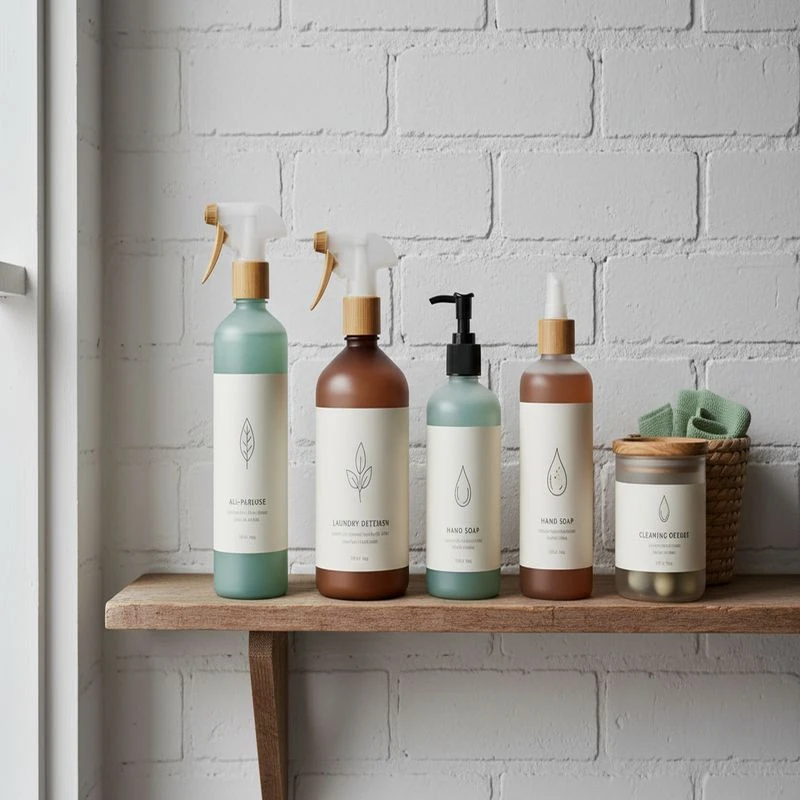
Beyond the functional aspects, custom packaging serves as a powerful canvas for brand storytelling. Unique bottle shapes, a distinctive colour palette, and thoughtful textures can instantly communicate core brand attributes. For instance, a minimalist design with earthy tones might signal an eco-friendly, plant-derived cleaner, while vibrant colours and robust shapes could convey powerful, industrial-strength efficacy. These design choices create an emotional connection with the consumer, distinguishing your product from competitors. The rising consumer demand for sustainability in Australia also necessitates innovation in packaging. Exploring refill models, introducing concentrated formulas that require smaller packaging, and lightweighting designs are actionable steps that reduce environmental impact and appeal to a conscious consumer base. A common pitfall can be selecting an incompatible material that degrades due to chemical interaction, leading to leaks or product spoilage. The solution lies in rigorous compatibility testing specific to your product’s formulation. Another challenge is an unappealing design that fails to capture attention; this can be overcome through thorough market research and collaboration with professional packaging designers who understand the local market aesthetics and consumer preferences, ensuring your custom cleaning packaging resonates effectively.
| Material Type | Pros for Custom Packaging for Household Cleaning Products | Cons | Suitability (Australian Context) | Sustainability Aspects |
|---|---|---|---|---|
| HDPE (High-Density Polyethylene) | Excellent chemical resistance (alkaline solutions), impact strength, opaque, cost-effective. Widely recyclable in Australia. | Less clarity than PET, can be heavier. | Very common for laundry detergents, bleaches, general cleaners. High acceptance in Australian recycling streams. | Often contains PCR (Post-Consumer Recycled) content; good for circular economy initiatives. |
| PET (Polyethylene Terephthalate) | High clarity, good chemical resistance (acidic solutions), lightweight, strong barrier properties, good for spray bottles. Recyclable in Australia. | Less resistant to strong alkalis, can be more expensive than HDPE. | Ideal for glass cleaners, toilet bowl cleaners, sprays where product visibility is desired. Good recycling infrastructure. | Excellent candidate for rPET; increasingly used for packaging to reduce virgin plastic use. |
| PP (Polypropylene) | Good chemical resistance, heat resistance, flexible, often used for caps/closures. | Can be less impact resistant than HDPE, not always collected in all kerbside recycling programmes for bottles. | Common for caps, tubs for wipes. Recyclability varies by council but improving for rigid items. | Can be recycled, but collection is less consistent than HDPE/PET for primary containers. |
This table outlines common materials used for custom packaging for household cleaning products in Australia, highlighting their individual benefits and drawbacks. Understanding these material characteristics is paramount for brands seeking to balance product integrity, cost-efficiency, and environmental responsibility within the Australian market, ensuring the chosen material aligns with both product requirements and consumer expectations for recyclability.
Plastic Bottles
Plastic bottles continue to dominate the custom packaging for household cleaning products sector in Australia, offering unparalleled versatility, cost-effectiveness, and essential chemical resistance. However, their continued prevalence is increasingly scrutinised by public perception and evolving regulatory pressures, notably driven by organisations like the Australian Packaging Covenant Organisation (APCO). These factors necessitate a strategic focus on selecting plastic materials that not only perform exceptionally but also actively contribute to the circular economy through enhanced recyclability and the incorporation of recycled content. The era of purely functional plastic packaging is giving way to a new paradigm where sustainability is as critical as performance.
When choosing plastic bottles, a key decision often lies between HDPE and PET, each possessing distinct chemical compatibilities. HDPE is typically favoured for alkaline solutions, such as laundry detergents and bleach, due to its robust chemical resistance and opacity, which can protect light-sensitive ingredients. PET, conversely, excels with acidic formulations like toilet bowl cleaners and glass cleaners, offering superior clarity that allows the product’s visual appeal to shine through, alongside excellent barrier properties. Beyond material type, the integration of Post-Consumer Recycled (PCR) content into plastic bottles represents a significant step towards sustainability. While PCR offers substantial environmental benefits—reducing reliance on virgin plastics and lowering carbon footprint—and garners positive consumer perception, it comes with challenges such as supply consistency, potential colour variations (often resulting in greyish tones unless masked), and slightly higher costs. For brands aiming to integrate PCR, a step-by-step approach involves assessing product compatibility, identifying reliable local PCR suppliers to minimise transport emissions, and transparently communicating the PCR content on packaging to leverage its marketing value. Designing for recyclability is another crucial aspect, involving the use of monomaterial designs where possible (e.g., bottle and cap made from the same plastic type), easy-to-remove labels, and avoiding mixed plastics in the primary container, all of which facilitate better sorting and reprocessing at Australian recycling facilities. Moulding techniques like blow moulding are predominantly used for forming bottles, while injection moulding is common for creating precise caps and closures.
A common pitfall in plastic bottle selection is inadvertently using non-recyclable plastics or designs that hinder the recycling process, leading to the product ending up in landfill despite consumer good intentions. The solution involves meticulously checking local Australian recycling guidelines and working with packaging manufacturers who are experts in designing for recyclability with materials like HDPE and PET. Another challenge can be the inconsistent supply of high-quality PCR material, particularly for smaller runs or specific aesthetic requirements. Brands can mitigate this by forging strong, long-term partnerships with reputable local Australian suppliers who have established PCR streams and can guarantee consistent quality and supply. For example, an Australian brand producing an all-purpose cleaner might transition from virgin HDPE bottles to those made with 50% rHDPE. This involves careful supply chain adjustments, including working with a plastics converter who can process rHDPE effectively, and potentially adjusting marketing materials to highlight this eco-friendly shift. This move not only aligns with national sustainability goals but also strongly resonates with Australian consumers who are increasingly prioritising environmental responsibility in their purchasing decisions, creating a tangible marketing benefit that strengthens brand loyalty and market position in the custom packaging for household cleaning products segment.
Label Printing
High-quality, compliant label printing is an indispensable element for any household cleaning product aiming to succeed in the Australian market. Labels are not merely decorative; they serve as the primary communication conduit between your brand and the consumer, delivering vital safety data, clear usage instructions, and compelling marketing messages. In Australia, where consumer safety and transparent communication are paramount, the regulatory landscape for labels is stringent, with oversight from bodies such as the ACCC (Australian Competition and Consumer Commission), and for ingredient disclosures, the AICIS (Australian Industrial Chemicals Introduction Scheme, formerly NICNAS). Additionally, state-specific dangerous goods regulations can further dictate specific labelling requirements for certain product categories, making attention to detail in label printing absolutely crucial for both legal compliance and building consumer trust in your custom packaging for household cleaning products.
The selection of label material is the first critical step, as it dictates the label’s durability and overall aesthetic. Common choices include BOPP (Biaxially Oriented Polypropylene) for its moisture and chemical resistance, PE (Polyethylene) for flexibility, and specialty papers that, when coated appropriately, can also withstand the typical conditions of a cleaning product environment. The label must endure exposure to moisture, spills of the product itself, and frequent handling without peeling, smudging, or fading, ensuring legibility throughout the product’s lifecycle. Regarding printing methods, flexography is often chosen for large production runs due to its cost-efficiency and speed, while digital printing offers flexibility for shorter runs, variable data printing (like batch codes), and complex graphic designs. Screen printing can be utilised for achieving tactile effects or vibrant colours on premium custom packaging for household cleaning products. Crucially, the Australian compliance checklist for labels is extensive: it requires a clear product name, a comprehensive list of ingredients (often guided by AICIS standards and APCO guidelines for packaging recyclability), prominent warnings (including those for poison control and child safety), precise directions for use, manufacturer details, and batch codes for traceability. The inclusion of GHS (Globally Harmonised System) pictograms is mandatory for hazardous chemicals, providing instant visual cues about potential risks. Beyond compliance, design considerations such as legibility of text, consistency with brand aesthetics, and potentially multi-language options for Australia’s diverse communities are important to enhance consumer understanding and brand accessibility.
To further enhance shelf appeal and brand recognition, custom labels can incorporate special finishes. Options like a matte or gloss laminate can alter the tactile feel and visual reflectivity, while spot UV varnish can highlight specific design elements, creating a premium look. Metallic accents or foil stamping can add a touch of sophistication, making the product stand out in a competitive aisle. A common pitfall in label printing for cleaning products is non-compliant labels, which can lead to costly product recalls, significant fines, and severe reputational damage. The solution lies in engaging legal and regulatory experts who specialise in Australian consumer and chemical regulations to conduct thorough reviews of all label artwork before printing. Another frequent issue is labels peeling, bubbling, or fading prematurely due to insufficient adhesion or poor material choice. This can be mitigated by selecting durable, chemical-resistant label materials and adhesives specifically formulated for cleaning products, followed by rigorous testing in conditions that mimic real-world usage. Investing in high-quality label printing ensures that your custom packaging for household cleaning products not only looks professional but also meets all necessary safety and information standards, building trust and reinforcing your brand’s commitment to quality in the Australian market.
| Key Label Element | Requirement/Purpose | Governing Body/Standard (Australia) | Example for Custom Packaging for Household Cleaning Products |
|---|---|---|---|
| Product Name & Description | Clear, accurate identification of the product. | ACCC (Australian Consumer Law) | “EcoClean Multi-Surface Cleaner – Eucalyptus Scent” |
| Ingredients List | Declaration of chemical components, often in descending order of concentration. Required for safety and transparency. | AICIS (Australian Industrial Chemicals Introduction Scheme), ACCC | “Ingredients: Purified Water, Sodium Lauryl Ether Sulfate, Cocamidopropyl Betaine, Eucalyptus Globulus Leaf Oil, Preservative.” |
| Hazard/Safety Warnings | Essential safety information, first aid, GHS pictograms where applicable. | Work Health and Safety (WHS) regulations (State/Territory specific), GHS (Globally Harmonised System) | “CAUTION: Keep out of reach of children. May irritate eyes. IF IN EYES: Rinse cautiously with water for several minutes.” (with appropriate GHS pictograms) |
| Directions for Use | Clear, step-by-step instructions on how to safely and effectively use the product. | ACCC (Australian Consumer Law) | “For general cleaning: Dilute 2 caps in a bucket of water. Wipe surfaces with a cloth. No rinse required.” |
| Manufacturer/Supplier Details | Contact information for the responsible entity. | ACCC (Australian Consumer Law) | “Manufactured for: Aussie Clean Co, 123 Clean Street, Sydney NSW. Ph: 1800 XXX XXX.” |
| Batch Code/Date | For traceability in case of recall or quality issues. | Internal Quality Control, potentially ACCC for product safety | “BATCH: 20240315-A, EXP: 03/2026” |
| Recycling Information | Instructions on how to dispose of the packaging responsibly. | APCO (Australasian Recycling Label – ARL) | “Recycle bottle & cap. Rinse bottle.” (with ARL symbol) |
This table details the essential elements required on labels for custom packaging for household cleaning products in Australia, outlining their purpose, the primary governing bodies, and practical examples. Adhering to these specifications is crucial for regulatory compliance, consumer safety, and transparent communication, directly impacting a brand’s reputation and legal standing in the Australian market.
B2B Supply
Establishing a robust and reliable B2B supply chain for custom cleaning packaging is a strategic cornerstone for any brand operating in the Australian market. An efficient supply chain ensures consistent product availability, facilitates cost-effectiveness, and allows for agile responsiveness to dynamic market demands, all of which are critical for maintaining a competitive edge. Local Australian suppliers often present significant advantages, offering reduced lead times, enabling tighter quality control through proximity, and possessing an inherent understanding of local regulations and market nuances. This local partnership can translate into a more streamlined process for custom packaging for household cleaning products, from initial design concepts to final delivery, minimising risks and optimising operational efficiency.
The process of selecting the right B2B supplier for your custom packaging for household cleaning products requires a methodical approach. Key criteria for evaluation should extend beyond just price; they must encompass quality certifications (such as ISO standards), proven production capacity to scale with your business needs, realistic lead times that align with your production schedule, and a demonstrated commitment to sustainable practices. Proximity is a definite advantage, reducing freight costs and carbon footprint, which is increasingly important for Australian consumers. Once potential suppliers are identified, fostering a strong collaborative relationship built on clear communication is paramount. This involves regular meetings to discuss progress, meticulous exchange of specifications (including detailed CAD drawings, material specifications, and print proofs for label printing), and robust forecasting to prevent stockouts or overstocking. Effective logistics and inventory management strategies are also crucial; deciding between a Just-In-Time (JIT) approach for cost savings and a safety stock approach for risk mitigation depends on your product’s demand volatility and supply chain resilience. Negotiating contracts carefully, outlining clear pricing structures, payment terms, minimum order quantities (MOQs), and stringent quality assurance clauses, provides a solid framework for the partnership.
Navigating the B2B supply chain for custom packaging for household cleaning products inevitably involves potential pitfalls. A significant risk is reliance on a single-point failure in the supply chain, where a disruption at one supplier can halt your entire production. The solution is to diversify suppliers for critical components, creating a contingency plan. For instance, having primary and secondary suppliers for your plastic bottles, or sourcing closures from a different vendor, can provide a vital buffer. Another common issue is miscommunication between the brand and the supplier, leading to incorrect orders, delays, or quality discrepancies. This can be effectively mitigated through the establishment of detailed specifications, requiring formal approval processes for all stages of design and production, and conducting regular quality checks at the supplier’s facility. An Australian cleaning product brand, for example, might partner with a local packaging manufacturer for their custom HDPE bottles. They would conduct site visits to verify quality control, agree on strict delivery schedules, and implement a digital platform for sharing forecasts and design updates. This ensures that their custom packaging for household cleaning products arrives on time, meets all specifications, and contributes positively to their brand’s overall market presence by guaranteeing consistent product availability and quality for their discerning Australian customer base.
Compliance
Navigating the intricate and constantly evolving regulatory landscape is an absolute non-negotiable for any brand involved in custom packaging for household cleaning products in Australia. The Australian regulatory framework is robust, designed primarily to safeguard consumer safety, protect environmental health, and ensure fair trading practices across all industries. A failure to comply with these stringent regulations can lead to severe consequences, including substantial financial penalties, forced product recalls that erode consumer trust, and irreparable damage to a brand’s reputation, making compliance a fundamental pillar of operation within the Australian market for custom cleaning product packaging.
Understanding and adhering to the mandatory standards is the first step towards ensuring compliance. The Australian Consumer Law (ACL), enforced by the ACCC, dictates general product safety and labelling requirements, prohibiting misleading or deceptive conduct. For the chemical components within cleaning products, the Australian Industrial Chemicals Introduction Scheme (AICIS) is the primary body ensuring that industrial chemicals, which include most household cleaning product ingredients, are assessed for human health and environmental risks before they can be introduced or manufactured in Australia. If a cleaning product makes therapeutic claims (e.g., “kills 99.9% of germs”), it might also fall under the Therapeutic Goods Administration (TGA) regulations. Additionally, state and territory dangerous goods acts impose specific requirements for the packaging, storage, and transport of hazardous cleaning products, necessitating a localised understanding of legal obligations. Packaging specifics are also under scrutiny; child-resistant closures (CRC) must comply with Australian Standard AS 1928 for products containing hazardous substances, and tamper-evident features are often required to ensure product integrity and consumer safety. Material compatibility with the cleaning product itself is critical, preventing leaks or degradation, and any claims of recyclability must be accurate and verifiable, aligning with the ACCC’s guidelines on greenwashing. Moreover, environmental bodies like the Australian Packaging Covenant Organisation (APCO) drive initiatives for sustainable packaging, influencing design choices towards recyclability and recycled content.
Labelling requirements are equally rigorous. The Globally Harmonised System (GHS) of Classification and Labelling of Chemicals mandates specific pictograms, hazard statements, and precautionary statements for hazardous cleaning products. A comprehensive ingredients list, specific warnings (e.g., “Poison” or “Corrosive”), detailed first aid instructions, clear directions for use, batch codes for traceability, and manufacturer contact details are all compulsory elements that must be present and legible. Furthermore, for environmental claims, the Australasian Recycling Label (ARL) is the recommended system to provide clear, consistent, and accurate recycling information to consumers, helping to improve recycling rates. To ensure full compliance, brands must proactively engage in rigorous testing and certification processes. This includes chemical compatibility testing to ensure the custom packaging for household cleaning products materials do not react adversely with the product formulation over time. Drop tests and other physical performance tests verify the packaging’s durability under transport and handling conditions. For extremely hazardous products, UN dangerous goods certification might be required for transport. A common pitfall for brands is overlooking seemingly minor regulations, which can quickly escalate into significant legal issues. The solution is to engage specialised regulatory consultants who possess in-depth knowledge of Australian specific requirements for custom packaging for household cleaning products, conducting thorough audits of all packaging and labelling. Another challenge is making unsubstantiated green claims; to avoid accusations of greenwashing, all environmental claims must be verifiable, and the appropriate use of the ARL is crucial. For example, a brand introducing a new concentrated bathroom cleaner must ensure its custom packaging not only features a child-resistant closure compliant with AS 1928 but also accurately displays the ARL on both the bottle and cap, clearly indicating their recyclability in Australian kerbside collections. This comprehensive approach to compliance not only safeguards the business but also strengthens its credibility and trustworthiness among Australian consumers.
