
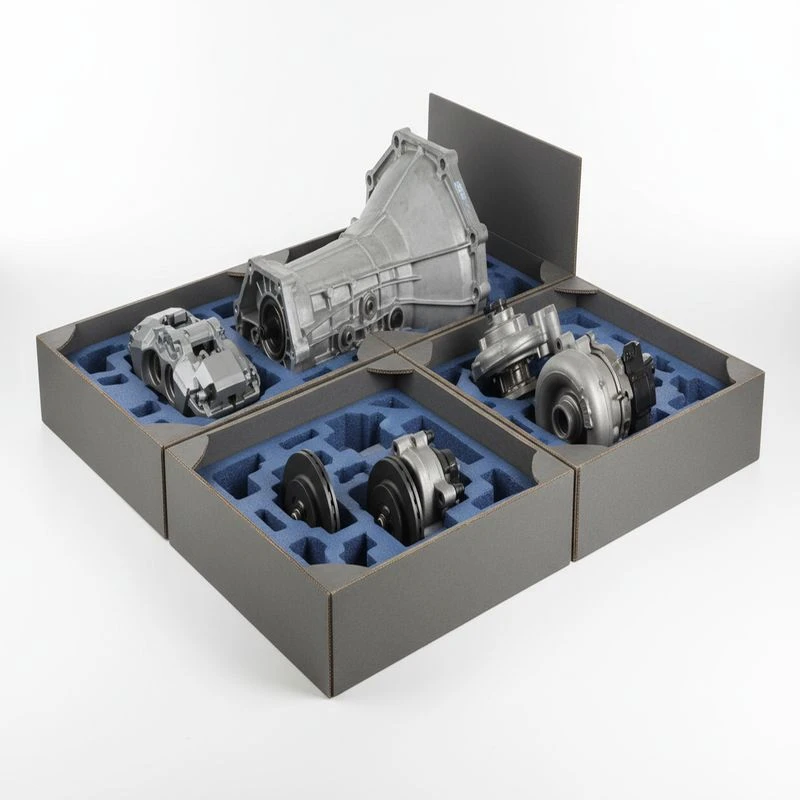
Ensuring the integrity and efficient delivery of automotive components across Australia’s vast and varied landscape demands a packaging solution that goes beyond the standard. From delicate electronic sensors to heavy engine blocks, each part requires a tailored approach to withstand the rigors of transit, climate, and handling. This comprehensive guide explores how durable custom packaging for automotive parts becomes a critical asset, transforming potential liabilities into reliable, cost-effective supply chain strengths for the Australian market.
Auto Packaging
In the dynamic and highly competitive Australian automotive sector, the significance of specialised packaging for auto parts cannot be overstated. Automotive components, whether for OEM production lines, aftermarket repairs, or performance upgrades, are inherently diverse in their form, fragility, and value. Standard, off-the-shelf packaging often falls short, leading to avoidable damage, increased costs, and compromised delivery schedules. The takeaway here is clear: generic packaging solutions are a significant risk; durable custom packaging for automotive parts is an absolute necessity for businesses operating within or supplying to the Australian market.
The reasoning behind this imperative lies in the unique challenges presented by the automotive supply chain and Australia’s specific geographical and logistical landscape. Automotive parts often possess intricate shapes, sensitive electronic components, or heavy, robust structures that require specific support and protection. A universal box or standard pallet wrap simply cannot cater to the anti-static requirements of an ECU, the precise fit needed for a painted body panel to prevent scratches, or the robust bracing an engine block demands to avoid shifting during transit. Furthermore, Australia’s expansive distances, coupled with varied environmental conditions ranging from coastal humidity to arid inland heat, place immense stress on packaged goods. Without appropriate customisation, parts are susceptible to impact damage, corrosion, electrostatic discharge, and contamination, all of which can render them unusable and lead to costly returns or warranty claims.
Implementing effective durable custom packaging for automotive parts begins with a meticulous assessment. The first actionable step involves a detailed analysis of each part’s physical characteristics, including its size, weight, material composition, fragility rating, and any specific environmental sensitivities (e.g., rust prevention, ESD protection). Concurrently, businesses must evaluate their supply chain specifics: what are the typical modes of transport (road, rail, sea, air)? What are the usual transit durations? Are there specific handling requirements at warehouses or assembly plants? This data forms the bedrock for designing packaging that is not just protective but also efficient and sustainable. Collaborating with packaging engineers who specialize in automotive solutions can provide invaluable expertise, helping to identify optimal materials and designs. For instance, a custom-moulded insert made from recycled plastic might be ideal for securing a delicate headlight assembly, while heavy-duty corrugated cardboard with internal dunnage could protect a set of brake rotors from impacts and movement. The pitfall here is underestimating the complexity or attempting to apply a ‘one-size-fits-all’ approach. Such an oversight inevitably leads to higher rates of product damage, increased insurance costs, and ultimately, a tarnished brand reputation. The solution involves a proactive, data-driven approach to packaging design, viewing it as an integral part of product quality and supply chain resilience rather than a mere afterthought. For the Australian market, where logistics can be particularly demanding, this forward-thinking strategy ensures that every automotive part arrives at its destination in pristine condition, ready for immediate use.
Protective Design
The core of effective automotive packaging for the Australian market lies in its protective design – an intricate balance of material science, structural engineering, and practical application tailored to prevent damage from the moment a part leaves the manufacturing line until it reaches its final destination. The leading takeaway here is that a well-engineered protective design for durable custom packaging for automotive parts is the most significant deterrent against transit-related damage, significantly reducing losses and enhancing customer satisfaction. This focus on design moves beyond simply containing an item; it actively shields it from a multitude of potential hazards.
The reasoning for such meticulous design is rooted in the harsh realities of the supply chain, particularly within Australia. Parts are subjected to various forces: impacts from drops or bumps, continuous vibrations during long-haul transport, changes in temperature and humidity, and even static electricity for sensitive electronic components. For instance, an alternator shipped from overseas to regional Australia might endure weeks of travel across oceans and vast landmasses, facing potential jostling, extreme heat, and moisture exposure. Without a design that accounts for these variables, the part could arrive corroded, functionally impaired, or physically damaged. Protective elements such as custom-fit foam inserts, plastic dunnage, or suspension packaging actively absorb shocks and vibrations, preventing movement within the package. For metal components, incorporating Volatile Corrosion Inhibitor (VCI) papers or films, along with desiccants, is crucial to combat humidity and prevent rust formation, a common concern in Australia’s diverse climates. Delicate electronic parts demand electrostatic discharge (ESD) safe packaging materials to prevent irreparable damage from static electricity, a silent killer of sensitive circuitry. The design must also consider the external environment, ensuring the outer packaging itself provides a robust barrier against dust, moisture, and UV radiation, which can compromise the integrity of the part or its internal packaging over extended periods.
To achieve optimal protective design, an actionable step-by-step approach is essential. First, conduct thorough vulnerability mapping for each part, identifying its weakest points and the types of damage it is most susceptible to. Second, select packaging materials based on their specific protective properties, not just their cost. For example, expanded polystyrene (EPS) or polyethylene (PE) foams are excellent for impact absorption, while corrugated plastic offers superior moisture resistance and durability for reusable applications. Third, prototype and rigorously test the proposed packaging designs under simulated transport conditions. This includes drop tests, vibration tests, and environmental chamber tests to ensure the packaging performs as expected. Consider the balance between over-packaging, which inflates costs and creates waste, and under-packaging, which leads to damage. The goal is the optimal level of protection. For instance, a bespoke injection-moulded tray might perfectly cradle a fragile sensor, preventing any movement, while a multi-layered corrugated solution with strategically placed internal partitions could safeguard a complex engine assembly. A common pitfall is to reuse existing packaging designs without re-evaluating them for new parts or changed shipping routes, assuming that what worked before will work again. This oversight can lead to unexpected failures. The solution involves continuous evaluation and adaptation of packaging designs, leveraging advances in material science and packaging technology. By investing in a smart, protective design for durable custom packaging for automotive parts, businesses ensure that their valuable components reach their destination intact, reflecting positively on their product quality and operational excellence.
| Packaging Material Type | Primary Protective Function | Typical Automotive Application | Suitability for Australian Conditions |
|---|---|---|---|
| Expanded Polyethylene (EPE) Foam | Excellent impact absorption, vibration dampening | Sensitive electronic components, painted body panels, dashboards | High (good insulation, moisture resistance) |
| Heavy-Duty Corrugated Cardboard | Crush resistance, stacking strength, basic cushioning | Larger, less fragile parts like brake discs, exhaust systems | Moderate (requires additional water-resistant coatings for humidity) |
| Corrugated Plastic (Corflute) | Water resistance, reusability, impact protection | Returnable packaging for engine parts, internal dunnage | High (excellent against moisture and temperature variations) |
| Wood Crates/Pallets | High load bearing, structural rigidity, extreme impact protection | Heavy engine blocks, transmissions, large assemblies | High (robust for long-haul and rough handling) |
| Volatile Corrosion Inhibitor (VCI) Films/Paper | Corrosion prevention for metal parts | Engine components, metallic fasteners, bearings | High (essential for humid coastal areas and overseas transit) |
This table illustrates various packaging materials and their specific protective functions, alongside typical applications within the automotive sector. Considering Australia’s diverse climates and logistics challenges, selecting the right material is paramount. For example, while standard corrugated is cost-effective, its performance in high humidity might necessitate VCI liners or a shift to corrugated plastic for certain parts.
Industrial Strength
When it comes to shipping automotive parts, particularly within a challenging logistical environment like Australia, the concept of industrial strength packaging moves from a desirable feature to a non-negotiable requirement. The overriding takeaway here is that durable custom packaging for automotive parts must exhibit industrial strength to reliably protect components against the physical stresses of long-distance transport, multi-point handling, and varied storage conditions, thereby safeguarding product integrity and minimizing supply chain disruptions. This strength isn’t just about preventing a box from collapsing; it’s about engineering resilience into every aspect of the packaging.
The reasoning behind prioritizing industrial strength stems directly from the demanding nature of the automotive supply chain in Australia. Parts often travel thousands of kilometers, undergoing multiple transfers between trucks, trains, and even ships. During this journey, they can be subjected to significant compression forces from stacking, accidental impacts from forklifts or other cargo, and sustained vibrations that can loosen components or abrade surfaces. Consider the journey of a heavy gearbox destined for a remote mining operation in Western Australia; it will traverse vast distances, potentially encounter rough roads, and be handled by heavy machinery. A standard packaging solution would quickly fail, leading to significant damage, delays, and costly replacements. Industrial strength packaging, in contrast, utilizes robust materials such as heavy-gauge corrugated cardboard (double or triple wall), solid timber crates, engineered plastic containers, or even specialised metal cages. These materials are selected not just for their inherent strength but also for their ability to withstand environmental factors like moisture ingress, extreme temperatures, and UV exposure over extended periods. The structural integrity must ensure that the package maintains its shape and protective qualities even when stacked high in a warehouse or container, preventing crushing or deformation of the sensitive parts inside. Furthermore, proper reinforcement, such as strapping, internal bracing, and load-spreading dunnage, are integral to ensure that the package can handle dynamic loads without failing.
Implementing packaging with industrial strength requires several actionable steps. Firstly, specify the expected maximum gross weight of the packaged part and the intended stacking height. This information is critical for determining the required board grade for corrugated boxes or the necessary timber thickness for crates. Secondly, conduct real-world or simulated transport testing, focusing on compression strength, puncture resistance, and drop performance. These tests provide empirical data on how the durable custom packaging for automotive parts will perform under stress. Thirdly, incorporate design features that facilitate safe and efficient handling. This includes ensuring adequate clearance for forklift tines, incorporating designated lifting points for heavy loads, and designing modular units that optimise space utilization in standard shipping containers or pallets. For example, a heavy-duty timber crate might feature integrated skids for easy forklift access and reinforced corners to absorb impacts, ensuring it can withstand repeated loading and unloading. A potential pitfall is to prioritize material cost savings over strength requirements, which almost invariably leads to increased damage rates and overall higher costs due to returns, rework, and damaged reputation. Another common mistake is failing to consider the complete lifecycle of the package; a package designed for a single trip might be perfectly adequate, but if it’s intended for reuse, it must be engineered for even greater durability and ease of refurbishment. The solution lies in a holistic approach, where packaging engineers work closely with logistics teams and product designers to anticipate potential stresses and build in preventative measures. This ensures that every automotive part, from the smallest fastener to the largest engine, is encased in packaging that is robust enough to guarantee its safe arrival, no matter the journey across Australia’s challenging terrain.
| Packaging Type | Key Strength Features | Best For (Australian Market) | Potential Pitfalls |
|---|---|---|---|
| Triple-Wall Corrugated Boxes | High compression strength, good cushioning, customisable | Medium-heavy parts (e.g., transmissions, alternators), bulk shipments | Moisture degradation if not treated, less puncture resistant than wood/plastic |
| Heavy-Duty Wooden Crates | Exceptional load-bearing, extreme impact protection, stackable | Very heavy/bulky parts (e.g., engine blocks, large body panels) | Weight, cost, potential for splinters, customs regulations for untreated wood |
| Reusable Plastic Containers (RPCs) | High durability, water/chemical resistant, stackable, nestable | High-volume, inter-facility transport, returnable loops for smaller parts | Higher initial cost, size/shape limitations for very large parts |
| Steel Crates/Racks | Maximum protection, extreme reusability, custom engineered for specific parts | High-value, sensitive, or very heavy components (e.g., robotic arms for assembly, specialty engines) | Weight, high initial cost, specialised handling equipment required |
This table compares different industrial strength packaging types, highlighting their key features and suitability for the Australian automotive market. Selecting the appropriate type of durable custom packaging for automotive parts depends on balancing the part’s weight, fragility, value, and the desired reusability against factors like cost and logistical complexity. For robust solutions, understanding these distinctions is crucial to mitigate transit risks effectively.
B2B Transport
The efficiency and safety of B2B transport are paramount in the Australian automotive industry, where components often traverse vast distances between manufacturers, distributors, assembly plants, and repair centres. Effective durable custom packaging for automotive parts plays a pivotal role in optimising this entire logistical chain. The critical takeaway here is that packaging design must proactively contribute to transport efficiency, reducing costs, minimizing damages, and streamlining operations from origin to destination across Australia’s extensive supply routes. This strategic approach to packaging transforms it from a mere protective shell into an integrated component of the supply chain.
The reasoning for this focus on transport efficiency is multi-faceted. Automotive parts, particularly in a B2B context, are often shipped in high volumes and with demanding delivery schedules. Inefficient packaging can lead to significant issues, such as wasted space in shipping containers or trucks, resulting in higher freight costs due to dimensional weight charges. Bulky or non-stackable packaging may necessitate more shipments than necessary, increasing fuel consumption and carbon footprint. Furthermore, packaging that is difficult to handle or unload can slow down operations at receiving docks, creating bottlenecks and increasing labor costs. For instance, a shipment of engine components to a remote dealership in Australia’s outback needs packaging that is not only robust but also dimensionally optimised to fit standard pallet sizes and container configurations, preventing ‘dead space’ and ensuring maximum load efficiency. The Australian market, characterized by its long hauls and diverse logistics partners, demands packaging that is designed for seamless integration into various transport modes, from road freight to rail and sea, without requiring repacking or special handling at each transfer point. This requires a packaging strategy that considers the entire journey, not just the initial departure.
To achieve optimal B2B transport efficiency through packaging, several actionable steps should be undertaken. Firstly, standardize packaging dimensions wherever possible to maximize fill rates in standard shipping containers, trucks, and air freight units. This involves designing modular packaging units that can be efficiently stacked and interlocked. Secondly, consider the implementation of Returnable Packaging Systems (RPPs) for closed-loop supply chains. For businesses that frequently move the same components between specific locations (e.g., OEM to assembly plant), durable, reusable plastic or metal containers can significantly reduce per-trip packaging costs, minimize waste, and enhance component protection. This requires an initial investment but yields long-term savings and environmental benefits. Thirdly, collaborate closely with logistics providers. Share packaging specifications, weights, and dimensions to allow them to optimise their loading and routing plans. For example, designing a packaging system that allows for efficient cross-docking can shave valuable hours off transit times. A common pitfall is to design packaging purely for product protection without considering its impact on logistics, leading to unnecessarily large or heavy packages that inflate shipping costs. Another pitfall is overlooking the potential for damage during loading/unloading due to poor handling features. The solution involves a comprehensive design process where packaging engineers, logistics managers, and procurement teams work in concert. For example, custom-designed racks for painted body panels protect against scratches and dents while also being stackable and forklift-compatible. Implementing RFID or IoT sensors within durable custom packaging for automotive parts can also provide real-time tracking and condition monitoring, allowing for proactive intervention in case of transit issues. By focusing on packaging that optimises B2B transport, businesses in Australia can achieve substantial savings, improve delivery reliability, and strengthen their position in a competitive market.
Labelling
In the complex ecosystem of automotive parts distribution within the Australian market, clear, accurate, and durable labelling is far more than a mere formality; it is a critical operational imperative. The primary takeaway here is that precise and robust labelling on durable custom packaging for automotive parts is essential for efficient inventory management, compliance with regulatory standards, seamless logistical flow, and ultimately, ensuring the right part reaches the right place at the right time, every time. Without effective labelling, even the most robust packaging cannot prevent costly errors, delays, or even regulatory penalties.
The reasoning behind this heightened importance stems from several factors inherent to the automotive supply chain and Australian regulations. Automotive parts often have unique identifiers, batch numbers, serial numbers, and specific application details. Misidentification of a part due to an unclear or damaged label can lead to incorrect installations, warranty disputes, and significant operational inefficiencies. In warehouses, clear labelling facilitates rapid identification, picking, and packing, drastically reducing search times and human error. During transit, labels provide vital information for customs clearance, carrier sorting, and final delivery instructions. For the Australian market specifically, compliance with import regulations, country-of-origin marking, and potential hazard warnings (e.g., for batteries or fluids) are non-negotiable legal requirements. A label that fades, smudges, or peels off due to environmental factors (like heat or humidity during a long Australian summer transit) or rough handling renders the entire package functionally useless from an identification standpoint. Sensitive parts might require specific handling instructions, such as “Fragile” or “This Way Up,” which must be clearly and indelibly marked to prevent damage during manual handling. Without robust labelling, the entire chain of custody can break down, leading to lost shipments, delayed repairs, and dissatisfied customers, all of which chip away at profitability and reputation.
To implement an effective labelling strategy for durable custom packaging for automotive parts, several actionable steps should be followed. First, standardize label templates across all product lines to ensure consistency in information hierarchy and presentation. This includes key data points such as part number, description, quantity, bar codes (e.g., GS1 EAN/UPC or QR codes for richer data), country of origin, and handling instructions. Second, invest in durable label materials and printing technologies. This means using industrial-grade adhesives, synthetic label stock that resists moisture and abrasion (e.g., polypropylene or vinyl), and high-quality thermal transfer or laser printing that ensures legibility even after exposure to harsh conditions. Third, integrate labelling processes with inventory management and enterprise resource planning (ERP) systems. This ensures that label data is accurate, automatically generated, and consistent with digital records, minimizing manual data entry errors. For example, a system might automatically print a label with a unique serialized barcode linked to a specific vehicle VIN, ensuring traceability. A significant pitfall is the use of consumer-grade labels or printers, which quickly deteriorate in industrial environments or during transit, becoming illegible. Another common mistake is neglecting to place labels in consistent, easily scannable locations on the packaging, which slows down logistics operations. The solution involves a proactive, technology-driven approach: implementing automated label applicators for high-volume operations, performing periodic audits of label quality, and training staff on proper labelling procedures. Furthermore, consider adding RFID tags to high-value or high-volume shipments. While a higher initial investment, RFID offers superior tracking capabilities, particularly for large shipments or complex assemblies, allowing for rapid inventory counts and seamless movement through automated checkpoints within the Australian supply chain. By prioritizing robust and intelligent labelling, businesses ensure that their durable custom packaging for automotive parts not only protects the product physically but also guides it efficiently through every stage of its journey.
