
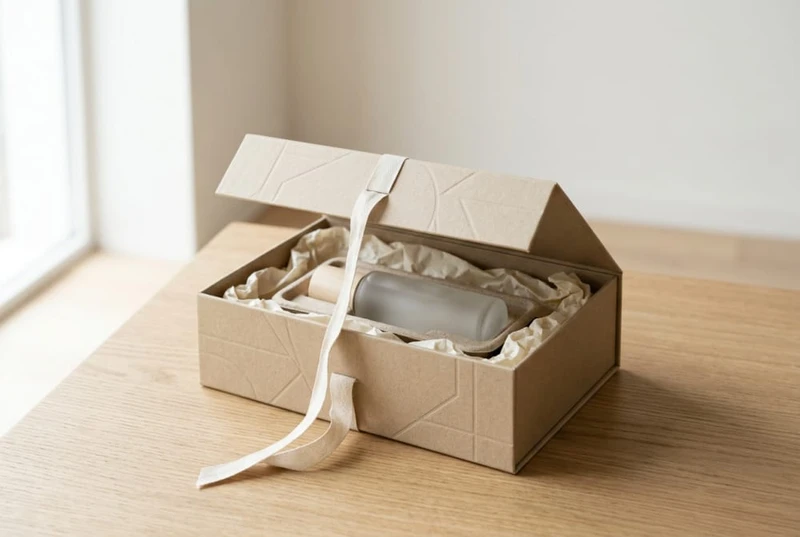
For direct-to-consumer brands, the strongest shipping packaging is designed as both a transit system and a brand touchpoint. It should fit the product closely, protect it through handling, present the order neatly on arrival and be simple for a fulfilment team to pack repeatedly.
Shipping-oriented packaging ideas for brands selling directly to consumers start with the product, not the artwork. Confirm the packed product dimensions, weight, fragility, order combinations and expected shipping conditions before selecting a box style. Branding can then be applied where it adds recognition without making the pack harder to assemble, seal or recycle.
How ship-in-own-container thinking changes packaging development from day one
Ship-in-own-container thinking means designing the retail or branded pack so it can travel to the customer without necessarily needing a separate plain outer carton. For suitable products, this can reduce handling steps and avoid a second layer of packaging. It is not appropriate for every product, however.
A ship-ready pack needs to perform several jobs at once:
- hold the product securely;
- resist ordinary compression, rubbing and handling during transit;
- provide a reliable sealing method;
- carry the required delivery and handling information where relevant;
- make the brand recognisable when the parcel arrives; and
- allow the recipient to open the pack without damaging the item.
This approach changes the early packaging brief. Instead of asking, “What will look good on a shelf?”, ask, “What happens to this package once it enters the dispatch process?” A rigid gift box, for example, may look premium but still require a protective outer carton if its corners, surface finish or closure are vulnerable in transit. Conversely, a well-designed corrugated mailer may work as both the shipping carton and the presentation box.
Define the full order, not just the individual product
Many packaging problems come from measuring only a single product. DTC orders often include more than one item, a sample, a card, an accessory, instructions or a promotional insert. Record the dimensions and weight of common order combinations, including bundle configurations.
A useful development brief should identify:
- Core products: the items that make up most dispatches.
- Order variations: single units, multi-packs, subscription replenishments and gift sets.
- Product sensitivities: breakage, scuffing, moisture exposure, heat sensitivity, leaks or crushing.
- Packing components: tissue, inserts, dividers, void fill, labels and sealing tape.
- Customer experience needs: whether the parcel should be gift-ready, reusable, discreet or particularly easy to open.
Where a ship-in-own-container design is being considered, check the final assembled package under conditions relevant to the intended distribution arrangement. The appropriate level and method of testing will depend on the product, packaging format and transport pathway.
Box sizing decisions that reduce void fill and dimensional weight costs
Right-sizing is one of the most useful packaging decisions a DTC brand can make. A box that is too large creates empty space, uses more void fill and can let products move around. It may also increase the shipment’s chargeable size under the delivery provider’s pricing rules.
Start with the packed product footprint, then allow only the clearance needed for protective material, inserts and practical packing. Avoid choosing a box based only on what is readily available if it leaves a large unused cavity.
Use an internal-dimension approach
Measure the product after any product-level packaging has been applied. Then identify the interior space required for:
- cushioning around fragile surfaces;
- a divider or insert, if needed;
- easy placement by the packing team;
- closure without pressure on the contents; and
- any printed collateral included with the order.
Internal dimensions matter more than external measurements when deciding whether a product will fit. Still, confirm both sets of dimensions: the external size affects storage, delivery pricing and how parcels stack in transit.
| Packaging choice | When it suits | Main advantage | Watch for |
|---|---|---|---|
| Close-fitting mailer box | Small to medium, moderately robust products | Presents well with limited void fill | May need an insert for movement control |
| Regular slotted carton | Variable order sizes and heavier goods | Flexible and familiar for fulfilment | Often needs tape and added internal branding |
| Die-cut mailer | Repeatable DTC order sizes | Fast assembly and an integrated presentation format | Less suitable when product sizes vary widely |
| Flat-pack product carton inside an outer shipper | Retail-ready products needing added protection | Separates product presentation from transport protection | Adds material and packing steps |
| Padded or paper mailer | Soft, non-fragile or low-profile goods | Uses less space than a box | Limited crush protection |
Build a practical size range
A small set of well-chosen box sizes usually works better than an excessive range. Too many formats complicate procurement, warehouse storage and packing decisions. Too few can force staff to overpack orders in oversized cartons.
Review order data and product combinations to establish a sensible range, such as:
- one compact format for single small items;
- one standard format for core orders;
- one larger format for bundles or gift packs; and
- a separate protective configuration for fragile or heavy items.
When comparing shipping costs, ask the delivery provider how it calculates chargeable weight and whether parcel dimensions affect the applicable service. Treat this as a commercial check, not an assumption: methods and thresholds can vary by provider and service.
Choosing custom box formats for marketplace sales and branded DTC orders
Marketplace and DTC orders often have different packaging requirements. A marketplace order may prioritise clear identification, reliable transit protection and operational consistency. A branded DTC order has the same functional needs, but it also has a stronger opportunity to create a memorable arrival experience.
The answer is not always two entirely different packaging systems. Often, brands can use a common protective structure and adapt the print, insert, label or outer presentation according to the sales channel.
Select the format around the product and packing process
For repeatable single-SKU orders, a custom-sized mailer can keep packing straightforward and minimise empty space. For products sold in varied combinations, a versatile carton with modular inserts may be more practical.
Consider these format questions before approving a custom design:
- Can one person assemble and close it efficiently?
- Does it require tape, or does it have an integrated closure?
- Will it remain closed if handled upside down or stacked?
- Can the product be inserted without force?
- Does the opening method protect the item from accidental cuts?
- Is there a logical place for a dispatch label?
- Can the same format accommodate promotional inserts without becoming overfilled?
- Does the outer print remain appropriate if the pack is exposed during delivery?
A full-colour branded outer can be effective for DTC orders, but the visible exterior may also be exposed to scuffs, labels and tape. Some brands reserve detailed visual storytelling for the interior and keep the exterior simpler. This can retain the reveal moment while leaving a clearer surface for shipping information.
For products that need a made-to-measure format, explore custom packaging boxes only after documenting the product measurements, desired closure, print areas and order configurations. A clear specification reduces revisions and makes quotes from packaging suppliers easier to compare.
Sticker roles in bundle management, logistics, and promotional messaging
Stickers are a flexible way to add information without printing a new box for every product variation. They can support fulfilment, identify bundles, apply seasonal messages or add a finishing detail to a relatively simple packaging design.
Their usefulness depends on using each sticker for a defined job rather than treating labels as an afterthought.
Separate operational labels from customer-facing stickers
Operational stickers should make packing and dispatch clearer. They may identify a SKU, bundle version, packing instruction or internal handling cue. Customer-facing stickers can carry a campaign message, a thank-you detail, a seal or a product-specific callout.
Keep the roles distinct. A customer should not need to interpret a warehouse code, and packers should not need to search through decorative messaging to find the information they need.
Common uses include:
- identifying bundle contents where outer boxes are shared across several offers;
- differentiating product variants stored in the same packaging format;
- sealing tissue or an inner wrap;
- applying limited-run promotions without replacing the main carton artwork;
- adding a reorder or product-care prompt; and
- marking packs that require a specific insert or packing method.
Label adhesion, finish and size should be checked against the surface to which they will be applied. A sticker that performs well on uncoated paperboard may behave differently on textured, coated or recycled-looking surfaces. Also leave a clear, flat label zone so delivery labels can be applied without obscuring essential branded information.
For campaigns or flexible pack identification, custom printed stickers can complement a core box design while allowing product and promotional details to change more easily.
Balancing transit protection with a clean and frustration-free unboxing experience
Protection and presentation should support each other. Excessive layers can make an order feel difficult to access, while too little protection can leave the product loose, damaged or untidy when opened.
The aim is controlled containment: the item should not rattle, collide with other items or press directly against vulnerable box panels. At the same time, the customer should understand how to open the parcel without tools where possible.
Match protection to the actual risk
Different products need different forms of protection:
- Fragile goods: may need dividers, fitted inserts or protective wraps that prevent contact between items.
- Heavy products: need a box structure and closure that suit the load, with reinforcement where appropriate.
- Delicate finishes: may benefit from tissue, sleeves or an inner carton to reduce abrasion.
- Liquids and products with leak risk: need containment planning that considers the consequences of a failure.
- Soft goods: may need less crush protection but still require a clean, weather-conscious outer layer.
- Gift products: may require a more refined internal arrangement while retaining a practical shipping layer.
Avoid adding filler purely to make a box look full. If a product is moving inside the pack, solve the cause through sizing, inserts or product arrangement. Loose fill may mask the problem, but it can slow packing and create a less polished unboxing experience.
Make opening intuitive
An easy-open feature can improve the customer experience, but it must be compatible with the pack’s strength and closure. Consider whether customers can identify the opening edge, whether a tear feature is likely to work as intended, and whether the product remains protected until the final opening step.
Also consider returns. A box that cannot be closed again may create inconvenience for customers who need to send an item back. A resealable feature is not necessary for every product, but it is worth evaluating where returns are part of the purchase journey.
Packaging adjustments that help fulfilment teams work faster at scale
A visually appealing package that is slow or confusing to assemble can become an operational burden. As order volumes grow, small packaging inefficiencies can lead to inconsistent packing, training difficulties and avoidable use of tape or filler.
Design for the person packing the order. They need clear components, predictable assembly and enough tolerance to place products quickly without damaging the box.
Reduce decisions at the packing bench
A well-planned system makes the correct pack configuration obvious. This can involve:
- colour or code cues for box sizes;
- pre-defined bundle layouts;
- inserts that only fit the product one way;
- printed fold or closure indicators where useful;
- a designated space for delivery labels;
- standardised locations for cards or product literature; and
- concise packing instructions for exceptions.
Flat-packed boxes can save storage space, but their assembly complexity needs consideration. A simple self-locking format may suit high-repeat orders, while a more elaborate structure may be reasonable for occasional premium gift packs.
Before moving into a larger production run, assemble sample packs with the actual product and packing materials. Check how the process works for different order types, not just the ideal single-product order. Confirm that the box can be folded, filled, closed, sealed and labelled in a consistent sequence.
Common shipping failures that start with poor packaging decisions
Many shipping issues begin before dispatch. The following failures are often connected to incomplete packaging planning.
Oversized boxes and uncontrolled movement
When a box has too much empty space, products can shift and collide. The response is not always more filler; a smaller carton or a fitted insert may be a more reliable solution.
Treating product packaging as a shipping carton
Retail cartons, gift boxes and display packs are not automatically suited to direct shipping. Their corners, closures, print finishes and structure may need an outer protective layer. Assess the intended pack as a transit unit rather than assuming that a premium appearance equals shipping durability.
No defined label area
Delivery labels, returns labels and handling instructions can cover logos, opening strips or customer-facing copy if the box has no planned label zone. Reserve a practical, unobstructed panel in the packaging artwork.
A closure that relies on perfect packing
If a closure works only when the box is filled precisely, it may fail when an order includes an extra insert or a different product combination. Build enough tolerance into the design for realistic order variation.
Overly complex unboxing
Multiple layers, tight adhesives and unclear opening points can frustrate customers. Keep every layer purposeful: it should protect, organise, inform or present the product.
Decorative finishes in high-contact areas
Special finishes may be visually effective, but external shipping surfaces can encounter friction, tape and labels. Consider where the finish will sit and whether a more protected internal placement would better preserve the intended look.
Ignoring disposal and material preferences
Customers may judge unnecessary mixed materials or difficult-to-separate components negatively. Where packaging materials or disposal claims matter to your brand, confirm the material makeup and provide only accurate instructions that apply to the intended market and collection systems.
How to move from generic mailers to a recognisable branded shipping system
A branded shipping system does not require every surface to be printed or every order to use a premium rigid box. Recognition often comes from a consistent combination of format, colour, message hierarchy and opening experience.
Start by defining a few brand elements that can be repeated across parcel sizes. For example, this may include a restrained exterior colour, a recognisable internal pattern, a consistent message under the lid and a standard seal sticker. Apply those elements across the box range rather than creating unrelated artwork for every size.
Use a staged upgrade plan
Moving from generic mailers to custom e-commerce packaging can be done in stages:
- Map the current dispatch flow. Record order sizes, product combinations, damage points, void-fill use and packing bottlenecks.
- Choose priority orders. Begin with the most common order type or the product where unboxing matters most.
- Specify the structure first. Decide dimensions, board type, closure, insert requirements and label area before final artwork.
- Create a simple design system. Set consistent colours, logos, typography, interior messaging and promotional sticker rules.
- Review samples with real products. Check fit, presentation, assembly and closure using the full intended pack-out.
- Document packing instructions. Give fulfilment staff a short, visual sequence for each configuration.
- Review after launch. Collect operational feedback and inspect recurring issues such as box overfill, product movement or label placement.
The right branded package is the one that makes each order easier to pack, safer to send and more recognisable to receive. Start with the product and dispatch workflow, then use box structure, print and stickers to create a system that customers can identify across every order.
