
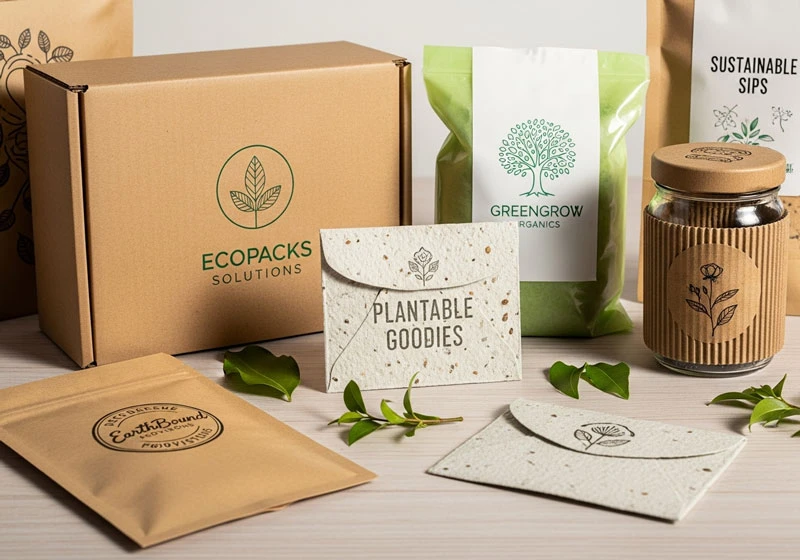
Elevate Your Brand’s Sustainability and Attract Eco-Conscious Consumers Down Under
In today’s rapidly evolving consumer landscape, particularly within the Australian market, businesses are increasingly finding that sustainability is no longer a niche consideration but a fundamental expectation. Consumers are more informed and ethically driven than ever before, actively seeking out brands that align with their values for environmental stewardship. This paradigm shift means that how you package your products is just as critical as the product itself, serving as a powerful, tangible statement of your brand’s commitment to the planet. For green businesses operating in Australia, leveraging eco-friendly packaging customisation offers an unparalleled opportunity to not only minimise environmental impact but also to significantly enhance brand identity, foster deeper customer loyalty, and gain a distinct competitive edge. It’s about creating an experience that resonates with the eco-conscious Australian consumer, from the moment they first encounter your product until its end-of-life cycle, ensuring every step reflects genuine sustainability.
The journey towards truly sustainable packaging begins with a clear understanding of its multifaceted benefits. Beyond the obvious environmental advantages of reducing waste, conserving resources, and lowering carbon footprints, adopting custom eco-friendly packaging strengthens your brand’s narrative of responsibility. It signals to your target audience that your commitment to green practices extends beyond marketing rhetoric, permeating every aspect of your operations. This authenticity builds trust and distinguishes your business in a crowded market. Moreover, with increasing regulatory scrutiny and consumer demand for transparency, proactive investment in sustainable packaging solutions can mitigate future compliance risks and position your brand as a leader rather than a follower. The initial perception of higher costs often overlooks the long-term return on investment, which includes enhanced brand reputation, increased sales from eco-conscious demographics, and potential savings through optimised material use and supply chain efficiencies. It’s a strategic investment that pays dividends in both environmental impact and business growth within the vibrant Australian green economy.
Eco Packaging
Embracing eco-friendly packaging is no longer an optional add-on for businesses in the Australian market; it has become an essential pillar of corporate responsibility and a significant driver of consumer choice. The core takeaway here is simple yet profound: adopting sustainable packaging practices, particularly through customisation, is pivotal for elevating your brand’s image and appealing directly to the growing segment of eco-conscious consumers across Australia. This trend is not fleeting; it’s a fundamental shift driven by a collective awareness of environmental challenges, from climate change to plastic pollution, and Australian consumers are increasingly voting with their wallets for brands that demonstrate genuine care for the planet. The reasoning behind this growing imperative stems from several factors, including heightened media attention on environmental issues, the influence of global sustainability movements, and a desire among consumers to make purchasing decisions that align with their personal values. Businesses that fail to adapt risk being perceived as outdated or irresponsible, potentially alienating a significant portion of their market.
The shift from conventional to sustainable materials forms the bedrock of eco-friendly packaging. This involves a thoughtful re-evaluation of every component currently used in your packaging, from primary containers to labels, tapes, and void fills. It’s an opportunity to innovate and differentiate. For instance, many Australian businesses are now exploring alternatives like mycelium-based packaging for fragile goods, seaweed-derived films for food products, or recycled ocean plastic for various applications. These innovations are not just about reducing waste; they are about designing packaging that fits seamlessly into a circular economy, where materials are reused, recycled, or composted rather than ending up in landfill. Practical examples abound, from small artisanal brands using compostable mailers and plant-based inks to larger retailers integrating closed-loop systems for their shipping containers. This proactive approach helps businesses not only meet but exceed consumer expectations for environmental performance.
For Australian businesses looking to embark on this journey, the actionable steps begin with a thorough audit of your current packaging. Identify all materials used, their source, and their end-of-life disposal methods. This baseline assessment is crucial for understanding your current environmental footprint. Next, explore available sustainable alternatives that align with your product’s specific needs, considering factors like shelf-life, protection, and consumer convenience. Engage with specialised eco-packaging suppliers who possess expertise in the Australian recycling and composting infrastructure. A potential pitfall in this process is “greenwashing,” where brands make exaggerated or misleading claims about their environmental efforts. To avoid this, transparency is key: be honest about your journey, acknowledge challenges, and back up your claims with certifications and verifiable data. While the initial investment in Eco-Friendly Packaging Customisation might seem higher than conventional options, consider the long-term ROI. This includes enhanced brand reputation, increased customer loyalty, and potential savings from optimised material usage or reduced waste disposal costs, making it a strategic decision for sustainable growth in the Australian market.
Recyclable Materials
Selecting the right recyclable materials is absolutely paramount for any effective eco-packaging strategy, particularly for green businesses navigating the diverse waste management landscape of the Australian market. The core takeaway here is that not all “eco-friendly” materials are created equal, and a deep understanding of their properties, end-of-life options, and compatibility with local recycling infrastructure is crucial. This nuanced approach ensures that your sustainable packaging genuinely contributes to a circular economy rather than creating new waste challenges. We need to move beyond generic terms and delve into the specifics of materials like post-consumer recycled (PCR) content, industrially compostable bioplastics, home compostable alternatives, and readily recyclable paper and glass. Each material offers distinct advantages and limitations, making the selection process a critical strategic decision that impacts both your environmental footprint and your brand’s operational efficiency. Considering the specific product you are packaging, its protection requirements, and its intended shelf life becomes central to this material selection, as a misstep here can undermine the entire sustainability effort.
Understanding the distinctions between these material categories is key. For instance, PCR cardboard and paper are excellent choices for many products, leveraging existing recycling streams across Australia. Bioplastics, while offering a renewable alternative to traditional plastics, come with caveats. PLA (Polylactic Acid) is a common bioplastic that is industrially compostable, meaning it requires specific conditions found in commercial composting facilities, which are not universally available across all Australian regions. Home compostable materials, on the other hand, are designed to break down effectively in a backyard compost heap, offering a more accessible end-of-life solution for consumers. The suitability of each material depends heavily on your product type and your consumers’ access to appropriate disposal methods. For food products, considerations around barrier properties, food safety certifications, and extending shelf life become critical, often leading to innovative multilayer structures that are still designed for eventual recycling or composting. Clear, concise labelling on the packaging itself, explaining how to dispose of the material correctly, is not just helpful but essential for ensuring its proper return to the resource stream.
Practical examples of material selection for Eco-Friendly Packaging Customisation in Australia include businesses using FSC-certified recycled kraft paper for outer packaging, often paired with starch-based packing peanuts or shredded paper as void fill. For liquid products, glass bottles or high-recycled-content PET plastic that are widely recyclable are often preferred. The pitfall of “wishcycling,” where consumers attempt to recycle items that are not accepted by local facilities, highlights the importance of choosing materials that align with Australia’s existing infrastructure. To mitigate this, engage with your packaging supplier to understand the full lifecycle of the materials they offer and whether they are genuinely recyclable or compostable in the specific areas where your products are sold. Furthermore, ensuring certifications like AS 4736 (for industrial composting) or AS 5810 (for home composting) for bioplastics provides credible assurance. Below is a comparison of common eco-friendly materials and their relevance in the Australian context.
| Material Type | Key Properties & Best Use | Australian Recycling/Composting Status | Cost Implication (Relative) |
|---|---|---|---|
| Recycled Cardboard/Paper | Versatile, lightweight, excellent for dry goods, outer packaging, void fill. | Widely recyclable in kerbside bins across Australia. | Low to Medium |
| Glass | High clarity, infinitely recyclable, ideal for liquids, food, cosmetics. | Widely recyclable in kerbside bins (check colour separation locally). | Medium to High |
| Post-Consumer Recycled (PCR) Plastics (e.g., PET, HDPE) | Durable, lightweight, reduces virgin plastic use, suitable for many products. | Generally recyclable, but check local council for specific types. | Medium |
| Compostable Bioplastics (e.g., PLA, PHA – certified AS 4736/5810) | Biodegradable in specific conditions, for food packaging, flexible films. | Industrial composting facilities are growing but not universally available; home composting for AS 5810 certified. | Medium to High |
This table illustrates the diverse options available for green businesses seeking Eco-Friendly Packaging Customisation. The “Australian Recycling/Composting Status” column is particularly crucial, as the effectiveness of your sustainable material choice heavily relies on the local infrastructure for processing these materials. Businesses must verify that their chosen materials can actually be processed in the regions where their products are consumed to avoid contributing to landfill waste, reinforcing the importance of informed decisions in packaging design.
Custom Printing
Once you’ve meticulously selected your sustainable packaging materials, the next crucial step in Eco-Friendly Packaging Customisation is leveraging custom printing to transform these eco-conscious substrates into powerful brand storytelling tools. The core takeaway here is that custom printing isn’t merely about aesthetics; it’s about making your commitment to sustainability visible, engaging, and memorable for the Australian consumer. Your packaging is often the first physical touchpoint a customer has with your brand, and through thoughtful design and eco-friendly printing techniques, it can convey your values, product benefits, and environmental efforts in a cohesive and compelling manner. This process enhances brand identity by allowing your unique story, mission, and brand personality to shine through, creating a deeper connection with your audience. For instance, a minimalist design on recycled kraft paper, coupled with a clear message about carbon neutrality, speaks volumes about a brand’s ethos.
Custom designs enable businesses to communicate their sustainability efforts directly on the packaging. This could involve clearly displaying recycling instructions tailored to the Australian market, showcasing certifications like FSC or the “Seedling Logo” for compostable materials, or sharing a QR code that links to more detailed information about your brand’s environmental initiatives. Such transparency not only educates consumers but also builds trust, mitigating concerns about greenwashing. Beyond messaging, the choice of inks and printing methods plays a significant role in maintaining the eco-integrity of your packaging. Traditional petroleum-based inks can hinder recyclability or composting processes. Therefore, opting for eco-friendly alternatives like soy-based, water-based, or vegetable-based inks becomes imperative. These inks are often biodegradable, have lower VOC (Volatile Organic Compound) emissions, and produce vibrant colours without compromising on sustainability. For example, a small batch producer of organic skincare in Australia might choose a simple, elegant design printed with soy-based inks on recycled paperboard boxes, reflecting the purity and natural essence of their products.
When it comes to actionable steps for custom printing, start by collaborating closely with packaging designers who understand sustainable design principles and eco-friendly printing technologies. Prioritise minimalism in design to reduce ink usage, and ensure that any text or graphics are clearly legible on your chosen material. Consider the end-of-life of your packaging: will the inks interfere with the composting or recycling process? Always verify that the inks your supplier uses are compatible with your chosen sustainable materials and won’t leach harmful chemicals. Digital printing offers flexibility for smaller runs and customisation, while flexographic printing can be efficient for larger volumes, with both methods adaptable for eco-friendly inks. A potential pitfall is over-designing, which can lead to excessive ink coverage or complex graphics that obscure vital information. The solution lies in strategic simplicity: focus on key branding elements, clear product information, and unambiguous disposal instructions. By thoughtfully integrating custom printing into your Eco-Friendly Packaging Customisation strategy, you not only beautify your packaging but also amplify your brand’s voice and reinforce its commitment to a greener future, resonating deeply with environmentally aware consumers throughout Australia.
B2B Solutions
For green businesses operating within the dynamic Australian market, the need for tailored B2B eco-packaging solutions is increasingly critical for establishing efficient, cost-effective, and sustainably-minded supply chains. The core takeaway here is that while consumer-facing packaging often grabs the spotlight, the unseen bulk and transit packaging used in business-to-business transactions present immense opportunities for environmental impact reduction and operational optimisation. These solutions go beyond simply using recyclable materials for individual products; they encompass an entire strategy for minimising waste, conserving resources, and streamlining logistics throughout the entire supply chain, from manufacturer to distributor to retailer. Green businesses must look at their entire ecosystem and how packaging contributes to or detracts from their overall sustainability goals. This often involves collaborating deeply with suppliers and logistics partners who share a similar commitment to environmental stewardship, creating a ripple effect of positive change across the value chain. This holistic approach ensures that your eco-credentials extend far beyond the customer’s doorstep, demonstrating a comprehensive commitment to planetary health.
Minimising environmental impact throughout the supply chain begins with strategic planning around bulk packaging and shipping considerations. This might involve optimising package size and design to maximise cargo space, thereby reducing the number of shipments and associated fuel consumption. Reusable transit packaging, such as durable crates, pallets, or totes made from recycled content, represents a significant step towards a circular B2B model, drastically reducing single-use waste. Imagine an Australian organic food distributor using standardised, returnable crates for transporting produce to local retailers, eliminating the need for disposable cardboard boxes. This not only cuts down on waste but also often leads to long-term cost savings in material procurement. Furthermore, choosing local suppliers for your Eco-Friendly Packaging Customisation needs helps to reduce transportation emissions and supports the local green economy, reinforcing your brand’s community commitment. Consolidating orders and planning efficient delivery routes are also fundamental aspects of a greener B2B logistics strategy, illustrating a proactive approach to environmental responsibility.
Actionable steps for Australian green businesses include conducting a comprehensive audit of current B2B packaging and logistics practices to identify waste hotspots and inefficiencies. Engage with your packaging suppliers to explore bulk options made from recycled, recyclable, or compostable materials that are suitable for industrial use. Consider implementing a returnable packaging program with your key B2B partners, setting clear protocols for collection, cleaning, and reuse. A potential pitfall in B2B eco-packaging is the perceived complexity and higher initial cost of transitioning to new systems, especially for large volumes. The solution involves strategic planning, often phasing in changes, and establishing long-term contracts with suppliers that can offer competitive pricing for sustainable solutions. By partnering with experienced eco-packaging providers who understand the intricacies of B2B logistics and the specific requirements of the Australian market, businesses can navigate these challenges effectively. Below is a table illustrating key considerations for B2B eco-packaging.
| Aspect | Traditional Approach | Eco-Friendly Approach | Benefits for Green Businesses |
|---|---|---|---|
| Transit Packaging | Single-use cardboard boxes, plastic wrap, foam peanuts. | Reusable crates, pallet wraps made from recycled plastic, starch-based void fill. | Reduced waste, lower long-term material costs, enhanced brand image. |
| Packaging Optimisation | Standard box sizes, regardless of product fit, inefficient space. | Custom-sized packaging, modular designs, maximised pallet efficiency. | Reduced shipping costs, lower fuel consumption, less material use. |
| Supplier Sourcing | Cost-driven, global sourcing. | Local, certified sustainable suppliers, emphasis on ethical practices. | Reduced transport emissions, support local economy, better supply chain transparency. |
This table highlights the stark contrast between conventional and eco-friendly approaches to B2B packaging, underscoring the benefits for green businesses in Australia. By focusing on reusable transit packaging, optimising dimensions for transport, and sourcing from sustainable local suppliers, businesses can significantly reduce their environmental footprint while often achieving greater operational efficiencies and cost savings in the long run. These strategic choices in Eco-Friendly Packaging Customisation demonstrate a deep commitment to sustainability that permeates the entire business operation.
Brand Sustainability
Integrating eco-friendly packaging is far more than a trend for green businesses in the Australian market; it is a fundamental pillar that strengthens overall brand sustainability and secures a competitive market position. The core takeaway here is that your packaging is a tangible representation of your brand’s values, directly influencing consumer perception, fostering loyalty, and ultimately driving long-term success. In a market where environmental consciousness is rapidly growing, a brand’s commitment to sustainability, visibly demonstrated through its packaging, can be a powerful differentiator. It creates a narrative that resonates deeply with an increasingly informed and ethically-minded customer base, moving beyond mere product attributes to forge an emotional connection rooted in shared values. This positive brand perception is invaluable, cultivating a loyal customer community that feels good about supporting a business that aligns with their environmental aspirations. Australian consumers are actively seeking brands that not only talk about sustainability but genuinely embody it in their operations, and packaging serves as a very public testament to this commitment.
The impact of packaging on brand perception and customer loyalty cannot be overstated. When a consumer receives a product in thoughtfully designed, custom eco-friendly packaging, it reinforces their decision to support your brand. This positive experience enhances trust and encourages repeat purchases, transforming casual buyers into brand advocates. Furthermore, strong sustainability credentials, clearly communicated through your packaging and broader marketing, offer a significant competitive advantage. As more businesses enter the green sector, differentiation becomes key, and genuine, verifiable sustainability acts as a powerful unique selling proposition. This includes obtaining relevant certifications, such as FSC for paper products, or the Australian Seedling Logo (AS 4736 or AS 5810) for compostable materials, which provide independent verification of your claims. These certifications are not just badges; they are critical trust signals for consumers navigating a market saturated with green claims, ensuring transparency and authenticity in your Eco-Friendly Packaging Customisation efforts.
Developing a comprehensive brand sustainability strategy that explicitly includes your packaging choices is an actionable step every green business in Australia should undertake. This involves setting clear environmental goals for your packaging, researching material lifecycles, and ensuring your claims are verifiable. Crucially, transparent communication about your efforts is vital. Use your packaging to tell your sustainability story – explain why you chose certain materials, how they should be disposed of, and what environmental benefits they offer. Extend this communication to your website, social media, and marketing campaigns, providing educational content that empowers consumers to make responsible choices. A significant pitfall is the risk of “greenwashing” – making unsubstantiated or exaggerated environmental claims. To avoid this, ensure your commitment is genuine, verifiable, and clearly communicated without ambiguity. Solutions involve rigorous self-assessment, third-party certifications, and an honest acknowledgment of your sustainability journey, including any challenges. By embedding Eco-Friendly Packaging Customisation into the very fabric of your brand’s sustainability, you not only protect the planet but also cultivate a stronger, more resilient brand identity that truly resonates with the Australian market.
| Brand Metric | Impact with Traditional Packaging | Impact with Eco-Friendly Packaging | Why It Matters for Green Businesses |
|---|---|---|---|
| Customer Loyalty | Potentially neutral or negative among eco-conscious consumers. | Increased, especially among environmentally aware demographics. | Retains customers, reduces marketing costs, generates positive word-of-mouth. |
| Brand Perception | Standard, potentially perceived as environmentally indifferent. | Innovative, responsible, aligned with modern values, premium image. | Attracts new customers, justifies premium pricing, builds trust. |
| Competitive Advantage | Undifferentiated or trailing behind eco-leaders. | Distinct, leading position in the green market segment. | Outperforms competitors, enters new markets, appeals to a growing consumer base. |
| Employee Engagement | Standard, no specific pride in packaging. | Increased pride, better morale, alignment with company values. | Attracts top talent, fosters a positive internal culture, improves productivity. |
This table clearly demonstrates how a strategic shift towards Eco-Friendly Packaging Customisation positively influences key brand metrics, moving businesses beyond basic compliance into a realm of genuine market leadership. The “Why It Matters” column highlights the direct business benefits, showing that investing in sustainable packaging is not just an expense but a strategic decision that drives growth, fosters loyalty, and enhances overall brand equity in the competitive Australian landscape. This holistic approach ensures that every aspect of the brand resonates with the values of a green economy.
