
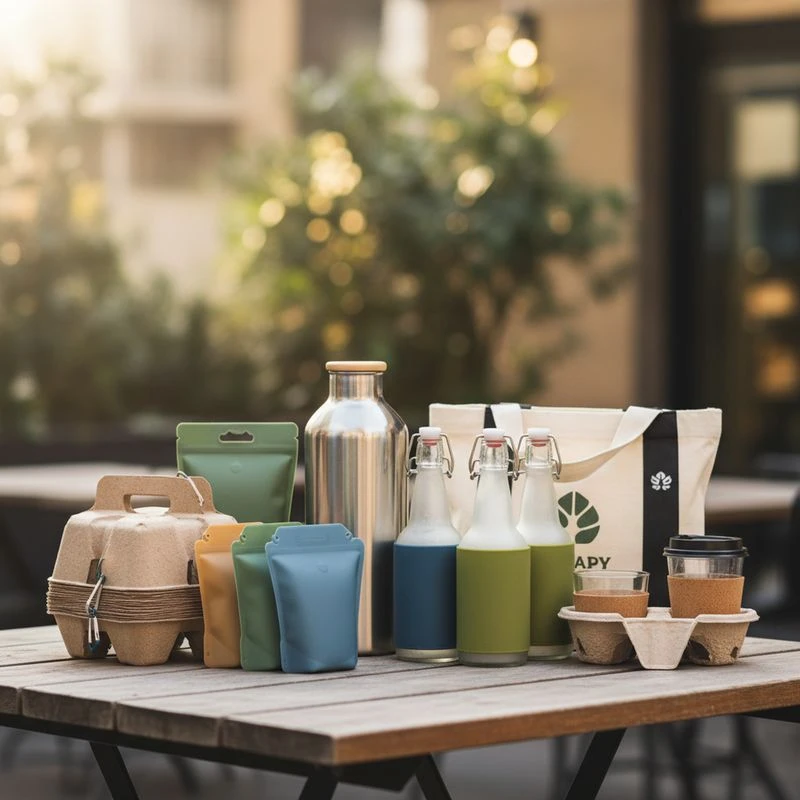
Eco reusable custom packaging for beverage companies works best when it is designed around a real return, refill or repeat-use process—not simply made from a heavier material. The right solution protects the beverage, suits how customers buy and use it, communicates the brand clearly, and can be cleaned, collected or repurposed without creating unnecessary complexity.
For Australian beverage businesses, the practical choice may be a returnable bottle, a reusable gift box, a durable e-commerce shipper or a refill-oriented secondary pack. Start by defining how many times the item is realistically likely to be used, who is responsible for returning or reusing it, and what happens at the end of its useful life.
Reusable Packaging
Reusable packaging is any pack designed to remain useful beyond its first delivery or purchase. In beverage applications, this can include refillable bottles, returnable crates, reusable carry packs, insulated presentation boxes, refill pouches used with a permanent container, and strong transit packaging that customers retain.
The environmental value of reuse depends on the whole system. A reusable pack needs enough repeat uses to justify the material and resources used to make it. It must also be convenient to return, refill, store or repurpose.
Choose the right type of reuse
There are three common approaches, each suited to different business models.
| Reuse model | How it works | Suitable beverage uses | Key consideration |
|---|---|---|---|
| Refill at home | The customer keeps a main container and buys refills | Cordials, concentrates, cocktail mixers, water flavourings and selected household beverage products | The refill format must be simple to pour and store without leakage |
| Return and refill | Empty containers are collected, inspected, cleaned and refilled | Local beverage ranges, hospitality supply and controlled distribution programmes | Collection, cleaning and container tracking need to be planned |
| Reuse as a secondary pack | The beverage container may be single-use, while the outer pack is kept and reused | Gift sets, premium bottles, subscriptions and corporate packs | The box should have a clear second purpose, not just extra decoration |
A returnable system may suit a business with predictable customer touchpoints, such as regular wholesale orders or a direct repeat-purchase model. A reusable presentation pack can be more appropriate where return collection is impractical but the product is often bought as a gift.
Define “reusable” before designing
A vague brief can produce packaging that looks sustainable but is not practical. Before choosing materials or print finishes, specify the intended use in straightforward terms:
- Is the pack returned to the business, refilled by the customer, or reused at home?
- How many handling cycles is it expected to withstand?
- Will it encounter moisture, refrigeration, condensation or ice?
- Does it need to carry one bottle, multiple bottles or mixed products?
- Can customers easily understand what to do after purchase?
- Is the packaging still recyclable or otherwise recoverable when it is no longer reusable?
This definition shapes every subsequent decision, including material thickness, closures, labels, printing methods and assembly.
Avoid overpackaging in the name of sustainability
A reusable outer box is not automatically the most responsible choice. If it adds bulk without a plausible ongoing function, it may be harder to justify than a minimal recyclable pack. The same applies to unnecessary inserts, layered sleeves and elaborate finishes that make components difficult to separate.
Aim for purposeful durability. For example, a rigid bottle box may be suitable where it becomes a storage case or reusable gift container. For routine online orders, a sturdy, right-sized corrugated mailer may offer a more realistic balance of protection and material efficiency.
Beverage Bottles
Beverage bottles require packaging decisions that protect product quality, support safe handling and suit the intended reuse model. Material selection should be driven by the beverage itself as well as branding.
Glass, aluminium, plastic and other formats each have different benefits and constraints. No single option is universally best.
Match the container to the product and reuse cycle
Glass can provide a premium feel and may suit repeated filling when the bottle design, collection process and handling conditions support it. Its weight and breakage risk, however, require careful secondary packaging and transport planning.
Aluminium is lightweight and can suit a wide range of beverage formats, but the suitability of a specific container depends on the product, internal lining, closure and intended filling process. Confirm product compatibility with the relevant packaging and filling specialists.
Plastic containers can be lightweight and durable, particularly for on-the-go or family-sized products. Where a reusable plastic bottle is proposed, assess how it will be cleaned, whether it retains odours or stains, and whether its label and closure remain functional over repeated use.
For all bottle materials, check that the selected packaging is appropriate for:
- Beverage acidity, carbonation and other product characteristics
- Hot-fill, cold-fill or other filling requirements where relevant
- Shelf-life needs and closure performance
- Food-contact requirements applicable to the intended Australian market
- Cleaning and inspection procedures in a return-and-refill system
- Warehouse, retail and e-commerce handling conditions
- Breakage, scuffing and movement within multi-bottle packs
Design secondary packaging to prevent movement
Bottle damage often occurs when there is too much empty space inside a carton, not simply because the board is too light. A well-designed pack controls movement using the right internal structure.
Useful protective options include:
- Fitted dividers for multi-bottle packs
- Folded board inserts that separate bottles
- Die-cut retention features that hold necks or bases in place
- Corrugated partitions for heavier shipments
- Paper-based cushioning where appropriate
- Reusable inserts designed to be retained with a gift box
Ask for a structural sample or prototype before committing to a full production run. Confirm the pack with the actual bottle, closure, label and any promotional insert in place. A box designed around an early bottle drawing may not fit a finished product with a different label thickness or cap profile.
Consider the label as part of reuse
Labels can either support or undermine a reusable bottle. A permanent branded bottle may need a label that tolerates moisture, handling and cleaning. A returnable container may instead require a label system that can be removed or replaced efficiently between cycles.
Important questions include:
- Will the bottle be washed, chilled or exposed to condensation?
- Should the label stay in place through repeated use?
- Can labels, adhesives and sleeves be separated when the pack reaches end of life?
- Is there enough space for required product information, instructions and batch details?
- Does the label design make return or refill instructions easy to find?
Avoid relying on a sustainability message that customers cannot act on. If a bottle should be returned, refilled or reused, state the steps simply and place them where people will see them.
B2B Branding
For beverage companies selling through retailers, hospitality venues, distributors or corporate channels, reusable packaging is also a brand asset. It needs to look considered while still working efficiently through handling, storage and display.
The most effective B2B branding usually focuses on clarity rather than decoration. A buyer, stockist or venue team should be able to identify the product range, pack configuration and handling needs quickly.
Build branding into the pack’s useful life
When packaging is designed to stay in use, brand elements should remain legible over time. Consider where branding appears on the primary bottle, outer carton, internal divider and reusable carry component.
A practical hierarchy could include:
- Primary identification: brand name, product name and flavour or variant.
- Operational information: pack count, bottle orientation, handling marks and product codes where needed.
- Reuse guidance: concise instructions for returning, refilling or repurposing the pack.
- Brand detail: illustrations, campaign messages or a short story that adds value without obscuring essential information.
For a reusable gift box, the unboxing experience may be important. For a wholesale tray, fast recognition and stacking logic may matter more. The design brief should distinguish these jobs rather than treating every pack as a premium retail display piece.
Select print and finishes for the real conditions
A finish that looks polished in a product photograph may wear poorly in a chilled environment or high-contact supply chain. Consider how the printed pack will be handled: dry retail shelving, refrigerated storage, hospitality service, postal delivery or repeated customer use.
Discuss the intended conditions with the packaging supplier and verify:
- Scuff resistance needed for the pack’s expected handling
- Performance around moisture and condensation
- Whether dark colours, metallic effects or large ink coverage are appropriate
- Whether coatings affect recyclability or separation goals
- The legibility of small text and light-coloured type
- Whether batch, date or variable information needs to be added later
A restrained print design can make a reusable package more versatile. Seasonal artwork and product-specific details can be applied through replaceable sleeves, cards or labels, allowing the main reusable component to remain relevant for longer.
Make custom packaging practical for procurement
A strong packaging specification gives procurement teams a clearer basis for comparing options. Include the dimensions, material preferences, print areas, internal fit requirements, expected storage conditions and end-of-use intention.
For tailored formats such as bottle shippers, gift sets and branded cartons, reviewing custom beverage packaging boxes can help turn a broad concept into a more defined packaging brief.
When requesting quotes or samples, compare like for like. A lower unit price may reflect a different board grade, print treatment, insert design, assembly method or quantity. Confirm the full specification rather than assessing a price in isolation.
Eco Design
Eco design for beverage packaging means reducing avoidable impacts while preserving product protection, usability and brand function. It is not limited to choosing a material described as recycled, recyclable or compostable.
A better approach considers the complete life of the pack: sourcing, production, filling, transport, customer use, return or recovery, and disposal.
Design for the most likely end-of-use path
Customers can only follow disposal or return instructions that are accessible to them. Design for the path most likely to happen in practice.
If a pack is intended for kerbside recycling, use materials and components that are broadly compatible with the relevant collection pathways, but verify local requirements before making claims. If the format is designed for return, make the return process easy to understand and convenient within the intended sales model.
Where possible:
- Reduce unnecessary material before adding recycled content or complex features.
- Use right-sized cartons to limit empty space and excess void fill.
- Keep components easy to separate when different materials are necessary.
- Avoid permanently bonding materials that need different recovery routes.
- Use durable structures only where repeat use is realistic.
- Print clear, specific disposal or return instructions based on verified local guidance.
Be cautious with broad claims such as “zero waste”, “planet friendly” or “fully sustainable”. These phrases can be unclear and may be difficult to substantiate. Specific information is more useful: what the pack is made from, what should be separated, and what customers can do next.
Reduce material without reducing protection
Lightweighting can reduce material use, but taking too much strength out of a bottle carton may lead to crush damage, breakage and wasted product. The goal is an efficient specification, not the thinnest possible one.
Review these areas before finalising the design:
- External dimensions against the actual bottle configuration
- Internal clearance around bottle shoulders, caps and labels
- The need for dividers, pads or neck supports
- Stacking expectations during storage and distribution
- Whether the pack needs a carry handle, and how it affects strength
- The number of components and assembly steps
- Whether a single design can cover several compatible stock keeping units
Materials are only one part of the decision
Paperboard and corrugated board can work well for outer packaging, inserts and gift boxes. Their suitability depends on the required strength, moisture exposure, print needs and recovery pathway. Reusable fabric bags, timber-style crates and rigid boxes may suit particular gifting or subscription applications, but should have a credible long-term function.
For any material, ask suppliers for the details necessary to assess the proposed application. This can include material composition, food-contact suitability where relevant, recycled-content information if claimed, finish options and end-of-life considerations. Verify any environmental statements before using them in consumer-facing copy.
Innovation
Innovation in reusable beverage packaging does not have to mean a complex new material or highly technical system. Often, the best improvements solve a clear operational problem: reducing breakage, simplifying refills, improving pack return, or allowing a branded outer pack to serve more than one product launch.
Practical ideas worth assessing
Modular bottle packs A carton or crate designed around a shared bottle footprint can support different flavours or mixed packs. This may reduce the need for separate packaging formats, provided product information remains clear.
Refill-ready starter packs A durable main bottle paired with smaller-format refills can work for suitable beverage categories. The refill pack should be easy to open, pour and store, and the primary bottle should have clear care instructions.
Reusable gift packaging A box with a second life as a storage case, organiser or display pack can add value to a premium beverage set. Keep the reusable function obvious and avoid fragile decorations that limit everyday use.
Replaceable branded elements A durable outer component can remain unchanged while sleeves, labels or cards update for seasonal ranges. This approach may reduce obsolescence where the core pack remains functional.
Simplified return identification Clear visual cues, return instructions and space for operational markings can make returnable packs easier to sort. Any tracking method should be proportionate to the scale of the programme and tested in the intended workflow.
Validate before scaling
New packaging concepts should be reviewed from both the customer and operations perspective. A practical validation process includes:
- Confirm the bottle, closure and product are compatible with the primary container.
- Assemble the finished pack with all real components, not placeholders.
- Review handling across packing, storage, retail display and delivery conditions.
- Check whether customers can understand reuse, return or disposal instructions quickly.
- Identify the cleaning, inspection and replacement process for returnable components.
- Verify sustainability and compliance claims before they appear in artwork or marketing.
- Approve final artwork only after required product information has been checked.
Common mistakes to avoid
- Calling a pack reusable without explaining how it will actually be reused.
- Using a durable format that is too inconvenient to return or store.
- Designing bottle inserts around estimated dimensions rather than production samples.
- Adding mixed materials that are difficult for customers to separate.
- Making environmental claims without confirming the relevant material and recovery details.
- Prioritising an elaborate unboxing experience over bottle protection.
- Leaving return, refill or disposal instructions until after the structural design is complete.
Frequently asked questions
Is reusable packaging always better than recyclable packaging?
Not necessarily. Reusable packaging can be a strong option when it will genuinely be used repeatedly and the return, cleaning or repurposing process is practical. A simpler recyclable pack may be more appropriate where repeat use is unlikely. Compare the whole system rather than relying on a single material claim.
What is the best reusable packaging for bottled beverages?
The best option depends on beverage type, sales channel, handling risk and intended reuse. Returnable bottles may suit controlled collection systems, while reusable cartons or gift boxes can suit premium products. For e-commerce, a protective right-sized shipper with minimal components may be the most practical choice.
Can a beverage box be both reusable and recyclable?
Yes, but the design needs to consider both stages. It should be durable enough for its intended repeat use, then easy to separate and recover when it is no longer needed. Material choices, adhesives, coatings and inserts all affect this outcome.
What should beverage brands confirm before making eco claims?
Confirm the pack’s material composition, intended recovery route, any recycled-content claim, relevant food-contact suitability and the accuracy of disposal instructions for the target market. Keep claims specific and avoid statements that cannot be supported by the final packaging specification.
A practical next step is to document your bottle dimensions, pack count, sales channel, reuse model and desired end-of-use path. With those details, XGolden Print can help translate a beverage packaging concept into a custom box specification that is clearer to compare, sample and refine.
