
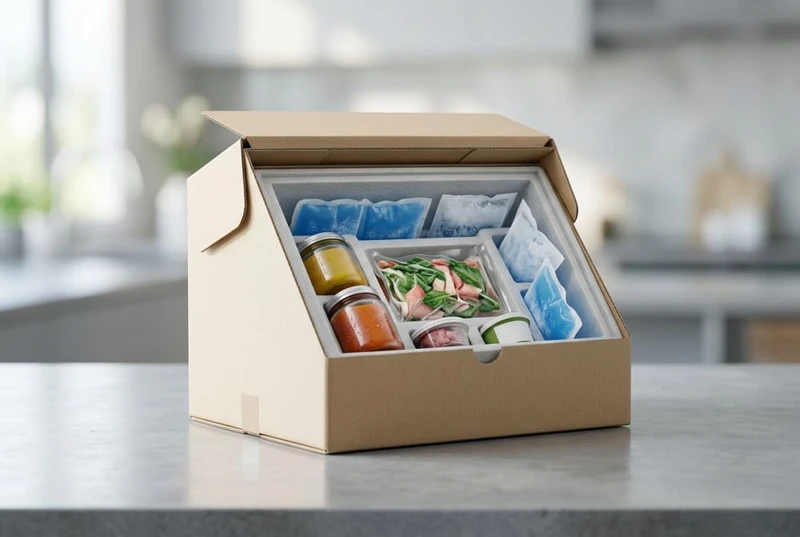
For food brands in Australia, cold-chain packaging is not simply a box decision. It is a system decision that connects transit time, product sensitivity, storage conditions, handling discipline, packing speed and customer experience. A chilled yoghurt multipack moving from Melbourne to Sydney has very different risks from a frozen ready meal travelling from a distribution centre in Brisbane to suburban households, and both are different again from same-day meal kit delivery in Perth or Adelaide. The right custom packaging protects product integrity, supports compliance, reduces claims and helps the brand arrive in good condition on the doorstep.
Businesses selling through online grocery, direct-to-consumer subscriptions, speciality food retail and wholesale distribution increasingly need shipping-ready formats that perform across Australia’s varied climate zones. Summer heat in Western Sydney, humidity in Brisbane, long-haul freight corridors through regional New South Wales, and port-linked cold storage activity near Melbourne, Fremantle and Port Botany all influence how outer cartons, liners, coolants and labels should work together. When packaging fails, the result is not only spoilage. It can lead to customer refunds, product waste, retailer disputes and reputational harm.
A practical approach starts with matching the pack design to the real shipping lane, not to a generic assumption. It also means choosing a supplier that can turn design ideas into repeatable production. Our team supports Australian buyers with advanced converting equipment, reliable manufacturing control and flexible service for both short custom runs and larger programmes across paper boxes, insulated outer packs, and custom box solutions designed for temperature-sensitive logistics.
Direct answer: how cold-chain food packaging should be planned in Australia
The most reliable cold-chain food packaging program in Australia is built around five linked decisions: target temperature range, delivery duration, outer box compression strength, insulation type and pack-out speed. If any one of these elements is treated in isolation, the final result is often either overbuilt and expensive or underperforming in transit. Chilled goods usually need tighter control against short temperature drift, frozen foods need stronger thermal buffers over longer periods, and short-delivery formats often need faster packing flows with simpler pack configurations.
For many brands, the best outcome is not the thickest insulation. It is the best balance between the corrugated shipper, internal liner, refrigerant placement and empty-space control. A sturdy outer carton helps retain liner integrity and prevents crushing under stacked transport conditions. Inner dividers or sleeves stop product movement, reduce punctures and improve pack density. When the system is designed correctly, the brand gains consistent performance and lower total landed cost.
In Australia, this planning should also reflect local lane realities such as last-mile handovers in dense urban areas, long distances between regional hubs and households, and temperature spikes during loading or doorstep dwell time. Businesses shipping food from processing sites in Victoria, New South Wales and Queensland should validate packaging against seasonal extremes rather than average conditions.
Australia market context for chilled and frozen food delivery
The Australian market for cold-chain food delivery continues to mature as online grocery, meal subscriptions, speciality dairy, health-focused prepared meals and premium frozen foods expand. Consumers increasingly expect fresh arrival, clear date control and tidy doorstep presentation. This places pressure on brands to use packaging that looks retail-ready while still surviving courier sorting, refrigerated storage transitions and final-mile delays.
Major metros such as Sydney, Melbourne, Brisbane, Perth and Adelaide remain the largest demand centres, yet regional growth matters too. Deliveries into Newcastle, Geelong, Gold Coast, Hobart, Canberra and regional mining or agricultural zones often involve mixed freight conditions and longer exposure windows. Businesses working near logistics clusters around Port Botany, the Port of Melbourne and Brisbane’s cold storage precincts often need packaging that adapts to cross-docking and pallet movement as much as it does to household delivery.
At the same time, retailers and food producers are being pushed by cost pressure and sustainability targets. This is why many buyers in Australia are reviewing paper-based insulated structures, lighter corrugated grades with smarter geometry, and label systems that reduce handling errors. Strong packaging is still important, but unnecessary bulk is harder to justify when freight charges and environmental scrutiny are rising.
| Market factor | Australia impact | Packaging implication | Typical response | Main risk if ignored | Buyer priority |
|---|---|---|---|---|---|
| Long transport distances | Common between states and regional areas | Need for longer thermal hold time | Use validated liner and coolant layout | Temperature breach | High |
| Summer heat spikes | Severe in many metro and inland routes | Outer and inner pack must resist rapid warming | Add summer pack-out protocol | Spoilage claims | High |
| Courier variability | Different handling quality by lane | Need stronger shippers and better labels | Use handling stickers and ship-ready cartons | Crush damage | High |
| E-commerce growth | Higher parcel volume direct to home | Packaging must balance branding and function | Design shipping-ready presentation | Poor unboxing and leakage | Medium |
| Sustainability pressure | Retailers and consumers ask for lower waste | Need material-efficient design | Reduce void space and optimise board grade | Higher disposal complaints | Medium |
| Compliance and traceability | Important for food safety control | Labels must remain readable and durable | Use moisture-tolerant stickers | Stock rotation errors | High |
The table shows why the Australian market rewards packaging systems rather than standalone materials. Freight distance, climate, courier variability and compliance all combine to influence performance. Brands that only compare unit price per carton often miss the bigger cost of failed deliveries.
This market-growth line chart reflects a steady rise in demand for shipping-ready cold-chain packs in Australia, driven by direct delivery, premium food subscriptions and improved logistics reach into secondary cities.
What changes between chilled foods, frozen foods, and short-delivery formats
Chilled foods, frozen foods and short-delivery formats should never be packed with the same assumptions. Chilled products such as fresh dairy, cut produce, deli packs and many meal kit ingredients usually travel in a narrower acceptable temperature window. They often tolerate less abuse from loading delays because a small rise can accelerate quality loss even if the product is not immediately unsafe. These packs usually benefit from well-fitted insulation, close coolant contact and accurate separation between moisture-sensitive paper components and condensation zones.
Frozen foods face a different risk pattern. They need to remain deeply cold enough to avoid thaw-refreeze cycles that damage texture, safety and visual appeal. Their packaging therefore prioritises longer thermal endurance and stable refrigerant placement. In many cases the contents themselves help maintain temperature because of their frozen mass, but once exposed to repeated warm intervals the decline can be fast. Frozen prepared meals, seafood and desserts often need more robust thermal buffering than chilled dairy or produce boxes.
Short-delivery formats, such as same-day metro grocery drops or rapid delivery meal subscriptions, can reduce insulation thickness if the route and handover conditions are tightly controlled. However, this only works where the real service levels support it. Brands frequently underestimate loading delays, doorstep wait times, apartment access issues and failed-first-attempt deliveries. A pack designed around ideal conditions may perform poorly in practice.
| Format | Typical product examples | Temperature goal | Transit profile | Key pack focus | Common mistake |
|---|---|---|---|---|---|
| Chilled | Milk, yoghurt, cheese, fresh meal kits | Cold and stable without freezing | Short to medium duration | Temperature consistency and condensation control | Too much empty space |
| Frozen | Prepared meals, seafood, desserts | Maintain frozen state | Medium to long duration | Thermal hold and coolant structure | Weak outer box under weight |
| Short-delivery | Same-day grocery orders | Match local service window | Fast urban last mile | Packing speed and easy fulfilment | Assuming all routes stay fast |
| Hybrid chilled and ambient | Meal kits with pantry items | Separate thermal zones | Mixed content | Compartment design | Cross-warming between items |
| Frozen premium | Artisan foods and specialty protein | High quality retention | Direct-to-consumer | Branding plus performance | Overemphasis on presentation |
| Retail replenishment | Dairy cases and convenience foods | Consistent pallet movement | B2B cold-chain | Stacking strength and traceability | Using parcel-grade formats only |
This comparison makes it clear that temperature-sensitive packaging strategy should begin with product and lane segmentation. One template rarely works well across the full range of chilled and frozen applications in Australia.
Matching outer box strength with insulation and inner packing needs
The outer box does more than hold the contents. In cold-chain shipping, it supports the insulation system, protects the refrigerant arrangement and absorbs handling stress during storage, sorting and delivery. If the box walls weaken under moisture, compression or impact, the insulation can shift and performance falls quickly. That is why selecting the correct corrugated profile, paper quality and structural style matters as much as choosing the liner.
For chilled logistics, the best outer shipper is often one that keeps its shape under damp conditions and limits internal movement. For frozen shipments, weight becomes a larger factor because gel packs, dry ice alternatives or dense frozen products add load. The stronger the vertical stacking requirement, the more carefully the board grade must be matched to carton dimensions and warehouse conditions.
Inner packing elements also change the performance equation. Dividers, pads, sleeves and inserts can reduce product collision, keep refrigerants where they work best and minimise empty voids that create thermal inefficiency. In practical terms, a slightly stronger carton with a better-fitted insert may outperform a thicker insulated setup inside a weak outer box. This is where engineering and production capability matter. Our workshop combines advanced machinery with precise converting control so buyers can develop box dimensions, fitments and closures that are repeatable from pilot stage to large-volume production.
| Outer box feature | Why it matters | Works best for | Interaction with insulation | Operational benefit | If under-specified |
|---|---|---|---|---|---|
| Board grade | Supports stacking and handling | Frozen and heavy dairy loads | Prevents liner collapse | Fewer crushed cartons | Compression failure |
| Wall construction | Single or double wall affects durability | Long-haul and mixed freight | Stabilises coolant placement | Better transit reliability | Sidewall buckling |
| Box geometry | Correct dimensions reduce dead space | Meal kits and direct delivery | Improves thermal efficiency | Lower refrigerant use | Warm spots |
| Moisture resistance | Cold-chain creates condensation risk | Chilled dairy and produce | Protects insulation integrity | Cleaner arrival condition | Softened carton surfaces |
| Closure design | Seal quality affects heat ingress | All formats | Preserves internal environment | Faster pack-out consistency | Air leaks |
| Internal inserts | Hold product and coolant in place | Mixed-SKU boxes | Directs cold where needed | Less breakage and movement | Product collisions |
The table highlights the need to view the shipper, liner and insert as one system. In Australia’s e-commerce food market, buyers that optimise this full structure typically gain better performance than buyers who only increase insulation thickness.
Packaging setups for meal kits, dairy products, and frozen prepared foods
Meal kits usually require the most complex internal zoning. They often combine chilled proteins, fresh vegetables, sauces and dry pantry components in one delivery. The best setup separates ambient items from cold-sensitive products, supports fast packing and keeps heavier items from damaging delicate produce. A custom partitioned box with fitted insulation around the chilled chamber is often more effective than simply placing all items into one cold cavity.
Dairy products vary widely. Milk bottles, yoghurt tubs, cheese blocks and cultured products each create different leak, crush and condensation risks. Dairy packs often benefit from stable upright orientation, pads to absorb movement and clear external handling instructions. For wholesale or subscription dairy boxes, readable lot and date control stickers are especially important when cartons pass through multiple storage points.
Frozen prepared foods usually allow denser packing because the product shape is more regular. Trays and sleeves can be arranged in compact layers, improving thermal retention. However, the pack must still protect corners, seals and printed sleeves from abrasion. In premium retail-style direct delivery, outer presentation also matters. Shipping-ready design should protect the product while still delivering a clean arrival experience for customers.
Australian brands serving meal subscriptions in Sydney and Melbourne, dairy deliveries across Victoria and Tasmania, or frozen prepared meal programmes from Brisbane into regional Queensland often need different stock-keeping structures by lane. It is rarely efficient to use one universal pack across all networks.
| Product type | Preferred packaging setup | Insulation approach | Inner packing style | Label priority | Typical shipping channel |
|---|---|---|---|---|---|
| Meal kits | Compartmented shipper | Zoned liner around chilled section | Dividers for proteins and produce | Recipe and storage sequence | Direct-to-home subscription |
| Milk and dairy drinks | Strong upright carton | Close-contact cold support | Bottle stabilisers or pads | Use-by clarity | Online grocery and local delivery |
| Yoghurt and cultured tubs | Tight-fit case pack | Moderate liner with void reduction | Layer pads | Keep refrigerated notice | Retail replenishment and e-commerce |
| Cheese | Compact insulated carton | Condensation-aware pack | Wrap separation pads | Batch control | Specialty food delivery |
| Frozen prepared meals | Dense tray shipper | Long-hold insulation | Stacked tray alignment | Keep frozen notice | Direct-to-consumer frozen delivery |
| Frozen desserts | Protective premium shipper | High thermal buffer | Cavity insert | Fragile and frozen handling | Gift and event delivery |
This table shows why product-specific configuration matters. Meal kits need zoning, dairy needs stability and date control, while frozen prepared foods benefit from density and longer hold performance.
Sticker use for handling instructions, storage notes, and expiration control
Stickers are not a minor finishing detail in chilled logistics. They are a practical control tool that guides warehouse teams, drivers, store staff and end customers. In cold-chain shipping, labels must remain legible in low temperatures, under condensation and during handling abrasion. A box can be structurally excellent and still fail operationally if the wrong handling or storage message is missed.
Useful sticker applications include “keep refrigerated”, “keep frozen”, “this side up”, “deliver promptly”, batch coding, date rotation prompts and customer-facing unpack instructions. For mixed-format deliveries, colour-coded stickers can also help separate ambient, chilled and frozen inventory in fast-moving fulfilment environments. This is especially relevant for meal kit operations and online grocery warehouses where packing speed is high and picking errors can occur.
For Australian distribution, stickers should be selected with moisture exposure and readability in mind. Adhesives need to perform on corrugated surfaces that may become cool or slightly damp. Print contrast matters when labels are scanned in loading bays or cold rooms. Businesses needing integrated label and carton supply can simplify procurement by sourcing both boxes and cold-chain packaging stickers from a partner that understands food logistics applications.
Our service capability is built around flexible support from sampling through volume production, helping Australian buyers coordinate packaging structure and label requirements without unnecessary delays between suppliers.
Shipping-ready packaging choices for online grocery and direct delivery brands
Shipping-ready packaging for online grocery and direct delivery should balance fulfilment speed, presentation, durability and thermal performance. In practice, this means choosing formats that are easy to erect, easy to load and reliable during last-mile movement. For Australia’s growing direct delivery market, the outer shipper often doubles as the customer’s first physical brand touchpoint, so it must do more than survive freight.
Common choices include regular slotted cartons with insulated liners, self-locking mailer-style shippers for smaller chilled parcels, partitioned meal kit boxes, heavy-duty frozen food cartons and branded shelf-ready outers that transition from transport to in-home unpacking with minimal mess. The right choice depends on order size, SKU mix, refrigerant type, route duration and whether the shipment is courier-parcel, milk-run or refrigerated van delivery.
Many brands now favour custom-sized cartons over generic stock boxes because better fit reduces filler use, improves thermal efficiency and lowers dimensional freight costs. This is where manufacturing capability becomes commercially important. A professional packaging workshop with efficient production lines and quality inspection discipline can support both small-batch launches and large-scale recurring supply for Australian brands that are scaling quickly.
This bar chart illustrates where demand for shipping-ready cold-chain packaging is strongest in Australia. Online grocery and meal kits lead due to broad parcel volume and complex multi-SKU orders.
Where packing speed and thermal protection often conflict in real projects
One of the biggest real-world conflicts in cold-chain packaging is the tension between faster pack-out and better thermal control. Fulfilment teams want fewer steps, fewer components and less training time. Product quality teams want tight coolant placement, exact item separation and robust sealing. Both sides are correct, but compromise is necessary.
Problems often appear when a theoretically excellent packaging design is too slow for the packing line. Staff may skip dividers, reposition refrigerants inconsistently or leave cavities unfilled during peak periods. The result is variable performance rather than controlled performance. Conversely, if a system is made too simple, it may be fast to assemble but too weak to handle long summer routes or delayed drop-offs.
The solution is not only better training. It is packaging engineered for operational reality. Pre-creased shippers, intuitive inserts, colour-coded packing positions, simplified closure systems and clear stickers all help reduce line error. Buyers in Australia should test pack designs during live operational windows, not only under calm sample-room conditions. In busy fulfilment centres around Western Sydney, Dandenong South, Truganina or the outer Brisbane corridor, seconds per pack matter. But those seconds should not come at the cost of spoilage or complaint rates.
| Project tension | Why it happens | Operational symptom | Packaging fix | Business result | Who should review |
|---|---|---|---|---|---|
| Too many pack components | Performance-first design without line input | Slow packing and errors | Reduce steps and pre-form inserts | Higher throughput | Operations manager |
| Insufficient coolant control | Speed pressure during peak | Inconsistent placement | Design fixed-position cavities | Stable temperature outcome | Quality lead |
| Weak sealing | Closure method too manual | Cartons partly open | Use simpler closure geometry | Lower heat ingress | Packing supervisor |
| Poor item separation | Mixed SKU complexity | Crushed product and leakage | Add smart dividers | Cleaner customer delivery | Product team |
| Label confusion | Inconsistent visual cues | Handling mistakes | Standardise stickers and positions | Better compliance | Warehouse team |
| Oversized boxes | Using stock cartons only | Extra void and refrigerant use | Custom size optimisation | Lower cost per order | Procurement |
The explanation behind this table is simple: packaging that ignores line realities rarely performs consistently. Cold-chain design should support both thermal science and human workflow.
Testing checkpoints before launching a cold-chain packaging program
Before launch, a cold-chain packaging program should be tested against the actual conditions it will face, not only the intended conditions. This means laboratory-style thermal validation should be combined with route simulation, compression checks, drop testing, moisture exposure review and real pack-line trials. Testing is where many avoidable failures are caught before they become customer complaints.
At minimum, brands should define the worst-case route duration, ambient temperature assumptions, acceptable internal product range, stacking conditions and coolant configuration. They should then repeat tests across representative seasonal scenarios. In Australia, a package validated for mild-weather metro delivery may not perform the same during a January heat event in Sydney or a delayed handover in regional Queensland.
Testing should also confirm that labels remain legible, date control survives condensation, outer boxes maintain strength after cold storage and the internal configuration can be packed consistently by real staff. When buyers treat testing as a one-off formality, programmes are more likely to drift into failure after launch. A capable packaging supplier can help support sample iteration, structural adjustment and small pilot runs before full-scale production.
This area chart shows the growing shift in Australia toward packaging programmes that combine thermal validation with sustainability and operational efficiency. Buyers increasingly expect proof, not assumptions.
| Testing checkpoint | What to measure | Why it matters | Best timing | Typical failure found | Launch decision use |
|---|---|---|---|---|---|
| Thermal hold test | Internal temperature over time | Confirms cold retention | Prototype stage | Insufficient hold duration | Approve or revise insulation |
| Compression test | Stacking strength | Prevents warehouse crush damage | Before pilot run | Carton collapse | Increase board strength |
| Drop test | Impact resistance | Checks parcel handling survival | Pilot stage | Split corners and leakage | Revise structure |
| Moisture check | Board and label condition | Cold-chain creates condensation | Prototype and pilot | Soft walls and unreadable labels | Adjust coatings or stickers |
| Live pack trial | Assembly time and consistency | Reveals operational risk | Pre-launch | Line slowdown and skipped steps | Simplify pack design |
| Seasonal route simulation | Hot-weather performance | Matches Australian climate risk | Before scale-up | Summer delivery failures | Create seasonal SOPs |
This testing checklist helps turn a packaging concept into a launch-ready system. It also makes supplier comparisons more objective because performance can be measured rather than assumed.
What to look for in a supplier handling custom packaging for chilled logistics
The right supplier for chilled logistics packaging should offer more than carton production. They should understand how structure, material, print, labels, lead times and repeatability interact in temperature-sensitive supply chains. A supplier that only discusses board thickness without asking about lane duration, product mix or packing speed is unlikely to deliver the best result.
Australian buyers should assess four broad areas. First, technical capability: can the supplier help refine dimensions, structural performance and label compatibility for cold-chain use? Second, manufacturing capability: can they hold quality across repeated runs, support short pilots and scale to larger orders when the program grows? Third, service capability: can they respond quickly, manage custom changes and support realistic timelines? Fourth, commercial fit: are they transparent about specification, tolerances and total cost implications?
Our company approach for the Australia market is built around these same areas. On technology, we use advanced equipment to support accurate converting and consistent production quality. On manufacturing, we handle both smaller custom orders and larger volume requirements with attention from material selection through final inspection. On service, we provide flexible and efficient support so brands can move from sampling to scheduled supply with less friction.
This comparison chart shows the capabilities buyers often value most when selecting a supplier for chilled logistics packaging in Australia. Technical guidance and quality consistency usually rank ahead of simple lowest-price sourcing.
| Supplier criterion | What good looks like | Why it matters in Australia | Questions to ask | Warning sign | Priority level |
|---|---|---|---|---|---|
| Cold-chain understanding | Knows chilled and frozen differences | Routes and climates vary widely | Can you review our lane profile? | Generic recommendations only | High |
| Design support | Helps optimise size and inserts | Custom fit lowers freight and spoilage | Do you offer sample iterations? | No structural feedback | High |
| Production control | Stable quality from run to run | Essential for recurring subscriptions | How is final inspection handled? | Inconsistent specs | High |
| Label integration | Can align box and sticker needs | Supports compliance and handling | Are cold-use adhesives available? | Separate unmanaged sourcing | Medium |
| Flexible order size | Supports pilot and scale-up | Useful for launches and seasonal demand | Can you handle small and large runs? | Rigid MOQ only | Medium |
| Service responsiveness | Fast communication and schedule clarity | Important during seasonal pressure | What is your revision lead time? | Slow replies and vague timing | High |
The explanation here is practical: the best supplier helps reduce risk before production starts. They should be able to translate product needs into a repeatable packaging program, not merely print and ship cartons.
Industries and applications where cold-chain packaging matters most
Cold-chain packaging in Australia serves a broad mix of industries. Direct-to-consumer meal programmes rely on it to protect freshness and brand trust. Dairy producers use it to maintain product integrity across urban and regional delivery routes. Frozen ready meal companies depend on it for portion-controlled household delivery. Seafood, confectionery, specialty cheese, nutrition products and fresh produce operators all have different thermal and handling needs, but all depend on packaging that performs consistently.
Applications extend beyond home delivery. There are also wholesale transfers between production sites and retail backrooms, replenishment for convenience stores, hospitality supply, event catering and export-adjacent domestic staging around port cities. Packaging must fit the application. A box built for refrigerated van rounds around inner Melbourne may not be right for parcel-based shipments moving from Sydney into inland New South Wales.
This is why buyers should choose packaging according to use case, not just product category. The application defines the stress profile. In many situations, the route and handover model are more important than the food itself.
Case examples from Australian logistics conditions
A Sydney meal kit business serving apartment-heavy postcodes may find that doorstep dwell times and access delays are a larger risk than total route distance. Their packaging should focus on fast identification, compact box size and chilled zoning that tolerates a moderate delay after drop-off. A Melbourne dairy subscription service shipping to Geelong, Ballarat and Bendigo may need stronger outer cartons because multi-stop handling and regional transfers create more compression and movement risk.
A Brisbane frozen prepared meal brand serving both metro households and regional Queensland may discover that one pack is not enough. Metro parcels can use a more streamlined format, while longer regional lanes require extra hold time and stronger coolant placement. Similarly, a Perth specialty seafood seller may prioritise premium presentation and leak prevention because customer expectations are high and product value per box is significant.
These examples show why local testing matters. Climate, density, route shape and customer handover conditions differ across Australia. The most cost-effective program is usually the one designed around real delivery behaviour rather than generic industry averages.
2026 trends in Australian cold-chain packaging
Looking toward 2026, three trends are likely to shape cold-chain packaging decisions in Australia. The first is smarter validation. More brands will expect suppliers to support structured performance testing, seasonal pack recommendations and data-backed optimisation rather than basic box quoting. The second is sustainability pressure. Buyers will keep looking for designs that reduce material use, improve pack efficiency and increase the share of recyclable paper-based components where feasible. The third is policy and operational accountability. Traceability, date visibility, waste reduction and packaging stewardship expectations will continue to influence buying decisions.
Technology will also play a larger role. Better digital print flexibility, improved short-run customisation, more precise converting and stronger coordination between structural packaging and label systems should help brands run targeted SKUs without carrying too much packaging inventory. In policy terms, broader attention to waste, recycling pathways and transport emissions is likely to reward right-sized shipping formats and material-efficient designs. Sustainability claims will need to remain realistic, especially where insulation performance and food protection must come first.
For Australian food brands, the future is not about replacing function with appearance. It is about designing packaging that protects temperature-sensitive products while using smarter structures, cleaner workflows and more transparent supplier support.
FAQ
What is the main difference between chilled and frozen food packaging?
Chilled packaging focuses on stable low temperatures and condensation management, while frozen packaging prioritises longer thermal hold and protection against thawing.
Can one box design work for all Australian delivery routes?
Usually not. Metro same-day, interstate courier and regional delivery lanes often need different pack specifications or seasonal adjustments.
Are stickers really necessary on cold-chain boxes?
Yes. Clear stickers improve handling, storage accuracy, date control and customer unpacking behaviour, especially in busy fulfilment environments.
How should meal kits be packed?
Meal kits generally perform best with separated zones for chilled and ambient items, plus inserts that protect produce and proteins from movement.
What should I ask a supplier before ordering?
Ask about structural design support, sample capability, moisture and temperature suitability, production consistency, inspection process and flexible order volumes.
Why do some cold-chain packs fail even with thick insulation?
Because box strength, fit, coolant position, sealing quality and real packing behaviour matter just as much as insulation thickness.
For Australian brands shipping food that cannot afford temperature mistakes, the strongest results come from treating packaging as a complete cold-chain system. Product type, route, outer box strength, insulation, internal layout, stickers, testing discipline and supplier capability must all work together. When they do, chilled and frozen deliveries arrive safer, cleaner and more efficiently.
