
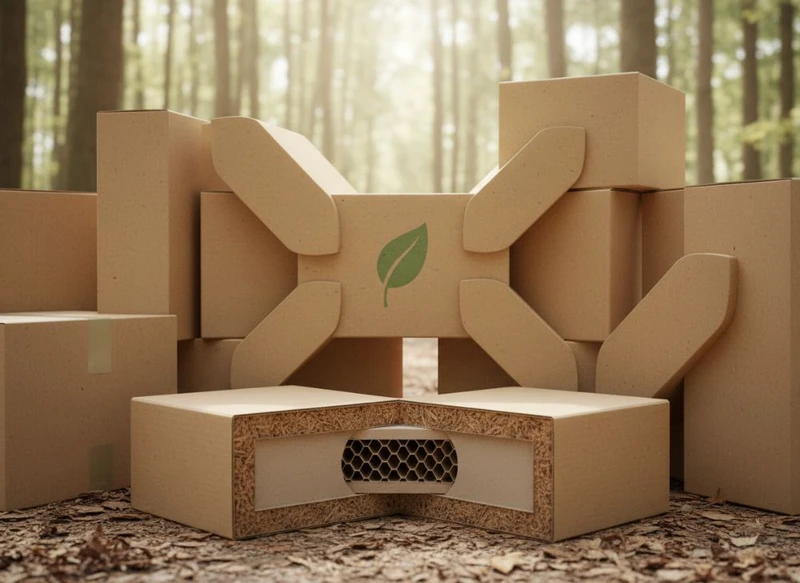
Future-proofing your brand with sustainable paper box materials means selecting packaging that fits the product, communicates clearly to customers and has a realistic end-of-life pathway. For most boxed products, the strongest starting point is usually a well-designed fibre-based pack with recycled content where suitable, minimal mixed materials and inks, coatings and adhesives chosen for compatibility with local recovery options.
“Sustainable” is not a single material claim. A paper box can contain recycled fibre yet be difficult to recycle because of plastic laminates, metallic decoration, heavy coatings or permanently bonded inserts. Conversely, a simple paperboard carton made from responsibly specified fibre may be easy for customers to place in the appropriate recycling stream, even if it is not suitable for composting. The best choice depends on product protection, food-contact needs, branding requirements and the waste systems your customers can actually use.
Understanding Recycled Content and Composites
Recycled paperboard can reduce demand for virgin fibre and make use of recovered paper, but it must still meet the practical demands of the pack. Strength, print finish, fold performance, surface smoothness and product-contact requirements can differ between grades and suppliers.
When specifying recycled content, ask for the percentage, whether it refers to the whole board or only one layer, and whether the fibre is pre-consumer, post-consumer or a combination. These details prevent a broad claim from creating confusion internally or on pack.
Choose board around the job it must do
A lightweight retail carton, a rigid presentation box and a corrugated shipping carton place different demands on paper-based materials.
| Packaging need | Useful material direction | Questions to verify |
|---|---|---|
| Folding carton for retail shelves | Paperboard with a print-ready surface and appropriate recycled content | Does it fold cleanly? Does it provide the needed stiffness and print result? |
| E-commerce transit packaging | Corrugated board designed for product weight and handling conditions | Is board construction sufficient for the product, closure and expected transit risks? |
| Premium gift packaging | Paperboard or rigid-board construction with restrained embellishments | Can decoration, magnets, ribbons and inserts be removed or avoided? |
| Food or moisture-sensitive products | Fibre-based pack with a fit-for-purpose barrier approach | Is the barrier necessary, and does it affect recycling or composting options? |
| Products with multiple components | Paper-based outer box plus simple, separable internal components | Can customers easily take the pack apart before disposal? |
A recycled-content specification should not be treated as a substitute for structural design. Under-specifying a box can lead to crushed corners, damaged goods or unnecessary secondary packaging, which may undermine the intended environmental benefit.
Be cautious with composite constructions
Composites combine paper or board with other materials, such as plastic films, foil, foam, fabric, magnets or multilayer barriers. Some are necessary for product protection, but they often make recovery more complicated because the layers cannot be readily separated.
Before adding a composite feature, consider:
- What exact function does it serve? Moisture resistance, grease resistance, tamper evidence, display impact and cushioning are different requirements.
- Can a simpler material provide enough performance? A redesign may remove the need for a laminate or insert.
- Can it be separated by hand? If a customer can remove an insert, ribbon or label without tools, the disposal instruction can be clearer.
- Will the component be visible to sorting and recycling processes? Small or tightly bonded elements can create practical recovery issues.
- Is the claim specific? Do not describe a composite box as recyclable without checking the complete construction, including coatings and attachments.
For branded cartons, the aim is not necessarily to remove every non-paper element. It is to use each additional material deliberately, minimise it where possible and tell customers what to do with it.
The Move Away from Single-Use Plastics
Many businesses are reassessing single-use plastic packaging, particularly where plastic does not materially protect the product or improve customer use. Paper boxes can replace some plastic sleeves, clamshells, void-fill materials and outer wraps, but substitution should be based on function rather than appearance alone.
A paper box is a sensible alternative when it can protect the item through handling, allow efficient packing and provide the required tamper, hygiene or shelf-display function. It may be less appropriate where a high moisture barrier, resealability or extended product protection is essential. In these cases, a packaging redesign may be better than simply placing a paper carton around an unchanged plastic pack.
Start with reduction, then replacement
The most useful review sequence is:
- Remove unnecessary layers. Eliminate decorative wraps, oversized cartons or duplicate protective components that do not serve a clear purpose.
- Right-size the box. Reduce unused space while allowing sufficient protection and practical packing.
- Use fibre where it works. Shift suitable outer packs, dividers and mailers towards paper-based alternatives.
- Design residual plastic to be minimal and separable. If plastic remains necessary, avoid permanently bonding it to the paper component where feasible.
- Give precise disposal guidance. Instructions should refer to the actual pack components, not a generic sustainability message.
Avoid treating paper as automatically lower impact in every application. Using substantially more material than needed, or choosing an inadequate paper box that requires replacement packaging, can create avoidable waste. Product trials and transport assessment remain important for any packaging change.
Water-Soluble Inks and Coatings
Inks and coatings help a box communicate a brand, protect printed graphics and create a particular tactile finish. They can also influence how easily paper fibres are recovered during recycling. Water-based or water-soluble systems may be considered in some paper-packaging applications, but the terminology alone does not prove that the finished box is recyclable, compostable or suitable for a particular recovery process.
The full system matters: board, ink coverage, varnish, coating, adhesive, foil, laminate and any labels or windows all need review together.
Specify the finish, not just a marketing term
Instead of asking simply for “eco ink”, define what the print needs to achieve and what environmental outcome you are seeking. For example:
- Is high rub resistance required during fulfilment and retail handling?
- Does the product need a moisture, oil or grease barrier?
- Is a matte, gloss, uncoated or soft-touch appearance essential to the brand?
- Will large areas of dark coverage or solid colour be used?
- Does the pack need to meet a product-specific safety or contact requirement?
- Is recovery through standard paper recycling the preferred end-of-life route?
Water-based ink and coating systems can be a useful option, particularly when selected with the board and anticipated recycling pathway in mind. However, coatings vary considerably. A coating promoted as water-based may still create issues depending on its formulation, application weight and the rest of the construction.
For any claim about recyclability, compostability, biodegradability or product suitability, request evidence that applies to the proposed finished packaging—not merely to one ingredient. Standards, acceptance criteria and waste infrastructure can vary, so verify the requirements relevant to the Australian market and your specific product category.
Keep print design recovery-aware
Design choices can reduce unnecessary material complexity without making the box look plain. Consider limiting special finishes to focal areas, avoiding full-surface plastic film laminations where an alternative finish can work, and using direct printing instead of additional decorative labels where practical.
Labels are still valuable for variable information, batch coding, promotions and product identification. If you need them, select a compatible construction and keep the label size proportionate to the pack. Explore custom printed stickers where a separate label is genuinely the most practical option, while confirming adhesive and removal considerations with the supplier.
Monomaterial Design for Easy Recycling
Monomaterial design means keeping a pack principally within one material family, such as paper and board. It does not require every component to be identical; rather, it aims to avoid combinations that are hard to separate or recover.
For paper boxes, a monomaterial-minded design often uses paperboard for the carton, paper-based dividers where protection is needed, and minimal additions that customers can remove easily. This approach can make disposal instructions simpler and may reduce procurement complexity.
Practical ways to simplify a paper box
- Replace plastic windows with no window, a die-cut reveal or another paper-based presentation approach where product protection permits.
- Use folded paperboard dividers rather than foam or plastic trays when the product is not highly fragile.
- Avoid magnets in reusable rigid boxes unless their value to repeated use clearly justifies their inclusion.
- Consider paper-based sealing methods where security and product conditions permit.
- Print instructions directly onto the box rather than applying extra labels for static information.
- Design tabs, locks and structural closures to reduce dependence on tape or mixed-material fasteners.
- Make detachable components obvious, such as a removable ribbon or separate product insert.
Monomaterial design is not a reason to compromise product safety. A fragile glass item, a product with a moisture-sensitive formula or a pack with a safety-critical closure may need additional engineering. The aim is to identify the lowest-complexity construction that still performs its required role.
Common design mistake: recyclable board, unrecyclable box
A carton may start as recyclable paperboard but become less straightforward once it gains a plastic laminate, foil layer, glued-in plastic tray, magnetic closure and synthetic ribbon. The issue is often not a single feature but the accumulated complexity.
Create a bill of materials for each packaging format. List the board, coatings, inks, adhesives, inserts, labels, closure materials and decorative elements. This gives procurement, design and marketing teams a shared view of what is actually being specified—and what could be simplified.
Biodegradable Additives in Packaging
Biodegradable additives are sometimes promoted as a way to improve the end-of-life profile of packaging. They require careful scrutiny. “Biodegradable” does not automatically mean a material will break down safely, quickly or in the conditions available to customers. It also does not automatically mean the material is accepted in home composting, commercial composting or paper recycling systems.
For a paper box, an additive may be part of an ink, coating, adhesive or polymer-based component. The key question is whether it offers a relevant, verified benefit in the complete packaging design.
Questions to ask before using biodegradable additives
- What component contains the additive?
- In which conditions is the claimed breakdown expected to occur?
- Does the claim apply to home composting, industrial composting, soil, marine environments or another setting?
- Does the finished item meet an applicable standard, rather than only the raw material?
- Is there a realistic collection or composting pathway available to the intended customer?
- Could the additive interfere with paper recycling or introduce uncertainty for recyclers?
- Would a simpler uncoated paperboard pack have a clearer end-of-life route?
Be especially wary of vague claims such as “degradable” or “earth friendly” when there is no explanation of conditions, timescale or disposal pathway. Claims should be precise, substantiated and understandable to a customer deciding which bin to use.
In many cases, a straightforward recyclable paperboard box is easier to communicate and manage than a complex pack relying on an additive. Compostability can be valuable in the right use case, but it should follow a clear end-of-life plan rather than act as a broad marketing claim.
Paper Box End-of-Life: Composting vs. Recycling
Recycling and composting are different pathways, with different design priorities. A box should not be described as suitable for either route unless its materials, contamination risk and local acceptance have been checked.
For many clean, dry paperboard boxes, recycling is the most familiar intended route. Fibre can be processed into new paper products, though recovery depends on local collection rules, pack design and whether the box is free of food, oil, moisture or other contamination.
Composting is intended for materials that break down under specified biological conditions. Some paper packaging may be compostable, but coatings, inks, adhesives, labels and added barriers can affect suitability. A compostable claim also has limited practical value if the relevant composting system does not accept the item.
| End-of-life option | Best suited to | Key limitations to check | Design priority |
|---|---|---|---|
| Recycling | Clean, dry fibre-based cartons with limited non-paper components | Local collection guidance; coatings, films, adhesives, contamination and attached inserts | Maximise recoverable fibre and minimise bonded mixed materials |
| Home composting | Packaging designed and verified for home-compost conditions | Finished-pack suitability, timeframes, backyard conditions and customer understanding | Use only where a genuine home-compost route is supported |
| Commercial composting | Items with an accepted collection and processing route | Facility acceptance varies; access may be limited; separate collection may be needed | Match materials and claims to an available service |
| General waste | Contaminated or non-separable composite packaging where no recovery pathway is available | This should not be presented as a preferred sustainability outcome | Redesign future formats to remove avoidable complexity |
Make disposal instructions useful
A recycle symbol or a generic “eco” message does not tell customers enough. Better guidance identifies the component and the action, such as separating a paper insert from a non-paper element if applicable. Keep instructions visible, short and consistent with the material reality of the pack.
Do not imply that all Australian councils, recycling services or composting operators accept the same materials. Disposal arrangements differ, so review instructions for the distribution footprint and update them if the packaging construction changes.
How to assess sourcing and environmental claims
Responsible sourcing and credible claims are central to future-proofing, because material choice affects brand trust as well as waste outcomes. The most reliable approach is to ask for specific documentation, compare like with like and avoid claims that are broader than the evidence.
A practical supplier-assessment checklist
When reviewing paper box materials and print finishes, ask suppliers to clarify:
- Material composition: What is the board grade, fibre source description and recycled-content percentage?
- Scope of the claim: Does the claim apply to the raw board, the printed blank or the completed box with all finishes and inserts?
- Relevant verification: What documentation supports recycled content, responsible fibre sourcing, recyclability or compostability? Is it current and applicable to your market?
- Coatings and adhesives: Are there plastic films, barrier layers, hot-melt adhesives, pressure-sensitive labels or other components that change end-of-life options?
- Product compatibility: Has the material been checked for the product’s weight, moisture exposure, odour sensitivity, storage conditions and handling requirements?
- Print and decoration: Which inks, varnishes, foils, embossing, laminations and finishes are included in the quoted construction?
- Component separation: Can inserts, sleeves, labels, ribbons or closures be removed by the customer?
- Claim wording: Can each consumer-facing statement be supported clearly without overstating the result?
- Change control: Will you be notified if the board, coating or construction changes after approval?
- Sample review: Can you assess a physical prototype with the actual product before committing to the format?
Avoid these common claim problems
Calling all paper packaging recyclable. Recovery depends on the complete pack and local systems, not simply the presence of paper fibre.
Confusing recycled content with recyclability. A box can contain recycled fibre and still be difficult to recycle after use; the reverse can also be true.
Treating compostable and biodegradable as interchangeable. They describe different concepts and depend on conditions.
Making a single-component claim for a mixed pack. If only the carton is recyclable, say so and provide a clear instruction for other components.
Using supplier language without review. Marketing terms can be ambiguous. Ensure claims align with the final construction, intended disposal route and applicable Australian requirements.
Build sustainability into the brief from day one
The most effective packaging projects set environmental criteria before artwork and structural design are finalised. Include preferred end-of-life pathway, minimum necessary protection, permitted material combinations, recycled-content goals, decoration limits and claim-approval steps in the brief.
This is particularly helpful for premium presentation formats. A well-planned custom gift packaging solution can use structure, print hierarchy and texture to create impact rather than relying on layers of hard-to-separate materials. For broader product ranges, review custom packaging box options against the actual product, packing workflow and end-of-life goal rather than selecting on appearance alone.
A practical decision framework for your next paper box
Use these five decisions to move from a broad sustainability objective to a workable specification:
- Define the non-negotiables. Product protection, safety, shelf presence, storage conditions and unboxing experience come first.
- Set one primary end-of-life route. Choose recycling or composting based on the material and realistic customer access; do not claim both without evidence.
- Reduce material complexity. Remove needless layers and select separable components where additions are necessary.
- Confirm the finished construction. Assess board, print, coating, adhesive, label and insert together—not in isolation.
- Approve claims last. Finalise environmental wording only once the exact materials and intended disposal instructions are confirmed.
Future-proof paper packaging is not about finding a perfect universal material. It is about making defensible, product-appropriate choices that can adapt as customer expectations, recovery systems and your product range evolve.
When you are ready to develop a specification, use your checklist to compare proposed structures and request finished samples. XGolden Print can also be considered as a packaging production partner; learn more about XGolden Print and its custom packaging capabilities before discussing a project.
