
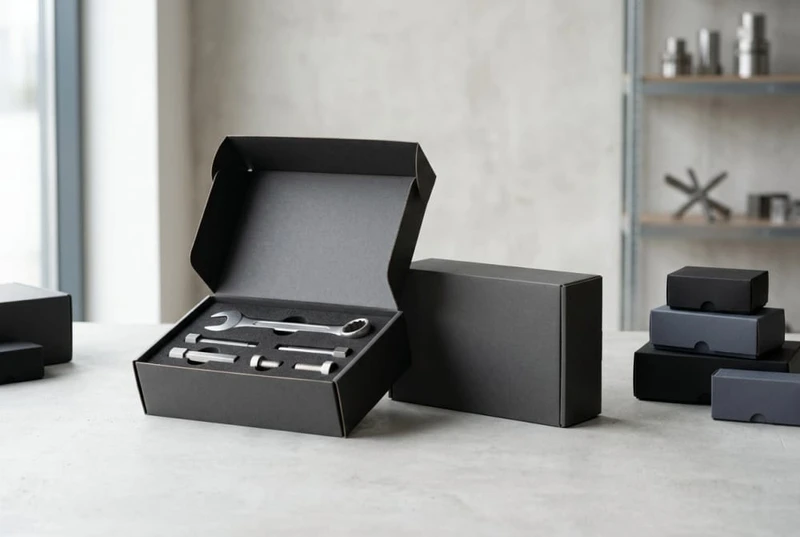
In Australia, packaging for industrial tools and hardware does far more than hold a product in place. It affects freight efficiency, shelf presentation, warehouse picking speed, buyer confidence, and even whether a supplier is seen as dependable enough for repeat contracts. For hand tools, fastener kits, maintenance sets, replacement parts, and industrial components, custom packaging is often the difference between a clean delivery and a costly claim.
For B2B buyers in Sydney, Melbourne, Brisbane, Perth, Adelaide, and regional distribution centres connected to Port Botany, the Port of Melbourne, and Fremantle, packaging quality is judged through a practical lens. Buyers look for transport resilience, accurate labelling, logical product organisation, and consistency across SKUs. That is why many brands invest in custom box packaging solutions that are designed around storage, dispatch, retail presentation, and repeat handling rather than a one-size-fits-all carton.
Well-planned packaging also reduces operational friction. In warehouse environments, a durable outer box with the right board grade, stack strength, barcode placement, and insert design helps teams receive, store, pick, and ship products with fewer errors. For retail lines, it improves visibility and perceived value. For industrial supply chains, it supports traceability, safer transport, and stronger account relationships.
Direct answer: why custom packaging matters for industrial tools and hardware
Custom packaging improves protection and B2B presentation because it is built around the real conditions tools and hardware face in the Australian market: long freight distances, mixed-channel distribution, frequent handling, exposure to dust or moisture, and demanding buyer expectations. A standard box may be acceptable for a low-risk shipment, but industrial brands often need packaging that can handle pallet stacking, shelf storage, barcode scanning, and item verification without breaking down.
When a procurement manager receives a boxed wrench set, a maintenance kit, or spare machine parts, the judgement is immediate. Are the labels clear? Do the parts stay in place? Is the carton strong enough for racking? Can the outer pack be identified in seconds? Does the packaging look like a reliable industrial line rather than a generic low-cost import? These questions shape whether packaging is seen as an asset or a hidden liability.
In practical terms, custom boxes help by matching dimensions to products, reducing movement in transit, supporting inserts for kits, improving stacking strength, and presenting a clear visual hierarchy. They can also be paired with custom stickers for barcodes and warehouse identification, helping teams manage stock rotation, serial tracking, and dispatch accuracy.
Market context in Australia
Australia’s tool and hardware market spans retail chains, specialised trade suppliers, safety distributors, industrial wholesalers, mining support contractors, e-commerce sellers, and OEM spare-part providers. Packaging needs vary sharply across these channels. A carton suitable for a shelf-ready power tool accessory sold in Newcastle may not suit a spare-parts programme shipping from Melbourne to mining sites in Western Australia.
Long transport routes are a major factor. Freight moving between eastern states and regional or remote destinations often passes through multiple hubs, depots, and delivery conditions. Packaging must tolerate compression, vibration, and occasional rough handling. In coastal trade and import-linked supply chains through Brisbane, Sydney, and Melbourne, moisture resistance and clear outer labelling also matter.
Another market factor is category expansion. Australian buyers increasingly expect organised kits, replacement packs, and maintenance bundles that reduce downtime on site. That increases the need for inserts, item-count control, and packaging consistency across product families. As businesses seek fewer claims and better internal efficiency, packaging becomes part of operational performance rather than a branding afterthought.
| Australian market channel | Typical products | Main packaging need | Key risk | Preferred packaging approach | Why it matters |
|---|---|---|---|---|---|
| Industrial wholesale | Hand tools, parts, kits | Stacking and scanning | Picking errors | Strong cartons with barcode stickers | Supports warehouse speed and traceability |
| Retail hardware | Tool sets, accessories | Shelf impact | Low perceived value | Printed display boxes with inserts | Improves presentation and product understanding |
| E-commerce | Replacement components | Transit protection | Damage in parcel delivery | Compact reinforced boxes | Reduces returns and reshipments |
| Mining supply | Maintenance kits | Durability | Part loss in transit | Heavy-duty kit boxes with compartments | Keeps site-critical parts complete |
| OEM spare parts | Components and service items | SKU clarity | Misidentification | Consistent labelled packaging system | Supports aftersales accuracy |
| Trade distributors | Fasteners, consumables | Storage efficiency | Crushed packaging | Stackable board grades and labels | Improves shelf and bin management |
The table shows that packaging decisions in Australia should be linked to channel behaviour, not just product size. The best format is the one that matches transport conditions, handling frequency, and how the buyer will use the pack once it arrives.
Product types and packaging roles
Industrial tools and hardware are not one packaging category. A single supplier may sell single hand tools, multi-piece kits, replacement components, fastener assortments, repair packs, or retail-ready accessories. Each type calls for a different structure, print strategy, and insert method.
Single heavy items often need board strength and anti-movement support more than decorative finishes. Multi-SKU kits need item separation and count verification. Spare parts usually require consistent outer dimensions and strong SKU coding. Replacement components may need compact boxes optimised for shelves and bins rather than visual theatre. Retail packs benefit from stronger branding and front-panel communication, while distribution cartons focus on durability, scan readability, and efficient stacking on pallets.
For Australian suppliers trying to manage broad product lines, a standardised packaging architecture can help unify dimensions, graphic hierarchy, and labelling zones across categories. This creates a cleaner experience for both warehouse teams and customers.
Box structures for hand tools, kits, spare parts, and replacement components
Choosing the right box structure starts with the product’s weight, shape, usage context, and sales channel. Hand tools such as spanners, pliers, chisels, and hammers usually require high board integrity and minimal internal movement. A rigid foldable carton, reinforced tuck-end box, or corrugated inner fitment can prevent product shift and edge burst during transport.
Kits and sets are more complex. If a maintenance kit contains sockets, drill accessories, small fasteners, and replacement pieces, the packaging has to do several jobs at once: separate components, maintain count accuracy, and allow fast inspection. This often means die-cut inserts, partition systems, or layered trays. A well-designed kit box should make it obvious when something is missing before dispatch and before use by the end customer.
Spare parts and replacement components often benefit from modular box sizes. Instead of using random carton dimensions, suppliers can group SKUs into several standard footprints. That improves carton purchasing efficiency, pallet planning, shelf storage, and visual consistency. For small but high-value items, fit-to-product packaging avoids wasted space and reduces the chance of parts shifting inside the box.
In Australia, where freight charges and warehouse space can significantly affect margins, efficient box structures support both protection and cost control. Businesses shipping from industrial precincts in Dandenong, Wetherill Park, Acacia Ridge, or Kewdale often benefit from packs that are easy to stack, identify, and replenish.
| Product type | Recommended box structure | Insert style | Best channel | Main benefit | Operational note |
|---|---|---|---|---|---|
| Single hand tool | Reinforced tuck-end box | Card support tab | B2B and retail | Controls movement | Useful for mid-weight items |
| Heavy tool | Corrugated carton with inner brace | Board cradle | Industrial distribution | Improves drop resistance | Better for pallet freight |
| Parts kit | Lid-and-base kit box | Die-cut tray | Service and maintenance | Keeps contents separated | Supports part counting |
| Fastener assortment | Partitioned carton | Cell divider | Wholesale | Reduces cross-mixing | Useful for bin restocking |
| Replacement component | Compact straight-line carton | Sleeve or wrap | E-commerce and OEM | Saves space | Good for standardised sizes |
| Tool set | Display-ready rigid carton | Printed insert board | Retail | Improves presentation | Supports premium positioning |
This comparison highlights that structure should follow both the product and the handling environment. A kit that looks neat but fails in picking accuracy is poorly designed, just as a strong outer box with no internal control can still generate claims.
How B2B buyers read packaging quality differently from general consumers
General consumers may react first to colour, branding, or front-panel claims. B2B buyers in Australia usually start elsewhere. They often assess packaging based on confidence signals: print consistency, material strength, label clarity, count control, edge quality, and whether the packaging appears fit for repeated storage. A packaging line that looks flimsy, overdesigned, or inconsistent can quickly undermine trust, even if the product itself is technically sound.
For procurement teams, packaging is evidence of supplier discipline. If the outer carton dimensions vary unpredictably, labels are poorly placed, or kits arrive with loose components, buyers may assume similar inconsistency exists in manufacturing, quality assurance, or dispatch control. That perception can affect reorder decisions.
B2B packaging also has to support downstream tasks. Warehouse staff need packs that can be scanned without rotating them multiple times. Service teams need kits that clearly show contents. Retail buyers need shelf-facing packs that still survive back-room handling. Buyers in sectors such as construction, mining, maintenance, agriculture, and engineering tend to reward suppliers whose packaging lowers friction across these steps.
Clear industrial presentation does not have to mean dull presentation. It means visual order, credible graphics, sensible specifications, and packaging that communicates reliability. That is often more valuable to a B2B buyer than glossy design alone.
Sticker applications for barcodes, bin systems, and warehouse picking accuracy
Stickers are one of the most practical tools in industrial packaging. In many Australian warehouses, operational accuracy depends on barcode readability, location coding, and visual differentiation between similar SKUs. A strong carton can still fail the workflow if the barcode sticker smudges, peels, or sits across a fold line that makes scanning unreliable.
For hardware and tool packaging, sticker applications usually include SKU barcodes, serial or batch labels, warehouse bin codes, replenishment markers, and handling instructions. Colour-coded label systems can also help separate product families, sizes, or service intervals. In fast-moving environments, small visual cues make a real difference.
Sticker material selection matters. Some products need matte writable labels for warehouse notes. Others need stronger adhesive stocks for corrugated surfaces or temperature-variable storage. Replacement part lines often benefit from standardised label zones so teams can identify product code, description, batch, and quantity at a glance.
Australian distributors working with high-SKU assortments often use sticker systems to bridge outer-pack branding and internal warehouse operations. The packaging may carry core printed branding, while stickers carry dynamic data that changes by batch, customer, or destination.
| Sticker use | Typical information | Best placement | Main benefit | Common mistake | Recommended fix |
|---|---|---|---|---|---|
| Barcode label | SKU and scan code | Side panel | Fast receiving | Placed on seam | Use flat scan zone |
| Bin identification | Location code | Front face | Easy storage | Too small to read | Increase type size |
| Batch label | Lot and date | Top panel | Traceability | Low contrast print | Use sharper black-on-white |
| Quantity marker | Units per box | Near barcode | Faster counting | Hidden by tape | Reserve label space |
| Colour code sticker | Series or size | Front corner | Visual sorting | Too many colours | Limit to simple system |
| Handling notice | Fragile or orientation | Top and side | Safer transport | Inconsistent positioning | Standardise locations |
The explanation here is straightforward: stickers are not a minor add-on. They are an operational layer that improves receiving, storage, picking, and shipment verification. When integrated early into packaging planning, they reduce warehouse error rates and improve accountability.
Durability and stackability choices that support efficient storage and transport
Durability is not only about surviving a drop. In industrial packaging, it also means keeping shape in a racked warehouse, resisting side-wall compression in stacked storage, and maintaining clean panel surfaces for labels and scanning. Australian supply chains often involve a combination of container freight, local pallet transport, depot transfers, and on-site handling, so packaging needs to hold up over time, not just at the first touchpoint.
Stackability is closely linked. If cartons bow, crush, or deform under load, warehouses lose cubic efficiency and increase damage risk. Stronger flute profiles, properly chosen board grades, and balanced box dimensions all help. Overly tall cartons with narrow footprints are especially vulnerable. Likewise, excess empty space inside a box can weaken overall stability because contents shift and concentrate pressure unevenly.
For tools and metal hardware, abrasion is another issue. Internal surfaces and inserts should be planned to reduce product-to-product contact, especially for coated items or components with machined edges. Moisture resistance may also matter when products move through ports or humid storage conditions near coastal trade zones.
The line chart indicates a realistic increase in demand for stronger packaging solutions as freight, compliance, and warehouse efficiency pressures grow across Australia. It reflects the way industrial buyers increasingly see packaging durability as a procurement requirement rather than a packaging premium.
Insert planning for kits and sets where missing parts create claims
Insert design is one of the most important decisions for kits and bundled hardware. Whenever a shipment contains multiple components, the risk of claims rises sharply if parts are loose, hidden, or difficult to verify. Missing-part complaints are expensive because they trigger resupply, administration time, and loss of trust. In some industries, they can also delay maintenance work or installation.
Good insert planning solves this by giving each item a defined location. Die-cut board inserts, stepped trays, partitions, and layered formats all make it easier to confirm counts during packing and receiving. If the insert reveals an empty cavity immediately, dispatch teams can catch omissions before the carton is sealed.
There is also a presentation benefit. Organised inserts make kits look engineered rather than improvised. For Australian B2B buyers, that can significantly improve confidence, especially for higher-value service kits, calibration sets, maintenance bundles, and OEM support packs. The insert becomes part of the product experience and part of the quality-control process.
Where component sizes vary, hybrid insert systems may work best. Larger metal parts can sit in cut cavities while smaller consumables are packed in labelled compartments or sealed packets. The goal is not only secure transport, but clear accountability.
| Kit type | Common insert style | Main purpose | Claim risk reduced | Best for | Extra advice |
|---|---|---|---|---|---|
| Maintenance kit | Die-cut tray | Part separation | Missing items | Service teams | Add item map on lid |
| Fastener set | Cell partition | Size organisation | Mixed contents | Trade supply | Use printed cavity IDs |
| Repair bundle | Layered insert | Compact stacking | Loose movement | OEM support | Include count checklist |
| Electrical accessory kit | Board and pouch mix | Protect fragile parts | Broken pieces | Field technicians | Separate heavy items |
| Tool set | Shaped board support | Display and retention | Transit scuffing | Retail | Align insert with front window if used |
| Replacement pack | Compact compartment tray | Quick verification | Dispatch omissions | Aftermarket parts | Keep SKU visible after opening |
The table shows that insert planning is fundamentally a risk-reduction tool. It lowers claim frequency, improves count checks, and makes kits easier to use once they reach the customer.
Retail display packaging compared with carton-focused distribution packaging
Retail display packaging and distribution packaging serve different jobs, and confusing them can lead to wasted cost or poor performance. Retail-facing packaging needs to sell the product visually. It must communicate brand, use case, specifications, and perceived value in seconds. It also needs enough structural integrity to survive shelf replenishment and customer handling.
Distribution packaging is more utilitarian. The priority is protecting product integrity across transport and making storage efficient. In industrial channels, a clean master carton with excellent label visibility may be more important than high-impact graphics. For many Australian suppliers, the best approach is a packaging hierarchy: attractive retail-level boxes inside stronger transit-ready outers.
This distinction matters especially for mixed-channel brands. A product sold through a hardware chain in Melbourne might also be ordered in bulk by a maintenance contractor in regional Queensland. The same product can therefore need both shelf-ready packaging and carton logic that supports warehouse distribution. Designing with both use cases in mind helps reduce repacking, damage, and branding inconsistency.
The bar chart reflects realistic differences in packaging demand by sector. Mining and MRO supply rank highly because kit completeness, transport resilience, and identification accuracy have direct operational consequences.
Visual mistakes that make hardware packaging look low-value or generic
Hardware packaging often loses value perception because of avoidable visual mistakes rather than budget limits. One common issue is generic graphics with no real hierarchy. If every panel uses the same font weight, colour density, and message size, buyers struggle to identify what matters. Another mistake is using over-polished retail styling for products that should look precise and industrial. In B2B categories, credibility is more important than trendiness.
Poor print contrast is another problem. Weak product names, cluttered specification blocks, and low-visibility labels make packs look cheap and difficult to manage. Random dimension changes across a product family also create a disorganised shelf or warehouse presence. Even strong products can look inconsistent if box sizes and layouts vary without logic.
Low-value perception also comes from visible structural weakness. Soft corners, collapsing panels, badly fitted inserts, and sticker placement that covers key branding all reduce confidence. In industrial categories, buyers often interpret these visual cues as signs of operational weakness.
The strongest packaging systems use a disciplined design language: clear typography, repeatable panel architecture, straightforward icons, and colours that support category navigation without overwhelming the product identity. This creates a more professional result for both shelf display and B2B handling.
| Visual mistake | How buyers read it | Operational effect | Best correction | Who notices most | Expected improvement |
|---|---|---|---|---|---|
| Cluttered front panel | Unclear positioning | Slower product identification | Use stronger message hierarchy | Retail and B2B buyers | Better first impression |
| Weak barcode placement | Poor planning | Scan delays | Create fixed label zones | Warehouse teams | Faster receiving |
| Thin-looking carton | Low durability | Damage concerns | Upgrade board and structure | Procurement teams | More trust in delivery quality |
| Inconsistent family design | Brand confusion | Shelf disorder | Build packaging system rules | Distributors | Clearer line recognition |
| Overuse of stock imagery | Generic product line | Weaker differentiation | Use technical visuals selectively | Trade buyers | Stronger credibility |
| Poor colour contrast | Cheap print quality | Harder information reading | Improve contrast and type size | All audiences | Higher readability |
These errors are important because packaging communicates value before the product is tested. In competitive Australian markets, small visual improvements can influence both shelf conversion and account confidence.
How custom packaging can strengthen consistency across industrial product lines
Consistency across a product line helps buyers recognise a supplier quickly, navigate categories easily, and trust that future orders will arrive in a familiar format. For industrial brands selling dozens or hundreds of SKUs, custom packaging provides the framework for that consistency. It allows a repeatable system for dimensions, branding zones, colour coding, insert logic, and labelling standards.
This is especially useful when product families include hand tools, repair kits, accessories, and replacement components. Without a packaging system, each new SKU may be boxed differently, creating confusion for warehouse teams and buyers. With a clear structure, even new product launches feel connected to the established line.
Consistency also improves internal operations. Procurement teams can forecast packaging materials more accurately. Packing teams follow clearer standards. Distributors can locate and replenish stock more easily. Buyers see a brand that appears controlled and scalable.
For Australia’s industrial market, where repeat business and supply continuity matter, packaging consistency can reinforce reputation just as much as product quality. It tells the market that the supplier has thought through the details.
The area chart shows a realistic trend toward custom packaging systems across industrial categories. As suppliers pursue lower claim rates, stronger branding, and easier warehouse handling, generic formats continue to lose relevance.
Buying advice for Australian businesses
When selecting packaging for tools and hardware, Australian buyers should start with use conditions rather than appearance alone. Ask where the product will travel, how it will be stored, whether it will be scanned, and how the buyer or end user will verify contents. A box that looks strong may still fail if inserts are poor or labels are inconsistent.
It is also wise to evaluate total packaging performance. Consider board strength, compression resistance, fit, insert logic, sticker compatibility, print legibility, and line-wide consistency. For businesses serving multiple channels, ask whether the same product needs a retail-facing inner pack and a stronger distribution outer. If kits are involved, demand sample checks focused on part retention and count visibility.
Another useful step is to review how packaging interacts with your own warehouse system. If staff rely on bin locations, scanners, or batch traceability, label planning should be built into the packaging design stage, not added later as a patch.
Industries and applications
Custom packaging for tools and hardware has practical value across construction, mining, manufacturing, agriculture, transport maintenance, electrical contracting, and facilities management. In construction, durable packs help tools survive rough movement between suppliers, vehicles, and sites. In mining and heavy industry, kit completeness and replacement-part identification are especially important because downtime is costly.
Automotive and transport maintenance businesses often need packaging that supports aftermarket parts programmes, where clear SKU identity and repeat order accuracy matter. Agricultural suppliers may need seasonal stock storage and carton resilience in regional environments. Electrical and plumbing trade suppliers often benefit from compact, standardised packs that fit bins and branch shelving efficiently.
These applications show why industrial packaging cannot be treated as a generic commodity. It sits directly inside the workflow of the customer.
Case examples from the Australian market
A Melbourne distributor of mixed hardware sets reduced picking errors after moving from plain stock cartons to standardised printed boxes with fixed side barcode zones and insert trays. Staff no longer had to open boxes to confirm kit type, and returned orders dropped because component counts became easier to verify before dispatch.
A Brisbane supplier of replacement machine parts improved pallet efficiency by shifting to modular carton footprints. This reduced void fill, improved stacking, and created a cleaner warehouse layout. Customers also reported faster receiving because labels were placed consistently.
A Perth business serving remote industrial sites upgraded maintenance kit packaging with die-cut inserts and top-panel content maps. The result was fewer missing-part claims and stronger buyer confidence, particularly for urgent orders sent to regional Western Australia.
These examples are realistic reflections of how packaging changes can improve both commercial presentation and operational performance.
Australian suppliers and what buyers should compare
When comparing packaging partners for the Australian market, buyers should look beyond price per unit. The key questions are whether the supplier can engineer durable box structures, maintain print consistency, support stickers and dynamic labelling, and scale from short runs to larger production. Lead times, prototyping quality, and communication also matter because industrial packaging often requires iteration.
Local buyers should ask how a supplier approaches packaging for mixed channels, whether they can support inserts for kits, and how they handle quality checks for board, print, and finishing. A supplier that understands freight realities between capital cities and regional destinations is more likely to recommend practical structures rather than overbuilt or underperforming formats.
The comparison chart shows which capabilities Australian buyers typically value most. Structural design and insert capability score highly because they directly affect product protection, kit integrity, and operational usability.
Our company for the Australia market
For Australian brands seeking dependable packaging support, our workshop is built around quality, flexibility, and production discipline. We support industrial product lines that need strong presentation without sacrificing transport performance or warehouse usability.
From a technology perspective, our operation uses advanced equipment to maintain accurate cutting, clean printing, dependable finishing, and repeatable output across custom boxes, paper packaging, and sticker applications. That helps customers create packaging systems with clear branding, reliable label placement, and structures that suit real distribution conditions.
From a manufacturing perspective, we manage both small-batch custom work and larger production programmes. This is useful for Australian importers, wholesalers, and growing brands that may need pilot runs for new SKUs before scaling to broader rollout. We focus on material choice, dimensional accuracy, and final inspection so packs arrive ready for practical use across retail, trade, and B2B channels.
From a service perspective, we work flexibly with product requirements, from protective cartons for hardware to inserts for kits and stickers for barcode workflows. That means customers can align packaging with their own warehouse systems, market positioning, and product family structure instead of forcing products into unsuitable stock formats.
2026 trends: technology, policy, and sustainability
Looking towards 2026, industrial packaging in Australia will continue moving toward stronger traceability, smarter material use, and more channel-specific design. One major trend is the tighter integration of packaging with digital inventory systems. More businesses are likely to use standardised barcode zones, batch-level stickers, and packaging layouts that support rapid scanning in mixed warehouse environments.
Policy and procurement expectations are also evolving. More buyers are asking for evidence of responsible material selection, reduced excess packaging, and transport-efficient designs that lower freight waste. This does not mean industrial packaging can become weak or minimal. Instead, the likely direction is engineered efficiency: right-sized boxes, recyclable paper-based components where suitable, and better inserts that reduce the need for secondary protective materials.
Sustainability will increasingly be judged through performance as well as material claims. A recyclable box that fails in transit and creates reshipment waste is not a strong outcome. In 2026, the more successful packaging solutions will be those that balance durability, stackability, clearer SKU management, and lower material inefficiency. Australian buyers in sectors such as infrastructure, maintenance, and industrial supply are likely to reward packaging that supports both operational reliability and environmental responsibility.
FAQ
What type of box is best for metal hand tools?
Usually a reinforced carton or corrugated structure with internal support is best, especially when the product is heavy or has edges that can damage lighter board.
Why are inserts important for kits?
They keep components separated, reduce movement, make missing items easier to detect, and lower claims from incomplete deliveries.
Are stickers really that important in industrial packaging?
Yes. Barcode labels, batch data, and bin identifiers are central to receiving, storage, picking accuracy, and traceability.
Can one packaging design work for both retail and B2B?
Sometimes, but many products benefit from a two-level system: a retail-ready inner pack and a stronger outer carton for distribution.
How can packaging improve brand consistency across many SKUs?
By using standardised dimensions, repeatable graphic layouts, fixed label zones, and a consistent structural logic across the product line.
What should Australian buyers ask a packaging supplier first?
Ask about structural design capability, insert options, print consistency, flexible run sizes, sticker integration, and quality inspection processes.
Conclusion
For tools, kits, spare parts, and hardware components sold in Australia, custom packaging is not only about appearance. It shapes product protection, stackability, warehouse accuracy, buyer confidence, and brand consistency. B2B customers often read packaging as a sign of operational quality, so structure, inserts, labels, and visual order all matter.
Businesses that invest in purpose-built boxes, clear sticker systems, and product-line consistency are better positioned to reduce claims, improve storage efficiency, and present a more reliable offer across industrial, retail, and trade channels. In a market defined by distance, logistics pressure, and demanding customers, packaging can become a measurable advantage rather than a routine cost.
