
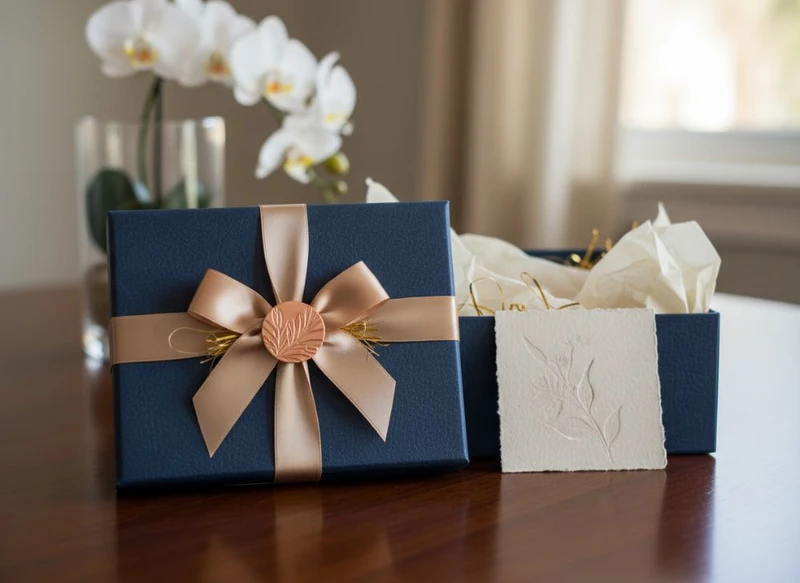
Luxury e-commerce gift packaging should make an order feel intentional before the product is even revealed. The most effective approach is not necessarily the most elaborate: use a sturdy box, a clear unboxing sequence, restrained branding and protective components that suit the product’s size, weight and finish.
For Australian brands, luxury presentation must also remain practical for online fulfilment. Packaging needs to look refined on arrival, protect the item in transit and be realistic to assemble at the packing bench. This guide to luxury e-commerce: elevating the customer experience with gift packaging explains how to balance those priorities when specifying custom packaging.
Creating an Expensive Feel with Affordable Materials
A premium impression comes from consistency, texture and detail more than from a single costly material. A well-proportioned rigid-style carton with crisp printing and thoughtful internal presentation can feel more luxurious than an oversized box with too many decorative elements.
Start by deciding what the customer should notice first. For many gift products, this is a clean outer surface, a satisfying opening action and a product that is neatly held in place. Limit the visual hierarchy to a few elements:
- A brand mark or product name in a considered position
- One or two brand colours used consistently
- A tactile finish, such as uncoated paper, soft-touch lamination or textured stock where suitable
- A contrasting internal colour or liner
- A simple closure or seal that supports the opening experience
Affordable material choices can still create depth. For example, a printed paperboard box can be enhanced with a matte finish and a single foil detail, rather than using multiple decorative finishes. Coloured tissue paper can provide a layered reveal without requiring a heavily printed inner box.
Material selection should always consider the product and fulfilment process. Fine paper stocks may mark during packing, while very dark colours can show scuffs. Metallic finishes can add emphasis, but they may be less suitable where the brand’s visual identity is understated or natural.
Design details that often feel premium
| Design choice | How it contributes to perceived value | What to check |
|---|---|---|
| Matte or soft-feel surface | Creates a subdued, tactile presentation | Scuff visibility and suitability for the handling process |
| Spot colour or foil accent | Draws attention to a logo or small graphic detail | Artwork tolerances and whether fine text remains legible |
| Contrasting interior | Makes the opening moment more distinctive | Colour consistency across box, tissue and inserts |
| Minimal exterior printing | Gives the product room to take focus | Whether branding remains recognisable at first glance |
| Closely fitted box dimensions | Reduces empty space and visual clutter | Product tolerances, protective wrap and assembly room |
Avoid treating “luxury” as a reason to add every available finish. Too many competing effects can make packaging look inconsistent. A focused palette, one tactile feature and accurate construction are usually more persuasive.
Using a Magnetic Closure Paper Box
A magnetic closure box creates a clear opening ritual and is commonly used for premium gifts, accessories, cosmetics, corporate packs and high-value retail items. Its hinged lid and concealed magnets can make the box feel substantial, especially when the product presentation inside is equally considered.
This style is most appropriate when the box may be kept, reused or displayed after purchase. It is less appropriate if the main objective is the smallest possible shipping format or the fastest packing workflow.
Before choosing a magnetic closure paper box, confirm:
- The finished internal dimensions, including the space taken by any insert
- The product’s packed weight and whether the closure performs appropriately
- Whether the box is supplied assembled or requires folding before packing
- The location and strength needed for the closure in the intended box size
- The compatibility of the box with mailer cartons or protective outer packaging
- The print and finish areas, particularly around fold lines and magnets
Magnetic boxes should not be relied on as the sole form of transit protection. A premium box can still require an outer shipper, void fill or protective wrapping, depending on the item and delivery journey. The goal is for the customer to receive the gift box in its intended condition, not simply for the box to look polished in product photography.
Where a magnetic format is beyond the needs of the product, a tuck-end carton, sleeve-and-drawer box or lift-off lid box may offer a similarly considered appearance with a different balance of cost, storage and assembly requirements. Explore suitable custom box options alongside the intended packing method rather than selecting a structure on appearance alone.
Gift Packaging Inserts: The Felt or Satin Liner
An insert should do two jobs: present the product neatly and reduce unwanted movement. Felt and satin liners are often chosen because they introduce softness and contrast against paperboard packaging, particularly for jewellery, accessories, keepsakes and delicate gift items.
Felt can provide a more structured, understated surface. It may suit products that need gentle cushioning or a warm, tactile appearance. Satin offers a smoother, more formal look and can create an elegant reveal, although it may shift or wrinkle if it is not secured and packed carefully.
The right liner depends on both aesthetics and product behaviour.
When to consider felt
Felt-style liners may be useful where the product needs a soft resting surface or where a muted, tactile presentation suits the brand. They can work well with die-cut recesses, pads or layered inserts.
Check the following before specifying felt:
- Whether fibres could transfer to the product surface
- How the material responds to light-coloured, polished or delicate goods
- The thickness needed around the item
- Whether the liner can be applied consistently during assembly
- How it will perform when paired with other components, such as ribbons or cards
When to consider satin
Satin liners can suit formal gifting, premium beauty products or items where a clean drape is part of the visual effect. They are typically most successful when the product is stable within an insert beneath the fabric, rather than resting on loose material alone.
Confirm whether the desired satin colour is available for the required application and whether the fabric needs adhesive fixing, a wrapped board base or a separate internal tray. Also consider how creases, dust or pressure marks may appear after fulfilment.
Neither felt nor satin replaces a properly engineered insert. For breakable, heavy or sharply shaped products, use a fitted structural insert first, then apply the decorative liner only where it supports the presentation. If the item must remain aligned during shipping, test a packed sample through the full handling process before committing to a production run.
Branded Ribbon and Bow Integration
Ribbon adds ceremony to a gift box, but it must be planned as part of the box structure and packing workflow. A ribbon that looks appealing in a mock-up may become difficult to tie consistently at volume or may catch on the outer shipping carton.
There are three common approaches:
- Loose ribbon supplied with the box
This provides flexibility but requires manual tying. It suits lower-volume gifting or orders where a hand-finished look is important.
- Ribbon threaded through the box structure
This creates a more integrated appearance. The box needs accurately positioned slots, reinforced attachment points and enough ribbon length to form the intended bow.
- Pre-tied bow or ribbon seal
This can reduce tying time, although placement and adhesive suitability should be assessed for the chosen box finish.
Choose ribbon width according to the box proportions. Very narrow ribbon may disappear on a large box, while an overly wide bow can cover important branding or prevent the box from sitting flat in a shipper. A simpler knot, flat wrap or belly band can be a practical alternative where speed and consistency matter.
Use a colour that complements, rather than duplicates, the box. Tonal combinations often look more refined than several bold colours used together. If using printed ribbon, review the repeat, logo orientation and how the artwork appears once the ribbon is tied.
Custom Tissue Paper and Wax Seals
Custom tissue paper turns product wrapping into part of the brand experience. It can conceal the item briefly, soften the reveal and add a layer of protection against surface contact. A repeating logo pattern, small icon or understated brand motif often works better than a large central design, as tissue folds differently with every pack.
When choosing tissue paper, consider:
- Weight and opacity for the intended product
- Ink coverage and how the artwork appears on folds
- Colour transfer risks on light or sensitive product surfaces
- The amount of tissue needed to wrap the item without excess bulk
- Whether staff can fold it consistently at the required packing pace
Wax seals can make tissue closures feel distinctive, especially for limited editions, seasonal gifts or products with an artisanal visual identity. However, they should be used with care in e-commerce. Raised seals can crack, detach or press into the box during transit. They also add a manual task that may not suit every fulfilment process.
A branded sticker is often a more resilient alternative for closing tissue. It can still provide a deliberate finishing touch, is easier to position and can be tailored to the box and tissue colour. For packaging that needs a durable closure detail, review custom printed stickers in relation to the paper surface, adhesive requirement and storage conditions.
If a wax seal is central to the brand concept, protect it by allowing clearance around the seal, avoiding heavy pressure on the wrapped product and placing the gift box inside an appropriately sized outer carton.
The Role of the Thank You Sticker or Card
A thank you card or sticker gives the brand a direct but unobtrusive way to acknowledge the purchase. It can reinforce the reason the customer chose the product, provide care information or explain the purpose of a gift set. The strongest version is concise and useful.
A card can include:
- A short thank you message
- Product care or storage guidance
- Instructions for any assembly, activation or use
- A space for a handwritten note where relevant
- A prompt to share feedback or contact the brand through its normal customer service channel
Do not overload a small card with promotional messages, dense terms or unrelated product offers. In luxury gift packaging, restraint matters. If the recipient is receiving an item as a gift, the card should feel appropriate to them as well as to the buyer.
Thank you stickers work best when they complete an action: closing tissue, sealing an envelope or holding a small card in place. They are less effective when placed arbitrarily on a premium box surface where removal may leave adhesive residue or disrupt the visual design.
Before production, confirm the card size, stock thickness and placement within the packed box. A card that is too large can cover the product or make the box appear crowded; one that is too small may be missed completely.
Securing High-Value Items in Gift Boxes
Gift packaging for high-value items must prioritise retention and protection alongside presentation. The customer should not open the box to find the product loose, tilted or damaged, regardless of how attractive the outer packaging looks.
Select the insert structure based on product geometry, weight, fragility and surface sensitivity. Possible approaches include die-cut paperboard inserts, folded partitions, moulded trays, foam alternatives, layered pads and product-specific cavities. Each option has different trade-offs in presentation, protection, material use and assembly.
Key checks before finalising an insert
- Movement: Can the item shift when the box is tilted or inverted?
- Clearance: Is there enough space for protective wrapping without creating a loose fit?
- Removal: Can the customer remove the product without pulling, digging or damaging the presentation?
- Surface contact: Do insert edges, adhesives or decorative materials touch sensitive finishes?
- Weight support: Does the base remain stable under the packed product weight?
- Repeatability: Can fulfilment staff place the item correctly every time?
- Outer protection: Does the packed gift box fit safely inside its shipping packaging?
For sets with multiple items, give each component a defined position. Small accessories should not be allowed to travel freely beside a larger product. Use partitions, cavities or sealed accessory envelopes where necessary.
It is worth making and reviewing a physical packed sample before placing a larger order. Assess opening, product retention, exterior presentation and whether the package returns to shape after normal handling. Where packaging will be sold or used in Australia, confirm any product-specific labelling, material, safety or disposal requirements that may apply to your category.
For more complex concepts, gift packaging solutions can provide a useful starting point for comparing box styles, presentation layers and insert approaches.
Post-Purchase Follow-Up and Packaging Feedback
Packaging is part of the customer experience after delivery, so feedback should inform future specifications. Ask focused questions that help distinguish design preferences from operational issues.
Useful feedback prompts include:
- Did the parcel and gift box arrive in good condition?
- Was the product easy to find, remove and repack?
- Did any part of the packaging feel excessive or difficult to recycle?
- Did the gift presentation match expectations?
- Was any instruction, care card or message unclear?
Review customer comments alongside internal fulfilment observations. If staff regularly need to adjust ribbon, add extra void fill or correct insert placement, the design may need simplification. If customers report that a box is attractive but difficult to open, consider a pull tab, ribbon lift or revised fit rather than adding more printed instruction.
Avoid making decisions from a single comment alone. Look for recurring issues over time, then isolate the component involved: box dimensions, insert fit, tissue folding, adhesive performance, outer shipping protection or the information card.
A packaging specification should be treated as a working document. Record approved artwork, material choices, dimensions, packing order, insert orientation and any quality points your team needs to check. This makes it easier to retain a consistent customer experience as product ranges evolve.
A practical specification checklist
Before ordering luxury e-commerce gift packaging, document the following:
- Product dimensions, weight and any delicate surfaces
- Desired unboxing sequence
- Box construction and internal usable dimensions
- Insert type, fit and product retention method
- Exterior and interior print requirements
- Finish choices and areas where they will be used
- Tissue, ribbon, sticker, card and liner requirements
- Outer shipping protection needs
- Assembly steps and who will complete them
- Artwork files, colour references and approval process
- Relevant packaging, labelling and material obligations to verify for the Australian market
XGolden Print has 27 years of packaging and printing experience, with a 15,000 square metre factory, 500+ employees and production capacity exceeding 10 million units. When comparing suppliers, use your specification checklist to request clear confirmation of what is included, what requires separate assembly and what should be sampled before production. You can also learn more about XGolden Print when assessing whether its packaging capabilities suit your project.
The best luxury gift packaging is coherent rather than complicated: a box that fits, an insert that protects, and a small number of brand details that make receiving the product feel special.
