
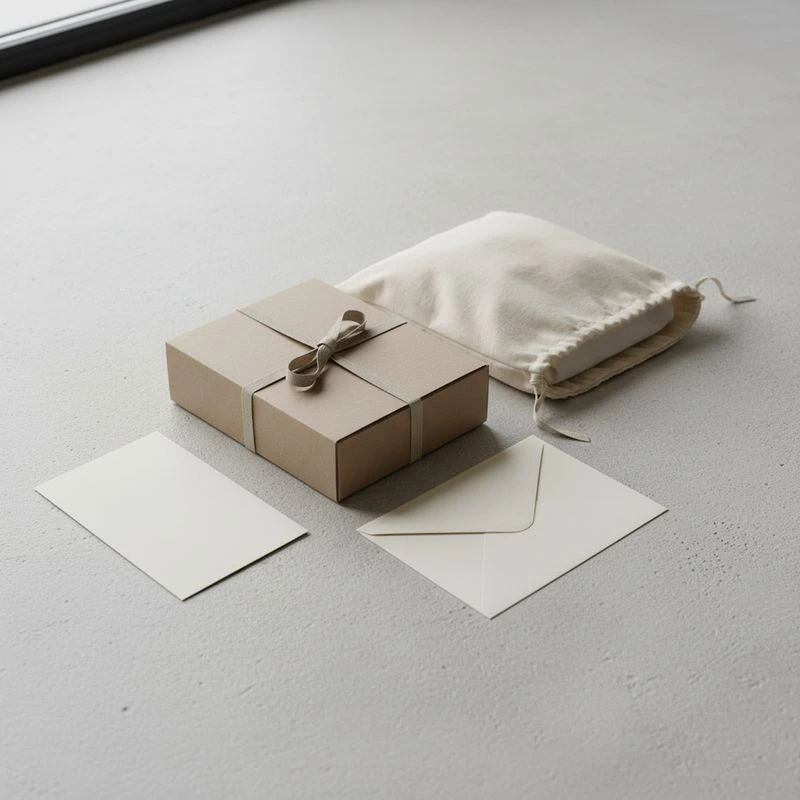
Minimalist custom packaging for fashion and apparel should make the product feel considered, not under-packaged. The best result uses the fewest practical components, a disciplined visual system and a structure suited to the garment’s size, weight and presentation needs.
For Australian fashion brands, the goal is not simply to remove colour, layers or material. It is to preserve garment condition through storage, dispatch and handling while making the unboxing experience unmistakably yours. Start with the product, then reduce every element that does not protect it, explain it or improve the customer’s experience.
Define what minimalism must achieve
Minimal packaging is successful when it performs its essential jobs with clarity. Before selecting a box style, paper stock or print treatment, write a short packaging brief covering the outcomes that matter for the product line.
For most apparel packaging, those outcomes are:
- Protection: prevent crushing, snagging, creasing, moisture exposure or scuffing appropriate to the sales channel.
- Presentation: hold the garment neatly and create a purposeful first reveal.
- Brand recognition: make the parcel recognisable without relying on busy graphics.
- Fulfilment practicality: enable staff to pack, seal and label consistently.
- Material efficiency: avoid oversized packs, redundant inserts and difficult-to-separate components.
- Production repeatability: use dimensions, finishes and assembly steps that can be specified clearly.
Minimalism is not automatically a plain kraft box, uncoated white board or a logo in black ink. Those choices can work, but only if they suit the garment and your brand. A sharply tailored occasionwear label may need a rigid presentation box for selected products, while a basics brand sending folded tees may benefit from a compact postal carton with one well-considered branded detail.
Choose the level of packaging by product and channel
The correct packaging level depends on what is inside and how it reaches the customer. Use the product’s vulnerability and selling context rather than its retail price alone.
| Product or use case | Appropriate minimalist approach | Details to check |
|---|---|---|
| Folded T-shirts, activewear or knitwear | Compact mailer or folding carton with tissue or a belly band where useful | Fit, edge protection and whether garments remain neatly folded |
| Shirts, blouses and light tailoring | Structured carton or shallow box with controlled folding | Collar support, tissue placement and crease points |
| Delicate fabrics, embellishments or light-coloured items | Clean inner wrap plus a protective outer pack | Abrasion risk, colour transfer and contact between trims |
| Shoes or small leather goods | Fitted box with limited void space and simple internal separation | Product movement, scuff protection and size-labelling workflow |
| Premium gifting, launch sets or store purchases | Rigid or presentation-style gift pack used selectively | Opening sequence, storage space and whether it is reused |
| Wholesale garments | Functional transit-ready carton with clear SKU identification | Pack quantity, handling, stacking and retailer labelling requirements |
A single packaging system does not have to serve every order. Keeping one core visual identity while using different structures for online dispatch, retail shelves and gift orders is often more practical than forcing one box to do every job.
Match the structure to the garment
A minimalist design starts with a close, sensible fit. Excess empty space can make a garment look less valuable, increases the chance of shifting and may require extra filler. However, an overly tight box can create unwanted folds, compressed trim or a frustrating opening experience.
Measure the packed garment rather than relying on its flat product dimensions. Include the garment after folding, tissue or sleeve material, swing tags, care cards and any protective accessory. For apparel with several sizes, measure the bulkiest folded size likely to use the same pack.
Select a structure that supports the packing method
The box should support the way your team will fold and load the product. Common options include:
- Folding cartons: Useful for light, compact garments and retail presentation. They can provide a crisp shape without the bulk of a more substantial box.
- Mailer boxes: Suitable where the outer package must protect the folded apparel during e-commerce dispatch. A well-sized mailer can reduce the need for a separate presentation box and shipping carton.
- Two-piece boxes: A base and lid can create a deliberate reveal for gifts, accessories and premium retail items. Check that the lid is neither too loose nor too difficult to remove.
- Rigid set-up boxes: Best reserved for products or gift programmes where the durable presentation is integral to the offer. They occupy more storage space and can add complexity to freight and fulfilment.
- Sleeves and belly bands: A way to create distinction around a simple inner pack. They work well when the band holds its position reliably and does not snag on the garment.
For broader structural options, review custom boxes for apparel packaging with your folded product dimensions and intended distribution channel in hand.
Plan for real handling, not a display-only sample
An attractive sample can fail once packing begins at volume. Ask practical questions early:
- Can a staff member insert the garment without scraping seams, buttons or hardware?
- Does the pack hold its shape after being stacked?
- Can the customer open it without tearing the box or struggling with excessive adhesive?
- Will a shipping label cover a critical logo, instruction or visual element?
- Is there a clear place for size labels, barcode labels or order information where required?
- Does the structure still work when thicker seasonal styles are packed?
For online orders, distinguish between the presentation layer and the transit layer. In some cases, one correctly engineered mailer can do both. In others, a lightweight inner presentation pack inside a protective outer shipping pack is more appropriate. The right choice depends on the product’s fragility, dispatch process and desired customer experience.
Reduce materials without weakening protection
Removing unnecessary material is a valuable part of minimalist packaging, but it should be done through design decisions rather than guesswork. Thin, poorly fitted packaging that collapses or requires re-packing does not deliver a clean customer experience.
Start by mapping every component in the existing pack:
- Outer shipping pack
- Product box, wrap or sleeve
- Tissue, garment bag or protective sheet
- Inserts, cards and promotional material
- Seals, stickers, tape and labels
- Void fill or dividers
For each component, identify its job. Keep it if it protects the garment, meets a fulfilment need, provides essential information or makes a meaningful contribution to presentation. Combine or remove it if its role overlaps with another element.
Use efficient components deliberately
Practical ways to simplify an apparel pack include:
- Right-size the pack so less void fill is needed.
- Use tissue only where it prevents friction, catches loose colour, protects a finish or improves the folded reveal.
- Replace a separate printed insert with concise information printed on an existing card where that suits the design.
- Use a branded seal to close plain tissue rather than printing every sheet.
- Select one label format that works across multiple garment styles where SKU and sizing requirements allow.
- Keep promotional pieces optional rather than including multiple cards in every order.
Custom printed stickers can provide a flexible finishing element for tissue seals, product information or limited campaign artwork. Keep their use purposeful: a sticker should secure, identify or guide the customer, not become another disposable layer without a clear role.
Be careful with broad material claims
Fashion brands often want packaging that communicates a lower-impact approach. It is sensible to reduce excess materials and choose specifications thoughtfully, but avoid making environmental claims unless they are supported by the exact materials, inks, adhesives, recovery pathways and evidence relevant to your packaging.
Also consider end-of-use simplicity. A design that combines multiple materials, permanent adhesives, films and inserts may be visually minimal but harder for customers to sort. If easy separation is important to your brief, specify it and ask suppliers to confirm the components involved.
Create a distinctive restrained visual system
Minimalist packaging needs stronger design discipline, not less branding. With few elements on the pack, every decision becomes more visible: logo scale, placement, type spacing, paper tone, closure detail and the contrast between outer and inner surfaces.
Choose a small set of repeatable visual cues instead of adding a new feature to every panel.
Build a compact brand toolkit
A practical restrained system might include:
- One primary logo position
- One typeface family or a tightly controlled typography pairing
- One or two core colours, plus the natural appearance of the substrate where appropriate
- A consistent placement rule for garment size, SKU or product category labels
- One recognisable finishing detail, such as a coloured interior, simple embossing or a patterned tissue seal
- Clear hierarchy for customer-facing instructions
The aim is recognition across different structures. A mailer, shoe box and gift box do not need identical layouts, but they should look like members of the same family.
Decide where the brand moment belongs
Not every surface needs print. Consider where the customer sees the package at each stage:
- At delivery: the outer pack can be discreet, especially if privacy or transit scuffing is a concern.
- At opening: the inside lid, tissue seal or fold can carry the primary brand moment.
- At product reveal: a card, belly band or carefully placed label can provide a final layer of identity.
- After purchase: a reusable box may justify a more considered exterior, while a basic mailer may not.
Restrained printing can still be distinctive through proportion and consistency. A small logo positioned accurately often feels more confident than a large mark repeated across every panel. Likewise, an uncoated surface, a subtle tonal print or a single accent colour can make sense when it reflects the fashion label’s identity rather than a generic “minimal” look.
Avoid common minimalist design mistakes
The following errors can make simple packaging feel unfinished:
- Using low contrast for essential information such as size, care or opening instructions.
- Choosing a pale finish without considering scuffing during transport.
- Adding a premium-looking detail that slows assembly or has inconsistent placement.
- Making the logo too small to recognise at normal viewing distance.
- Leaving excessive blank space without a clear visual structure.
- Using a script, fine line or small reverse type that is difficult to reproduce consistently.
- Applying different logo placements and label treatments across product categories without a system.
Ask for artwork templates and confirm the printable areas, fold lines, seams and closure zones before finalising art. Minimal layouts leave little room to hide a misaligned detail.
Prototype the opening and presentation
A flat artwork proof is necessary, but it cannot tell you whether the pack feels right in the hand. Prototype the full opening sequence with an actual folded garment and all intended components.
The customer should understand what to do without excessive printed instruction. A clean opening does not have to mean complicated magnets, ribbons or multiple tabs. Often, a well-designed tuck, lift point or simple seal is more reliable and better aligned with minimalist packaging.
Test the unboxing sequence step by step
Review a prototype through the customer’s actions:
- Receive the parcel or pick up the product.
- Identify where and how to open it.
- Remove any outer protection without damaging the presentation pack.
- Lift or unfold the garment easily.
- See the product in a tidy, intentional arrangement.
- Access necessary care, return or product information.
- Reclose, reuse or separate the pack without confusion.
Repeat the test with a person who did not design the packaging. They may spot an unclear opening point, awkward lid fit or card that falls out immediately.
Include operational testing
The packing team’s experience matters as much as the customer’s. Test whether the prototype can be packed at a repeatable standard. A design may look excellent when assembled slowly by a designer but be unsuitable if it requires excessive hand positioning, precise folding or several separate components.
For each prototype, record:
- Folded garment dimensions and weight
- Number of packing steps
- Components required per order
- Closure method
- Position of labels and inserts
- Potential damage points
- Pack time observations
- Storage format before use: flat-packed or set up
- Whether the package fits the intended shipping process
Where gift presentation is central to the order, explore custom gift packaging separately from your everyday e-commerce pack. This allows a stronger reveal for seasonal gifting or special purchases without adding unnecessary complexity to every shipment.
Prepare production and delivery references
A minimalist packaging program is easier to produce well when the brief is specific. A few clean visual elements require clear reference points; “simple and premium” alone is too subjective for consistent decision-making.
Prepare a packaging specification that combines dimensions, material preferences, artwork and functional requirements. It helps purchasing, product development, marketing and fulfilment teams evaluate the same proposal.
Include these details in the specification
Product and fit
- Garment type, folded dimensions and the largest relevant variant
- Accessories, swing tags and inserts included in the pack
- Required internal clearance and acceptable movement
- Any sensitive trims, fabrics or colour-transfer concerns
Structure
- Box or mailer style
- Internal and external dimensions
- Closure type and opening direction
- Flat-packed or assembled supply preference
- Outer transit protection needed for the channel
Visual design
- Artwork files and version control
- Print locations and colour references
- Logo size and placement rules
- Surface finish preferences
- Position and format of retail, SKU, barcode or size labels
Operations
- Intended order volume and expected usage period
- How products will be packed and stored
- Any co-packing, warehouse or retail handling constraints
- Delivery format needed for the packing location
- Approval process for samples, artwork and production changes
Confirm commercial details before ordering
Packaging costs and feasibility vary with structure, dimensions, material selection, printing coverage, finish, quantity, packing configuration and delivery requirements. Compare proposals on the complete specification, not only on the unit price.
When reviewing options, confirm:
- What is included in the quoted pack configuration.
- Whether samples or pre-production approvals are available and what they represent.
- Minimum order quantities for the selected structure and print treatment.
- How boxes will be bundled, packed and delivered.
- What artwork formats and file checks are required.
- Which changes may affect cost, lead time or production setup.
- Whether a repeat order will use the same approved specification.
XGolden Print has 27 years of experience in custom packaging and printing, with a 15,000 square metre factory, more than 500 employees and production capacity exceeding 10 million units. For a supplier discussion, share a practical brief rather than only a mood board; garment dimensions, channel requirements and a physical sample make it easier to assess a minimalist concept realistically. Learn more about the company’s packaging background on the XGolden Print about page.
A simple decision checklist
Choose minimalist packaging for fashion and apparel when you can answer “yes” to these questions:
- Does the structure protect the garment in its actual sales channel?
- Is the package sized for the folded product rather than a generic format?
- Does every component have a defined purpose?
- Can customers open the package naturally and see the garment presented neatly?
- Is the visual identity recognisable with limited colours, graphics and finishes?
- Can fulfilment teams assemble it consistently?
- Are labels, inserts and shipping requirements accounted for?
- Have you reviewed a physical prototype with the final product inside?
- Are material and environmental statements limited to claims you can support?
Minimalism works best as a system: a well-fitted structure, fewer purposeful components and a visual language that remains recognisable at every touchpoint. Begin with the garment sample and packing workflow, then develop the smallest packaging solution that still protects, presents and identifies the product properly.
