
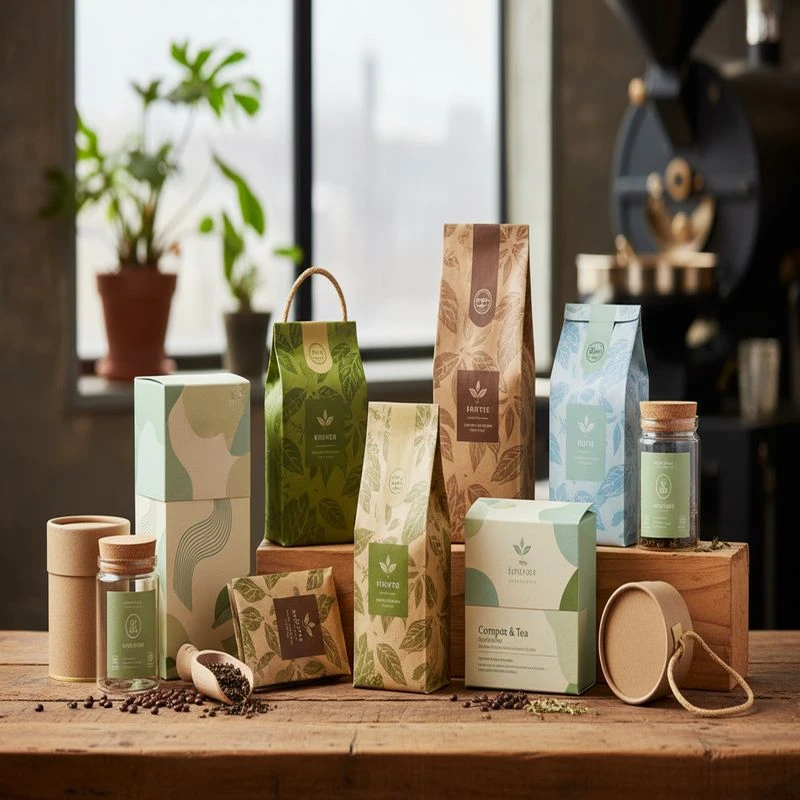
Elevate Your Brand and Reduce Your Footprint with Eco-Conscious Solutions
Coffee Packaging
In the dynamic and increasingly environmentally conscious Australian market, the choice of coffee packaging is no longer just about preserving freshness; it’s a profound statement about a brand’s values and commitment to sustainability. Investing in Sustainable Custom Packaging for Coffee and Tea Brands is rapidly becoming a non-negotiable for market success and maintaining a positive brand reputation. Australian consumers are demonstrating a clear preference for brands that actively reduce their environmental footprint, scrutinizing everything from sourcing practices to the end-of-life of packaging. Non-recyclable or excessively wasteful packaging can quickly erode consumer trust and loyalty, particularly in a segment as community-oriented as coffee and tea. Conversely, brands that embrace genuinely eco-friendly packaging solutions not only attract a loyal customer base but also differentiate themselves in a competitive landscape, turning sustainability into a powerful competitive advantage rather than a mere compliance exercise.
Embarking on the journey to more sustainable coffee packaging involves a thoughtful exploration of materials and design. A crucial first step is to prioritize materials with high post-consumer recycled (PCR) content, which reduces the demand for virgin resources and supports the circular economy. Alternatively, brands can explore innovative mono-materials designed for easier and more effective recycling within Australia’s evolving waste management infrastructure. For those seeking even greater impact, fully biodegradable or home compostable options are emerging as viable solutions, provided they meet the stringent requirements for product protection. Beyond material selection, the design itself plays a pivotal role. Packaging should be intuitively designed for circularity – easy for consumers to open, reseal to maintain freshness, and critically, feature clear, unambiguous instructions on how to properly dispose of or recycle the package. Collaborating with packaging suppliers who possess a deep understanding of Australian recycling capabilities and sustainable material science is invaluable in navigating this complex landscape. This ensures that the chosen packaging is not only eco-friendly in principle but also practical and effective in practice.
While the transition to sustainable coffee packaging offers significant advantages, brands must be mindful of potential pitfalls. One prevalent issue is ‘greenwashing,’ where vague or unsubstantiated environmental claims can mislead consumers and damage brand credibility. Transparency is paramount: brands should clearly communicate their certifications, the exact properties of their materials, and any limitations. If a package is industrially compostable, for instance, this should be stated, along with guidance on where such facilities are available. Another common concern revolves around perceived higher initial costs associated with sustainable materials. While some eco-friendly options may have a higher upfront investment, it’s essential to view this through a long-term lens. Enhanced brand loyalty, increased market share, and potentially reduced waste disposal fees can often offset these initial expenditures, offering a strong return on investment. Furthermore, striking the right balance between sustainability and product durability is critical. Coffee and tea require effective barriers against oxygen, moisture, and light to preserve their aroma and flavour. Innovations in sustainable packaging technology, such as advanced high-barrier compostable films, are continually addressing these challenges, offering solutions that don’t compromise product integrity. By carefully navigating these considerations, Australian coffee and tea brands can successfully adopt sustainable packaging that truly reflects their commitment to a greener future.
| Sustainable Packaging Material | Key Characteristics | Best Use Cases for Coffee/Tea | Considerations for Australia |
|---|---|---|---|
| Post-Consumer Recycled (PCR) Plastics | Reduces virgin plastic demand, can be recycled again. Offers good barrier properties. | Flexible pouches, rigid containers, jar lids. | Availability of PCR content varies; check for local recycling infrastructure compatibility. |
| Compostable Films (e.g., PLA, PBAT blends) | Breaks down into organic matter in specific conditions (home or industrial). | Flexible coffee bags, tea sachets, inner liners. | Requires proper disposal (home or industrial composting); consumer education is key for AS 4736/AS 5810 standards. |
| Paper-Based Packaging (FSC Certified) | Renewable resource, widely recyclable if not contaminated. | Coffee bags with thin liners, tea cartons, gift boxes. | Ensure any liners are separable or compatible with paper recycling; look for FSC certification. |
| Glass Jars | Infinitely recyclable, premium feel, good barrier. | Specialty coffee beans, loose leaf tea, instant coffee. | Heavier for transport, requires robust handling; excellent recycling rates in Australia for clean glass. |
This table outlines common sustainable packaging material options pertinent to the Australian coffee and tea market, detailing their primary characteristics, typical applications, and important considerations specific to the local context. Brands need to carefully evaluate each option based on their product’s specific needs, target audience, and alignment with their overall sustainability goals, particularly noting the disposal infrastructure available to consumers.
Compostable Bags
Embracing compostable bags represents a significant leap forward for Australian coffee and tea brands aiming to lead with environmental responsibility. This approach offers a tangible and impactful way to demonstrate an unwavering commitment to a circular economy, especially in light of Australia’s ongoing challenges with waste management and flexible plastic recycling. Traditional flexible packaging, while excellent for preserving freshness, often ends up in landfill due to its multi-layered composition, contributing to plastic pollution and microplastic accumulation. Compostable alternatives, however, are specifically designed to break down into organic matter, returning valuable nutrients to the earth. This not only diverts waste from landfill but also mitigates the environmental damage caused by persistent plastics. For the modern, environmentally conscious consumer in Australia, the availability of compostable packaging is a powerful differentiator, signaling a brand’s deep-seated respect for the planet and aligning with their own values, thereby fostering stronger loyalty and positive brand perception.
For brands considering compostable bags as part of their Sustainable Custom Packaging for Coffee and Tea Brands strategy, understanding the nuances of certification is absolutely critical. In Australia, the key standards are AS 4736 for industrial composting and AS 5810 for home composting. These certifications ensure that a product will indeed break down within specific timeframes and conditions without leaving behind toxic residues. Brands must seek out packaging suppliers who provide bags certified to these Australian standards and prominently display the relevant logos on their packaging. Equally important is consumer education. Many consumers are still learning the difference between ‘biodegradable’ (a term often used broadly with no specific standards) and ‘compostable.’ Clear, concise instructions on the packaging itself—whether it’s “compost at home” or “dispose of in an industrial composting bin where available”—are essential to ensure proper disposal. Without this guidance, even the most sustainable packaging might not fulfill its intended end-of-life potential. Sourcing from reputable suppliers is also paramount, guaranteeing that the materials used are genuinely compostable and that the bags maintain adequate barrier properties to protect the sensitive aromas and flavors of coffee and tea throughout their shelf life.
While the benefits of compostable bags are clear, brands must navigate potential pitfalls. A common challenge is consumer confusion, especially regarding the difference between ‘biodegradable’ and ‘compostable.’ It’s vital to explain that while all compostable items are biodegradable, not all biodegradable items are compostable, and compostable implies a certified breakdown process. Another significant hurdle in Australia is the varied access to industrial composting facilities across different regions. Brands must acknowledge this limitation and, where industrial composting isn’t readily available, prioritize home compostable options or actively engage in partnerships with commercial composting facilities to create viable disposal pathways. Furthermore, maintaining product integrity is non-negotiable. Coffee and tea require robust protection from oxygen, moisture, and light. Early compostable materials sometimes struggled with these barrier properties, but advancements in material science have led to sophisticated multi-layer compostable films that offer excellent barrier performance without compromising their end-of-life compostability. Overcoming these challenges requires careful planning, transparent communication, and a commitment to educating both internal teams and the end consumer, ensuring that the shift to compostable bags genuinely contributes to a more sustainable waste stream in Australia.
| Feature | Compostable Flexible Packaging | Traditional Flexible Packaging |
|---|---|---|
| End-of-Life Disposal | Breaks down into organic matter; can return nutrients to soil (home/industrial). | Typically ends up in landfill; limited recycling options for multi-material films. |
| Environmental Impact | Reduces landfill waste, avoids microplastic pollution, supports circular economy. | Contributes to landfill burden, potential for plastic pollution. |
| Material Composition | Made from plant-based polymers (e.g., PLA, PHA) or blends designed to biodegrade. | Derived from fossil fuels (e.g., PET, PE, PP) often in multi-layer structures. |
| Certification (Australia) | AS 4736 (industrial composting) & AS 5810 (home composting) for verified breakdown. | No specific end-of-life breakdown certification; focus on recyclability where mono-material. |
| Consumer Perception | Highly positive, seen as eco-friendly and responsible. | Growing negative perception due to environmental concerns. |
This table provides a concise comparison between compostable flexible packaging and traditional flexible packaging, highlighting key differences in their end-of-life, environmental impact, material composition, and consumer perception. For Australian coffee and tea brands, understanding these distinctions is crucial for making informed decisions that align with sustainability goals and resonate with an eco-conscious consumer base.
Custom Labels
Custom labels are far more than mere decorative elements for your coffee and tea products; in the Australian market, they serve as a critical communication conduit for sustainability, acting as a direct touchpoint with consumers to convey vital eco-credentials and proper usage instructions. In an increasingly crowded marketplace, where every brand vies for attention, clear, honest, and impactful communication about sustainable practices is paramount. Labels provide an invaluable opportunity to build trust and educate consumers, guiding them not only on how to enjoy your product but also on how to responsibly dispose of its packaging. They can prominently display eco-certifications, showcase commitment to a circular economy, and tell the unique story behind your brand’s environmental journey, effectively transforming a simple identifier into a powerful advocacy tool for your Sustainable Custom Packaging for Coffee and Tea Brands.
When designing custom labels with sustainability in mind, several actionable steps can significantly enhance their environmental profile and communicative power. First, the choice of label material is crucial. Opting for recycled paper labels, compostable labels, or labels made from other renewable resources immediately aligns with eco-friendly principles. Furthermore, selecting labels printed with vegetable-based or water-based inks, rather than petroleum-based alternatives, reduces the chemical footprint. Second, design for clarity and impact. Prominently displaying relevant recycling symbols (like the Australasian Recycling Label – ARL), composting instructions (complete with AS 4736 or AS 5810 logos if applicable), and certifications demonstrates transparency and guides consumer action. A minimalist design can also reduce ink usage while maintaining a sophisticated aesthetic. Thirdly, labels are an excellent medium for concise storytelling. While space is limited, a brief message about your brand’s commitment to sustainable sourcing, community involvement, or innovative packaging choices can resonate deeply with consumers. Consider integrating scannable QR codes that link to a dedicated landing page, offering more detailed information about your sustainability initiatives, thereby creating a richer, more engaging experience without cluttering the physical label.
Despite their potential, incorporating sustainable custom labels presents its own set of considerations and potential pitfalls. A significant challenge lies in ensuring that the label material does not compromise the recyclability or compostability of the primary packaging. For instance, a non-compostable label affixed to a compostable bag can undermine the bag’s environmental integrity. The solution lies in material compatibility: using paper labels on paper bags, or compostable labels on compostable bags, or choosing labels with easily removable adhesives. Another pitfall is the temptation to overload labels with too much information, which can overwhelm consumers and diminish the impact of key messages. Prioritizing essential information for the physical label and leveraging digital channels (via QR codes) for more extensive details offers an effective solution. Lastly, the cost of sustainable inks and materials can sometimes be higher than conventional alternatives. However, by researching various suppliers, exploring bulk purchasing options for economies of scale, and understanding the long-term brand value added by a genuine commitment to sustainability, brands can often mitigate these cost concerns. Emphasizing the value proposition of eco-friendly packaging and transparent labelling to consumers can also justify any marginal price differences, as a growing segment of the Australian market is willing to pay a premium for ethically produced and packaged goods.
B2B Branding
For Australian coffee and tea brands operating in the Business-to-Business (B2B) space, supplying cafes, restaurants, hotels, and offices, sustainable B2B branding through packaging extends far beyond mere product delivery. It serves as a powerful testament to your brand’s core values, reinforcing your commitment to environmental stewardship, and, crucially, empowers your business partners to meet their own evolving sustainability objectives. In today’s corporate landscape, businesses are increasingly scrutinizing their supply chains, with environmental criteria playing a significant role in procurement decisions. By offering Sustainable Custom Packaging for Coffee and Tea Brands in your B2B offerings, you transform your packaging into a compelling selling point. This demonstrates shared values, facilitates your partners’ efforts to reduce their operational footprint, and positions your brand as a forward-thinking, responsible supplier. It’s about building partnerships not just on quality of product, but on a mutual dedication to a greener future, providing a competitive edge in tenders and client relationships.
Implementing effective sustainable B2B packaging requires a strategic approach. Consider offering bulk packaging solutions for your commercial clients. This could involve larger format, highly durable, recyclable containers designed for high-volume use, significantly reducing the amount of single-use packaging per serving. For partners with consistent and substantial orders, exploring closed-loop systems—where containers are returned, cleaned, and refilled—can represent the pinnacle of sustainable practice. This not only eliminates waste but also fosters deeper, more collaborative relationships. Furthermore, equip your B2B partners with comprehensive marketing collateral that highlights your sustainable packaging efforts. Provide them with easy-to-understand fact sheets about the materials you use, their certifications (such as AS 4736 for industrial compostability), and clear instructions on proper disposal. Digital badges or web assets that partners can display on their own websites or menus can also amplify your collective sustainability message. Demonstrating verifiable certifications, like those for industrial composting, reassures partners of your compliance and genuine commitment, making it easier for them to communicate their own green initiatives to their end consumers. By providing these resources, you enable your partners to become extensions of your own sustainability narrative.
While the benefits of sustainable B2B branding are substantial, there are practical challenges to address. The complexity of implementing bulk solutions or closed-loop systems can be daunting initially. A recommended approach is to start with pilot programmes involving key, willing partners. This allows for testing the logistics, gathering feedback, and refining the process before scaling up more broadly. Clear communication and robust training for your partners are also essential to prevent missteps. Ensure they understand how to handle, store, and correctly dispose of sustainable packaging materials, particularly if specific composting or recycling streams are required. Inconsistent messaging between your B2B and Business-to-Consumer (B2C) channels is another potential pitfall. It’s vital to maintain a coherent sustainability narrative across all customer touchpoints, tailoring the specifics slightly to resonate with each audience. For instance, while a retail consumer might appreciate a home compostable bag, a cafe owner might prioritize a large, industrially compostable bulk bag or a reusable container system. By proactively addressing these operational and communication challenges, Australian coffee and tea brands can successfully embed sustainability into their B2B relationships, strengthening partnerships and driving collective environmental impact.
| B2B Sustainable Packaging Option | Description | Key Benefits for Partners | Considerations |
|---|---|---|---|
| Bulk Recyclable Bags/Bins | Large-format bags or bins made from recyclable mono-materials for high-volume delivery. | Reduces individual packaging waste, simpler disposal for partners. | Requires partners to have appropriate recycling streams; storage space for bulk. |
| Reusable/Refillable Containers | Durable, multi-use containers that are returned, cleaned, and refilled by the supplier. | Zero waste for packaging, significant cost savings over time, strong green credentials. | Requires robust logistics for collection/cleaning/redelivery; partner buy-in for system. |
| Compostable Bulk Packaging | Large sacks or liners made from industrially compostable materials (e.g., AS 4736 certified). | Eliminates landfill waste, contributes to organic soil enrichment. | Partners need access to industrial composting facilities; proper waste segregation. |
| Consolidated Shipping (Minimal Packaging) | Optimised packing to reduce void space and use minimal protective packaging for transit. | Reduces carbon footprint of transport, less waste to manage upon receipt. | Requires careful product protection strategy; potential for damage if not well-designed. |
This table outlines various sustainable packaging options specifically tailored for B2B relationships within the Australian coffee and tea industry. It details the nature of each option, the benefits it offers to business partners, and crucial considerations for successful implementation, emphasizing a collaborative approach to sustainability.
Eco Design
Eco-design, when applied to coffee and tea packaging, represents a profound philosophical shift beyond simply selecting green materials. It is a holistic approach that embeds sustainability into every stage of a package’s lifecycle, from initial concept to its ultimate end-of-life. For Australian brands, adopting eco-design principles offers a comprehensive and deeply responsible pathway to environmental stewardship. This methodology requires designers and brands to think critically about the entire journey of a package: where materials are sourced, the energy and water consumed during manufacturing, the carbon footprint of transport, how consumers interact with and use the package, and finally, its disposal or repurposing. By considering these interconnected elements, eco-design aims to minimize environmental impact at every single stage, optimising resource efficiency and reducing waste. This approach not only enhances the environmental credentials of Sustainable Custom Packaging for Coffee and Tea Brands but also fosters innovation, often leading to more efficient, cost-effective, and aesthetically pleasing packaging solutions that resonate deeply with an environmentally conscious consumer base.
Implementing eco-design principles involves a series of actionable steps that can significantly green your packaging. Firstly, a paramount consideration is material reduction. This involves lightweighting the packaging – using less material overall without compromising structural integrity or product protection. It also extends to optimising package dimensions, ensuring that products fit snugly, thereby reducing void space during transport and allowing for more efficient stacking, which in turn lowers shipping volumes and associated carbon emissions. Minimalism in design, avoiding unnecessary layers or components, further contributes to material reduction. Secondly, adopting a lifecycle thinking approach is essential. This means evaluating the energy and water required not only to produce the packaging material but also to recycle or compost it. Choosing materials with lower embodied energy and ensuring they align with existing recycling or composting infrastructure in Australia are key. Thirdly, explore multi-functional design possibilities. Can the package be easily repurposed by the consumer before disposal? A well-designed coffee tin could become a useful storage container, extending its life cycle and offering added value. Finally, collaborate closely with expert designers who specialize in sustainable packaging. These professionals possess a deep understanding of material science, waste streams, and consumer behaviour, enabling them to create designs that are both innovative and genuinely eco-friendly.
Despite the immense potential of eco-design, brands must navigate certain challenges and potential pitfalls to ensure its successful implementation. One common pitfall is over-engineering packaging. Sometimes, in an effort to appear premium or highly protective, designs incorporate unnecessary layers, complex closures, or excessive material, which negates the principle of reduction. The solution lies in rigorous testing and critical evaluation, ensuring every component serves a clear, functional purpose without adding undue environmental burden. Another challenge arises from the inherent limitations of some sustainable materials. Eco-friendly alternatives might sometimes present different aesthetic qualities or structural characteristics compared to conventional plastics. Instead of seeing these as drawbacks, designers can embrace these unique properties, integrating them creatively into the brand’s visual identity. For example, the natural texture of recycled paper can add an authentic, artisanal feel. Lastly, it’s crucial not to overlook consumer behavior in the eco-design process. A package designed for optimal end-of-life disposal is only effective if consumers understand how to properly sort and dispose of it. Designs must be intuitive and feature clear, concise instructions, making it easy for the average Australian consumer to participate in the circular economy. By holistically integrating these considerations, Australian coffee and tea brands can truly exemplify leadership in sustainable packaging design, delivering both environmental benefits and enhanced brand value.
