
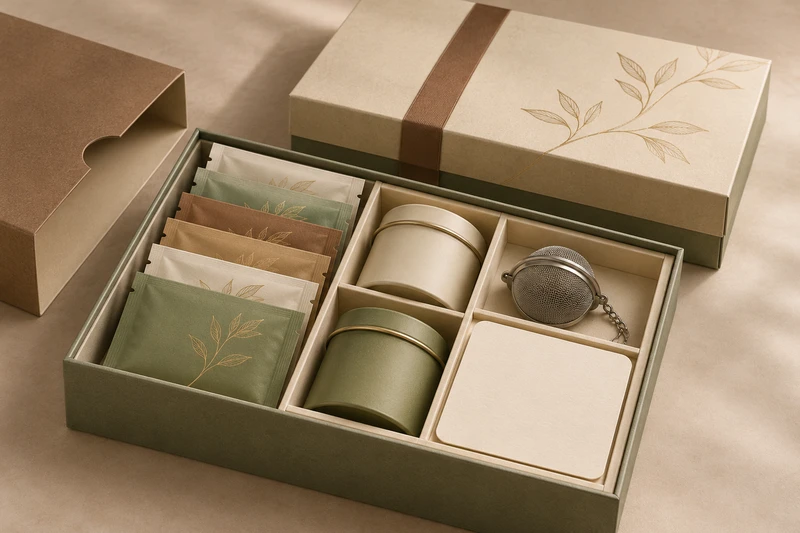
Tea sampler packaging should make a tasting collection easy to understand, open and enjoy. For tea brands, retailers and gifting teams in Australia, that means arranging each sealed tea format in a purposeful order, keeping brewing information visible, and protecting the presentation through packing and handling.
A well-planned tea gift set can suit retail shelves, online orders, corporate gifts, seasonal promotions and event gifting. XGolden Print designs and produces custom paper packaging boxes, gift packaging, labels and stickers, supporting projects with structural design, material selection, artwork support, printing, finishing, fitted inserts and sample approval before production. The box enhances the collection and unboxing experience; the sealed sachet, tin or other primary container remains responsible for the tea itself.
A tea tasting selection needs a clear order
Tea sampler packaging is most useful when it guides the recipient through a selection rather than simply holding assorted products. The order may follow flavour family, tea type, intensity, time of day or a branded tasting sequence. Whatever the approach, it should be evident before the box is fully unpacked.
For example, a collection could progress from lighter blends to stronger varieties, from herbal infusions to black teas, or from everyday teas to limited-edition selections. This sequence can appear on the inside lid, an insert card, a printed tray or the individual sachet positions. The arrangement should match the way the brand expects the collection to be explored.
Before selecting a tea sampler box, define:
- Number of tea varieties: Count distinct flavours as well as the number of sachets, tins or pouches per variety.
- Tasting order: Decide whether the recipient should follow a numbered sequence or choose freely by flavour.
- Format mix: Identify whether the set contains flat sachets, individually wrapped pyramids, tins, loose-leaf pouches or a combination.
- Audience and occasion: A retail discovery pack, corporate gift and premium afternoon-tea set may need different presentation and access.
- Refill or reuse intention: If the box is designed to be retained, consider whether the internal layout still makes sense after the original contents are removed.
- Display position: Determine whether the set will sit upright on a shelf, lie flat in a gift hamper, be presented at an event or be packed into an online order.
A clear order also reduces packing errors. When each variety has an assigned compartment or marked position, a packing team can check that the completed tea tasting collection contains the intended mix before closing the outer box.
The outer gift box should not be represented as an aroma, freshness or moisture barrier. Tea freshness depends on the sealed sachet, tin, pouch or other primary container selected for the product. The presentation packaging should be specified around those sealed components, their dimensions and their packing requirements.
Sealed sachets, tins and accessories in one set
A tea tasting collection may include more than tea. A small infuser, measuring spoon, tea strainer, cup accessory, tasting card or message card can turn a sampler into a more complete gift experience. Each extra component changes the packaging brief because it affects internal space, weight, access and packing sequence.
The first practical task is to measure the actual filled items. Do not estimate from an unfilled sachet, a generic tin size or an early accessory concept. Measure the maximum length, width and depth of each sealed component, including seams, labels, closures, lids and any protective wrap. Also note whether components can be stacked, whether tins require upright storage and whether any accessory has edges or moving parts that need separation.
| Tea set use case | Typical contents | Packaging requirements | Suitable packaging direction |
|---|---|---|---|
| Retail tea discovery set | Sealed sachets in several flavours | Shelf-facing flavour identification, compact footprint, simple stock checking | Lid-and-base box or drawer box with marked compartments |
| Premium tea gift set | Sachets or tins, tasting card and brewing accessory | Layered reveal, secure accessory position, coordinated branding | Rigid box with fitted insert or magnetic closure box |
| Corporate or event tea gift | Tea selection, branded message and optional accessory | Consistent contents, efficient packing workflow, space for recipient messaging | Structured gift box with insert and artwork areas |
| Online tea gift order | Sealed tea formats and printed tasting guide | Contents held in place, outer presentation protected within a separate transport solution | Rigid or paper gift box with fitted insert, packed inside suitable shipping protection |
Fitted inserts can help separate flavours, stop tins from shifting and create a deliberate opening sequence. However, insert design needs to reflect the product’s actual tolerance for movement. A shallow recess may suit a stable tin, while flexible sachets may need partitions or a tray that prevents them from mixing during handling.
Consider how the recipient removes each item. Tight recesses can look neat but make thin sachets difficult to lift. Finger notches, pull ribbons, angled trays or a stepped arrangement may improve access. These details should be checked with real filled samples, particularly where the set combines flat sachets with heavier tins or brewing accessories.
For online orders, gift packaging is not automatically a complete transport protection system. A presentation box may need to be packed inside an appropriately designed outer shipping solution, with the final configuration assessed for the actual distribution route and contents. This distinction is important when briefing a premium tea gift set that will be handled after fulfilment.
Identifying flavours and brewing information
Tea sampler packaging should help recipients recognise what is in the set before and after opening it. The outer box introduces the collection, while individual sachets, tins or labels identify each tea product. The internal presentation should connect the two without requiring the recipient to guess which blend sits in each position.
Useful information can include:
- Tea or infusion name
- Flavour description
- Tea type or blend category
- Tasting order number
- Brewing guidance supplied by the tea brand
- Ingredient, storage or other product information determined by the brand
- Batch, date or other operational details where required for the product’s own labelling approach
Keep the hierarchy practical. The collection name and gift purpose may lead on the outer box, while the inside panel or tasting card explains the sequence. Individual sachets and tins still need their own clear identity because they may be removed from the set, placed in a pantry or shared separately.
For Australian retail presentation, buyers should consider what a customer can identify while the box is closed. A shelf-facing panel may need the collection name, flavour count and a concise indication of the tea styles included. If the set is intended for gifting or online sales, product photography and listing copy should match the final variant count and packaging arrangement to reduce confusion between what is shown and what is packed.
Labels and stickers can support identification on bottles, jars, boxes and bags, and can be specified in custom dimensions, shapes and agreed roll or sheet formats. For tea tins or pouches, confirm the exact application surface, label placement, product format and application method before ordering. A label intended for a curved tin, for example, should be planned around the available flat or curved panel rather than designed only from a digital mock-up.
Artwork should be developed around the physical structure. Allow for folds, edges, openings, insert walls and areas that will be covered once the product is placed inside. XGolden Print can provide artwork support alongside structural design so the visual system and tea sampler layout can be considered together.
A tea-sachet drawer-box presentation
A drawer box gives a tea sampler a controlled reveal: the outer sleeve introduces the collection and the sliding tray presents the sachets in their planned order. This format can be especially effective for flat sealed sachets, where the recipient benefits from seeing the full selection at once.
The DB-315 tea-sachet drawer-box style is a relevant structure reference for brands considering a drawer-led tea presentation. It illustrates the type of format that can support an organised sachet collection. Its suitability for a particular project must still be confirmed against the actual sachet dimensions, sachet count, material thickness, insert arrangement and any added accessories.
A drawer-box brief should address both closed and open states:
When the drawer is closed
The sleeve should provide enough room for the collection identity and any essential outward-facing information. Consider the direction in which the drawer opens: a side pull may work for a wide, flat gift box, while a front pull may make more sense for a box displayed face-forward. The opening direction affects where logos, flavour messaging and pull details are placed.
When the drawer is opened
The tray should reveal the tea selection without sachets sliding out of sequence. A grid, stepped layout or grouped rows can make the tasting journey legible. If varieties have different pack counts, avoid a layout that makes one flavour look accidentally underfilled; use clearly labelled groups or a printed insert to explain the intended assortment.
The pull mechanism should be comfortable for the expected user and should not obstruct display artwork. A ribbon pull, thumb notch or exposed tray edge are structural choices to review at sample stage. Confirm that the drawer opens smoothly when fully packed, especially if the collection includes thick individually wrapped sachets.
Drawer boxes are primarily retail and gift presentation packaging. If the tea set will travel through e-commerce fulfilment, assess the packed box as part of the full shipping configuration rather than assuming the sleeve and tray alone will protect every component.
Developing a magnetic tea gift-box layout
A magnetic closure box can create a more ceremonial opening experience for an afternoon-tea gift, a premium brand launch or a corporate presentation. The lid offers a broad communication area, while the inside can introduce the collection, a tasting note or a personalised gift message before the recipient reaches the tea.
The MC-307 afternoon-tea magnetic-box structure is a useful reference for a magnetic tea gift-box direction. It can inform a brief where the intended experience centres on opening a hinged lid and viewing a coordinated set. The final layout, dimensions, materials and insert fit need confirmation against the actual products.
A magnetic format is worth considering where the set contains multiple component types, such as:
- A group of sealed tea sachets arranged by flavour
- One or more tea tins
- A brewing accessory in its own recess
- A tasting guide or branded message card
- A separate compartment for confectionery, where applicable to the brand’s own product range
The layout needs to account for the lid’s opening path. Avoid placing tall components where they interfere with closure, and leave sufficient clearance between the contents and the box edges. If the internal presentation has multiple layers, define whether the recipient should remove a card, lift a tray or uncover a lower compartment. The sequence should feel intentional, not like a search for hidden items.
Finishing choices should support the tea gift set’s use and brand positioning rather than be chosen in isolation. Printed artwork, surface finish and structural details need to be reviewed as one presentation system. Material selection also depends on box dimensions, product weight, insert design, handling expectations and the desired opening experience. These decisions should be confirmed for the individual project.
For brands developing a broader gifting range, XGolden Print’s gift packaging options provide a relevant starting point for discussing coordinated boxes across tea collections, corporate gifting and special occasions.
Checking set contents and packing consistency
A tea sampler packaging design is only successful if the intended collection can be packed consistently. The best time to identify issues is before production, using final or representative components rather than artwork alone.
Create a packing map that shows:
- Each tea flavour and its assigned position
- The quantity of every sachet, tin and accessory
- The order in which items enter the insert or tray
- Any card, ribbon, seal or label applied during packing
- How the box is closed and checked
- How the finished gift box is placed into its outer transport packaging, if relevant
This map is especially valuable when several tea variants share one box structure. It helps distinguish sets with different flavour line-ups, seasonal editions or recipient-specific message cards without relying on memory at the packing stage.
Common tea gift set issues to check include:
- Sachets bowing or catching when the lid or drawer closes
- Tins sitting proud of the insert and affecting closure
- Accessories moving into adjacent tea positions
- A tasting card covering flavour names once inserted
- Identical-looking varieties being placed in the wrong order
- Outer artwork not matching the final assortment
- A presentation box being used as though it were the tea’s primary freshness protection
- Online-order packing that does not account for the finished gift box as a separate item
XGolden Print can support the process from structural design and material selection through artwork support, printing, finishing, fitted inserts and sample approval before production. The company has 27 years of experience, a 15,000 square metre factory, 500+ employees and 10M+ production capacity. Those facts do not replace project-specific checks: materials, finishes, inserts, quantities, sample terms, pricing and schedules should all be confirmed for the individual tea sampler packaging brief.
When a collection needs a box structure beyond a standard presentation format, explore XGolden Print’s custom box packaging options. Start with the actual sealed sachet, tin and accessory dimensions, then build the gift-box layout around the tasting order and packing workflow.
To discuss tea sampler packaging with XGolden Print, prepare your product dimensions, variety and component counts, intended quantity, artwork files or direction, required delivery date and delivery destination.
