
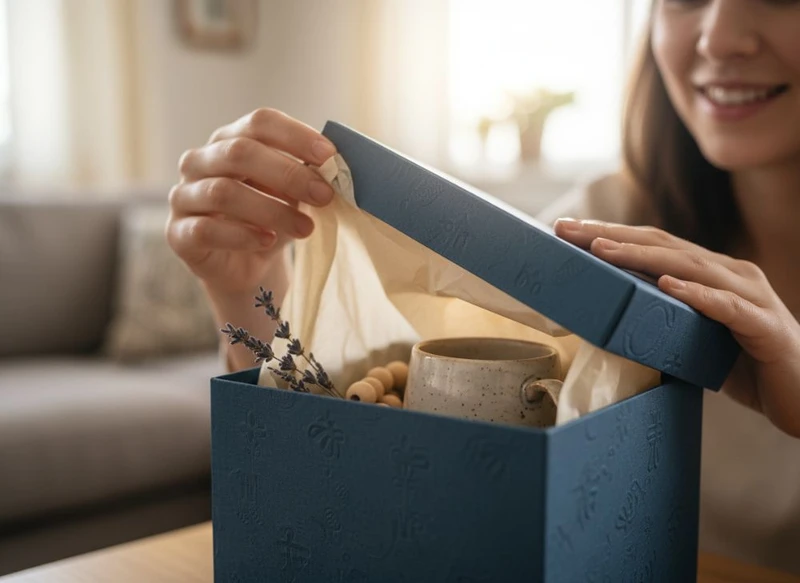
A memorable unboxing experience is not about adding the most material. It is about making every touchpoint feel deliberate: the outer box arrives cleanly, the opening is intuitive, the product is protected, and small brand details make the recipient feel considered.
For Australian brands, retailers and e-commerce teams, the art of the unboxing experience: gift packaging secrets revealed comes down to balancing emotion, protection, presentation, material use and budget. Start with the product’s practical needs, then build a small number of packaging layers that support the occasion and your brand identity.
Emotional Connection: Why Unboxing Matters
Gift packaging creates a pause between receiving a product and using it. That pause can make an everyday purchase feel like a present, help communicate product value and give the recipient a stronger sense of care.
The emotional effect usually comes from consistency rather than complexity. A premium skincare set, for example, may benefit from a calm colour palette, neatly folded tissue and a concise care card. A playful gift item may suit bright printing, an illustrated sticker and a reveal when the lid is lifted. Neither approach needs excessive decoration to work.
Consider the unboxing sequence as a series of simple questions:
- What does the recipient see first?
The outer carton, mailing label area, tape or sticker set the initial expectation.
- What do they touch next?
The opening mechanism, tissue, ribbon, insert or product tray should be easy to handle and suitable for the product.
- What is revealed?
The product should be presented neatly, held in place and not obscured by unnecessary filler.
- What message do they receive?
A short note, product-use instruction or gift message can provide a human touch without overcrowding the pack.
- What remains after opening?
If the box is attractive and useful, it may be retained for storage, gifting or display. Design this possibility into the structure only when it supports the product and budget.
A strong unboxing design also makes practical sense. If the pack is difficult to open, sheds filler, damages easily or leaves the product loose inside, the emotional value disappears quickly. Function must lead decoration.
Define the intended feeling before selecting materials
Use a few clear adjectives to guide decisions. For instance:
- Refined: restrained print, matte surfaces, tidy edges and minimal copy.
- Warm: natural-looking paper, a personal note and soft tissue layers.
- Festive: seasonal colours, themed illustrations and an optional gift tag.
- Modern: clean typography, limited colours and simple structural forms.
- Playful: bold patterns, surprise messages and interactive details.
This short brief helps packaging buyers, designers and suppliers choose compatible materials and finishes instead of assembling unrelated ideas.
Layering Elements: Tissue Paper and Fillers
Layering gives a gift box depth and helps create a considered reveal. However, each layer should have a purpose: protection, separation, presentation or information. More layers do not automatically create a more luxurious result.
A practical layering order is:
- Outer box or mailer
- Protective void fill or insert, where needed
- Tissue paper, sleeve or product wrap
- Product and any accessories
- Printed card, gift note or instruction leaflet
- Closing detail, such as a seal sticker or ribbon, if appropriate
Choosing tissue paper
Tissue paper is useful for wrapping products, covering contents and separating delicate surfaces. It can be plain, coloured or printed with a repeated pattern or logo. Before specifying it, check:
- whether the product could be affected by ink transfer, moisture or abrasion;
- whether the tissue needs to be folded, crumpled or wrapped around sharp corners;
- how the selected colour appears alongside the box stock;
- whether a printed design still reads when the tissue is creased;
- how easily packing staff can use it consistently.
Printed tissue can add a distinctive branded layer, but plain tissue in a carefully chosen colour can be just as effective and may suit smaller runs or changing seasonal campaigns.
Selecting fillers with care
Void fill prevents the product from moving during handling. It should suit the product’s weight, shape and fragility, rather than being chosen solely for appearance.
| Filler option | Best suited to | Key strengths | Checks before specifying |
|---|---|---|---|
| Crinkle-cut paper | Gift boxes with moderate empty space | Decorative texture and cushioning | Confirm dust, volume and packing consistency |
| Tissue paper | Light products and presentation layers | Soft reveal and flexible wrapping | Check protection is adequate on its own |
| Paper shred | Lightweight products and themed packs | Can create a full, celebratory look | Avoid overfilling or burying the product |
| Cardboard insert | Products needing stable positioning | Neat presentation and repeatable placement | Confirm product dimensions and tolerances |
| Moulded or shaped insert | Delicate or irregularly shaped items | Better product restraint | Assess tooling, minimum quantities and storage needs |
Avoid using filler merely to make a box feel heavier or fuller. Oversized packaging can look wasteful, increase handling effort and make the product harder to find. A closer-fitting box with a well-designed insert often presents better than a large box packed with loose material.
Personalisation: Adding Custom Notes or Label Stickers
Personalisation can turn standard packaging into a gift-ready experience without redesigning the entire box. Custom notes and label stickers are particularly flexible because they can be adjusted for campaigns, product variants and customer occasions.
A note does not need to be long. A few useful approaches include:
- a short thank-you message;
- a product-specific care or use tip;
- a space for the sender to write a message;
- a seasonal greeting;
- a QR code linking to information, provided the destination is maintained and easy to access;
- a simple explanation of how to reuse, separate or dispose of packaging materials where applicable.
For retail gifting, a blank “To” and “From” area can be more useful than pre-printed sentimental copy. For direct-to-consumer orders, a small card that acknowledges the purchase and explains the next product step may be more relevant.
Use stickers for flexible branding and operations
Stickers work well for sealing tissue, closing a sleeve, identifying a product variant or adding a campaign message to a standard box. They can provide visual impact with less artwork commitment than printing every box variation.
When specifying stickers, confirm:
- the label material suits the surface it will be applied to;
- the adhesive performs appropriately for the expected storage and handling conditions;
- the sticker is large enough to apply reliably;
- fine text, pale colours and small QR codes remain legible;
- the application point is flat enough to prevent lifting or creasing.
Explore custom label stickers when you need an adaptable finishing element for promotions, gift messages or product identification.
A common mistake is treating a sticker as an afterthought. It needs clear placement in the packing instructions, especially if it seals tissue or provides essential product information.
Designing Thematic Gift Boxes for Holidays
Seasonal gift packaging works best when it feels timely without becoming unusable once the occasion has passed. Rather than rebuilding every component for each campaign, create a flexible base pack and add a limited number of themed elements.
For example, a core box may use your standard brand colours and logo, while the seasonal layer comes from:
- a printed sleeve;
- a themed sticker;
- coloured tissue paper;
- a gift tag;
- a campaign card;
- a removable belly band;
- a limited-edition insert.
This approach can help maintain a recognisable brand identity while allowing room for occasions such as end-of-year gifting, Mother’s Day, Father’s Day, weddings, birthdays or corporate thank-you packs.
Match the theme to the recipient and product
Theme choices should support the item inside. A candle, food gift, beauty set, apparel accessory and corporate item each have different presentation needs. Start with the recipient’s likely use case:
- Personal gifts: include space for a message and easy re-closing.
- Corporate gifting: favour clear branding, restrained presentation and product protection.
- Retail display gifts: ensure the box looks complete before purchase and can withstand customer handling.
- E-commerce gifts: prioritise secure transit, easy opening and an intact presentation upon arrival.
Be cautious with highly date-specific printing. If inventory remains after an event, a box printed with a narrow message may be difficult to use elsewhere. A removable seasonal component can reduce this risk.
Before approving artwork, check that all mandatory product labelling, warnings, ingredients, instructions or claims relevant to your product category remain visible and accurate. Packaging requirements vary by product and market, so verify what applies to the finished pack.
How to Keep Gift Packaging Costs Low
Cost-conscious packaging is not necessarily plain packaging. The most effective way to manage cost is to direct the budget towards details the recipient will notice and remove complexity that does not improve protection or presentation.
Design for efficient production and packing
Begin with the smallest practical box size. A well-fitted box can reduce the amount of filler required, improve presentation and simplify packing. Measure the finished product, including accessories, protective wraps and reasonable dimensional variation.
Then review each component:
- Can the standard outer box work across several product variants?
- Could one printed insert replace multiple loose cards?
- Does the box need printing on every panel?
- Would one or two ink colours achieve the intended look?
- Is a special finish visible enough to justify its use?
- Can a seasonal campaign use a sleeve or sticker rather than a new box design?
- Is the assembly process simple enough for consistent packing?
Complex structures, extensive print coverage, multiple finishes and high numbers of individual components can add cost and packing time. They may still be right for a high-value product or special launch, but should be intentional choices.
Compare packaging approaches by total value
| Approach | Upfront design complexity | Flexibility for campaigns | Presentation potential | Typical trade-off |
|---|---|---|---|---|
| Plain box with branded sticker | Low | High | Clean and adaptable | Less impact at first glance |
| Printed box with tissue wrap | Moderate | Moderate | Strong, cohesive brand feel | Artwork changes are less flexible |
| Standard box with printed sleeve | Moderate | High | Easy seasonal or promotional variation | Adds a separate packing component |
| Rigid-style gift box with insert | Higher | Moderate | Elevated product presentation | Requires closer structural and budget planning |
| Mailer with internal gift presentation | Moderate | Moderate | Convenient for e-commerce gifting | Must balance transit protection and visual reveal |
Do not compare quotes only by the price of one box. Ask what is included in the specification: material, dimensions, print areas, finishes, inserts, assembly format, artwork requirements and quantity. Confirm any relevant commercial terms directly before ordering, as they can vary by project.
For products that need a tailored structure, reviewing custom packaging boxes can help you frame a clear brief around dimensions, protection and visual requirements.
Creating Shareable Moments for Social Media
Shareable packaging should be designed for genuine visual clarity, not forced theatrics. A recipient is more likely to photograph or film a pack when the product reveal is tidy, the colours work together and there is one immediately recognisable detail.
Useful shareable features include:
- a neat tissue seal with a logo sticker;
- an inside-lid message that is brief and readable;
- a contrast between the exterior and interior colours;
- an illustrated insert that frames the product;
- a gift tag or card with room for a handwritten note;
- a distinctive, but practical, opening sequence.
The best moments are often simple: lifting a lid to reveal a well-positioned product, unfolding tissue to find a message, or sliding off a sleeve to expose a contrasting box.
Design for the camera without compromising usability
Small text, glossy surfaces and overly subtle colour contrast can be difficult to capture in variable indoor lighting. Keep key visual elements bold enough to read at a glance. At the same time, avoid making social prompts the main message. A pack should still feel complete for recipients who never post about it.
Consider these checks during artwork review:
- Is the logo visible from a natural opening angle?
- Does the product remain the visual focus?
- Will the internal message be covered by the product or filler?
- Are colours sufficiently distinct under warm and cool lighting?
- Does the packaging look orderly after ordinary handling?
Do not rely on a specific social platform feature, trend or format in permanent print. These change quickly; timeless visual design generally has a longer useful life.
The Power of Branded Tape and Exterior Stickers
The exterior of a gift shipment or retail box signals what is inside, but it also has to protect privacy and withstand ordinary handling. Branded tape and exterior stickers can make a plain outer carton more recognisable while allowing the inner gift box to remain clean and special.
Branded tape is best used where it supports a secure closure and is unlikely to obscure important shipping or product information. Exterior stickers may identify a campaign, offer handling guidance or add a simple brand touch.
Keep the exterior design measured. A heavily decorated shipping carton can create expectations that the internal pack cannot meet, while prominent branding may not suit every gifting situation. For some products, an understated outer carton and a more considered internal reveal is the better choice.
Practical considerations for exterior details
Before choosing tape or exterior labels, check:
- carton surface and texture;
- the adhesive’s suitability for the intended material;
- potential overlap with required labels or operational markings;
- whether the tape can be applied consistently and straight;
- whether the sticker may lift at corners, seams or curved edges;
- whether printed information remains readable after application.
Use branded tape as a functional closure first and a design element second. If the tape is decorative but the carton is not securely sealed, it is not doing its primary job.
Turning a Simple Paper Box into a Luxury Gift
Luxury is usually communicated through restraint, fit and finish rather than by adding every available embellishment. A simple paper box can feel premium when the structure is crisp, the product is held securely, the material choices are cohesive and the opening experience is calm.
Start with the fundamentals:
- choose a box style that suits the product rather than forcing the product into a fashionable format;
- use a close and consistent fit;
- limit the colour palette;
- choose type that is readable and appropriately scaled;
- keep edges, folds and closure points uncluttered;
- use one standout detail instead of several competing finishes.
Potential details may include a textured paper feel, a single interior print colour, a well-fitted insert, a neatly applied foil element or a ribbon closure. Each needs to work with the box material and assembly method. Request samples or prototypes where possible to assess how the full set of elements looks and functions together.
Avoid common luxury-packaging mistakes
A premium-looking pack can lose impact when:
- the box is too large for the product;
- the insert allows the item to shift;
- the closure is difficult to open or re-close;
- the finish is used on areas that receive frequent scuffing;
- the printed design is too busy;
- the material combination feels inconsistent;
- the packaging makes disposal or separation unnecessarily difficult.
A simpler design with accurate construction is generally more convincing than an elaborate pack with poor fit or excessive components.
For gift-focused formats and structural inspiration, review custom gift packaging options. When assessing a packaging partner, it can also be useful to understand their relevant production background; XGolden Print’s company information outlines its experience and manufacturing scale.
A practical gift packaging specification checklist
Before requesting samples or pricing, prepare a short brief covering:
- product dimensions, weight and fragility;
- number of items and accessories in each gift set;
- desired opening style and whether the pack needs to be re-closed;
- retail, e-commerce or event distribution use;
- intended theme, colour palette and key message;
- required printed information and product labelling;
- preferred box material, insert and tissue or filler options;
- expected order quantity and campaign duration;
- whether components need to be packed flat or pre-assembled;
- artwork files, branding guidelines and finish preferences;
- material recovery or disposal considerations relevant to your market.
The clearest gift packaging is built from a disciplined sequence: protect the product, make opening easy, add one or two memorable brand details, and keep every component purposeful. Use the checklist to compare packaging options on fit, usability, presentation and total complexity before committing to a final design.
